

.
Return to Seoul
Davy Chou
Aurora Films: 2022
.
Diaspora is a rift, a paradox. A return, then, is not the goal but a process within itself.
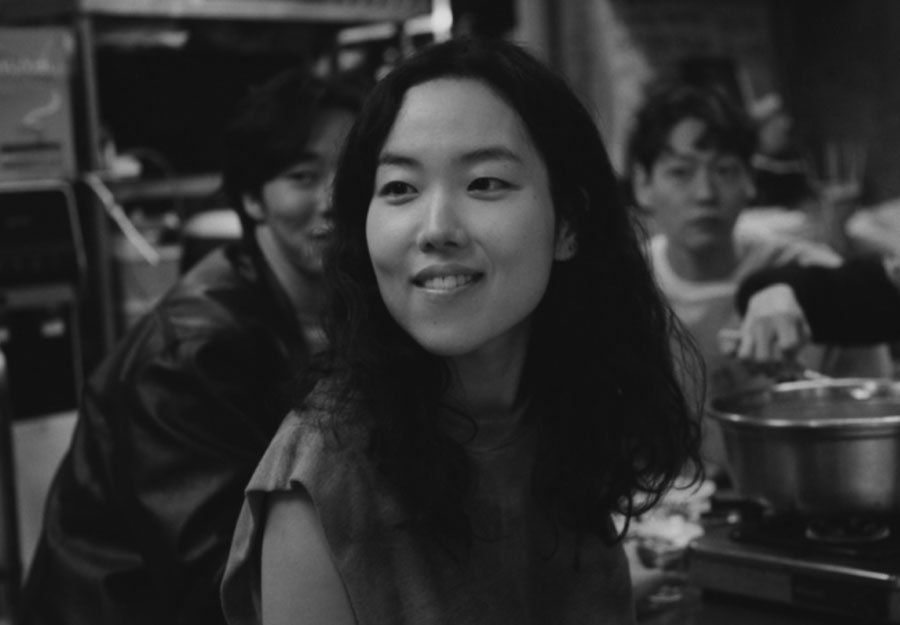
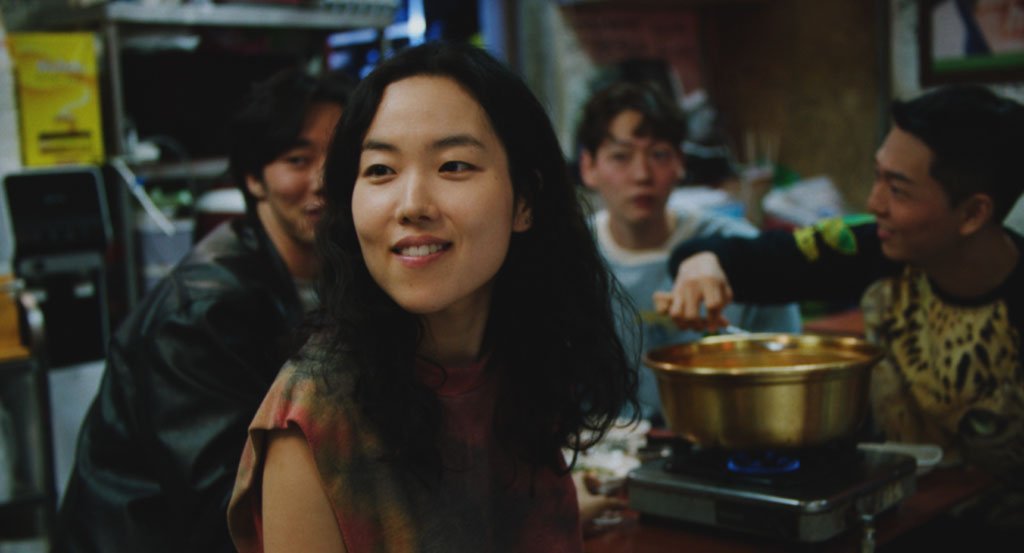
Freddie, the protagonist in Davy Chou’s new film, Return to Seoul, portrays the diaspora that separates the leaves from the roots, the return enabled by adoption. In Zhang Lu’s Fukuoka, a journey to the eponymous city in search of a lovelorn history beneath an unresolved separation cajoles us to identify the people the characters could have been. Freddie has a parallel affair: to seek but unable to find. The similarity extends to the filmmakers themselves. Lu, Korean Chinese, hovered over Fukuoka in a dreamy drift across foreign mores, and, like him, his characters belonged to a place out of joint. Chou, Cambodian French, exercises a similar looseness inherent in the trilingual flexibility that still renders French a predominant role, as though Freddie carries the custodianship of France with her to Korea, a place most recognisable to her through a fuzzy baby photo, a piece of paper.
If Lu’s cinema on reconciliatory voyage focuses on a pivotal moment to define love and regrets, Chou sprawls with contentment that Freddie’s visit as an adoptee reared with constant reassessment, spanning eight years from self-pouring soju to representing the French war machine. The charge that Freddie is ultimately ‘able to not look back’ is relayed not in identity-building but in identity-defying: what isn’t helps construct the meaning of what is.
Now, Freddie fringes an underground circuit, an environment replete with similar social outcasts, challenging the normative notion of sexual identity and distancing from what Korean, French, or Korean French isms seem to force on her. The surrealistic conversion that pervades Freddie’s twenty-seventh birthday, particularly the basement club scene, recalls the artifice from David Lynch’s ‘Pink Room’ that taunts Laura Palmer. Freddie may not suffer Laura’s state of histrionics, but her personal metamorphosis is steeped in elements of Lynchian inexplicabilities.
‘It’s all I have of Korea’, she says, holding her childhood photo, clinching the remnant of her Korean identity with bitter pride; stored elsewhere are her adoption papers, identification cards, ticket numbers to France. If her Korean identity, her past as a what if or a could have been, is simply ink on adoption papers, then her leap into the present unknown emboldens a kind of scientific research. Return to Seoul thus transcends Justin Chon’s hanbok trauma, and tries to break away from the framework of contrived shock and weary adoption politics, instead illuminating the loose networks through which identity is reframed and reinterpreted.
Freddie had promised her adoptive mother that they would go to Korea together one day to process her adoption origins. In one of Freddie’s habitual radical whims, she repealed that promise and set sail alone. Her visit isn’t totally unguided, however. Tena (Guka Han), a superintendent at a place Freddie was staying, assists her in interpreting between French and Korean, and in the film’s first hour, Tena becomes a mediator softening Freddie’s crude language. Freddie reacts in a language spoken only for her; language is simultaneously a mode of mediation for possible connection and a barrier to it.
Although the film leaps ahead to different phases of Freddie’s life, the adoption centre remains her only recourse to reconnect with her biological mother. Their possible reunion, throughout the film, moves towards either a catharsis or a frustration that lingers, an absence mirroring the presence of her biological father (Oh Kwang-rok), who is tearful, drunk and persistent in reaching out to Freddie. To Freddie, his desperation to shoehorn into a paternal role, an identity he will never achieve, begets further distance.
There is always a built-in tendency to forget as if awoken from a spell of narcolepsy: Freddie escapes upon immediate detection that she came too close to an allure of love. That cut—thanks to Dounia Sichov’s editing prowess, synchronises Freddie with her psychological break, disrupting Korean music with Freddie’s impulsive techno cues or, through a wrestling match, dissolving the pain suffered from her biological mother’s rejection. Each successive refrain is Freddie’s attempt to defer her Korean identity, as she digresses into a temporary dance episode based on her techno-raving French identity, unbefitting her abiding surroundings. In her first-time acting role, Ji-Min Park in her facial gestures encodes complexity with an air of indifference.
Davy Chou’s personal odyssey rings close to the person he has based it on, too. Coming to Cambodia when he was twenty-five, at the same age as Freddie visiting Korea, Chou searched for a lost voice beneath the detritus of war and separation; instead of ending up looking for biological parents, he is identifying an itch that brings him closer to relinquishing Freddie’s clamouring remarks about her biological father: ‘He has to understand that I’m French now’. Chou’s sympathies with Freddie’s quest concern a grander narrative, from relatives seeking the whereabouts of their loved ones after the Khmer Rouge, precipitating generations of neglect and abandonment, to the imprints of the French colonial enterprise: a false maternal role and a false sense of belonging, as ironically titled in Rithy Panh’s France is Our Mother Country.
The separation Freddie succumbs to wedges between her grandmother and her father, the former’s hysterics and superstitious traits easily ignored, the latter’s over-redemptive affections easily scoffed at. Chou portrays the child who returns as an amorphous being, a reconstructed code that the creators themselves cannot crack. Thus, questions about Freddie’s well-being denote a purely symbolic exchange, language that creates noise more than meaning. In Ji-Min Park’s stern portrayal, Freddie bears the marks of a hanging judgement, cocktails of confusion, anger, and disappointment. Chou’s cinema is not a cinema of revenge but of reprieve.

More from Mekong Review
-
Pakistan's mountainous north
-
Photographer Yvan Cohen in Bangkok's disappearing Chinatown
-

After 20 years, America is leaving
- Tags: Davy Chou, Free to read, Notebook, Seng Savunthara
