



The Road to Dien Bien Phu: A History of the First War for Vietnam
Christopher Goscha
Princeton University Press: 2022
.
Empires end in a variety of ways. They dissolve from strategic blunders or loss of will. They are doomed from the start or give way to more tenacious loyalties. They are ravaged from the edges or rot from the core. They are weakened by guerrilla warfare or terrorist attacks. But occasionally empires collapse in a burst of revolutionary violence—a single battle so bloody and decisive that it marks the end of an era. This is what the Vietnamese accomplished at Dien Bien Phu. On 7 May 1954, after fifty-six days of bombardment and trench warfare that left a mountain valley looking like the blasted ruins of Verdun, the Vietnamese ended nearly a hundred years of French colonial rule in Indochina.
The French had built a heavily fortified garrison in Vietnam’s western highlands. The fort failed to stop the flow of opium—the hard currency of the war—from Laos into Vietnam. It failed to stop the troops and arms that moved over the mountains. Dien Bien Phu was a sitting target, but the French, with their military superiority, their air force and arrogance, presumed they could repulse a main force attack. After being napalmed in their mountain burrows, the People’s Army of Vietnam (PAVN) would perish in a pile of incinerated corpses.
More from Mekong Review
-

What Graham Greene ate in Vietnam
-

A poem from Jonathan Chan
-
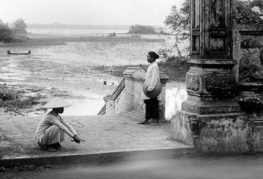
Goscha's Vietnam puts Vietnamese at the centre of their own history.
- Tags: Christopher Goscha, Issue 25, Thomas A. Bass, Vietnam