

MiSuu tells me she was a troublemaker as a teenager. ‘If you follow as you have been told, you will gain recognition. But if you try to be creative and ask questions, you are not really welcome.’
She twinkles as she says it, belying the reality that to be a troublemaker in Myanmar in the 1980s meant risking a lot. A troublemaker could find themselves running through the forests to reach the Thai border. A troublemaker could be woken by a knock on the door in the night. Many went to jail. Many didn’t come out.
I believe MiSuu—I have seen the photograph of her with other troublemakers circa 1988, all flairs and fringes. But it is hard to marry the image with how she looks today, dressed immaculately in the traditional Burmese htamein, a colourful full-length skirt tied around the waist. While Burmese men have embraced white trainers and skinny jeans, many women of Myanmar have kept faith with traditional dress, perhaps inspired by Daw Aung San Suu Kyi, who is always traditionally dressed and who was troublemaker-in-chief in the 1980s.
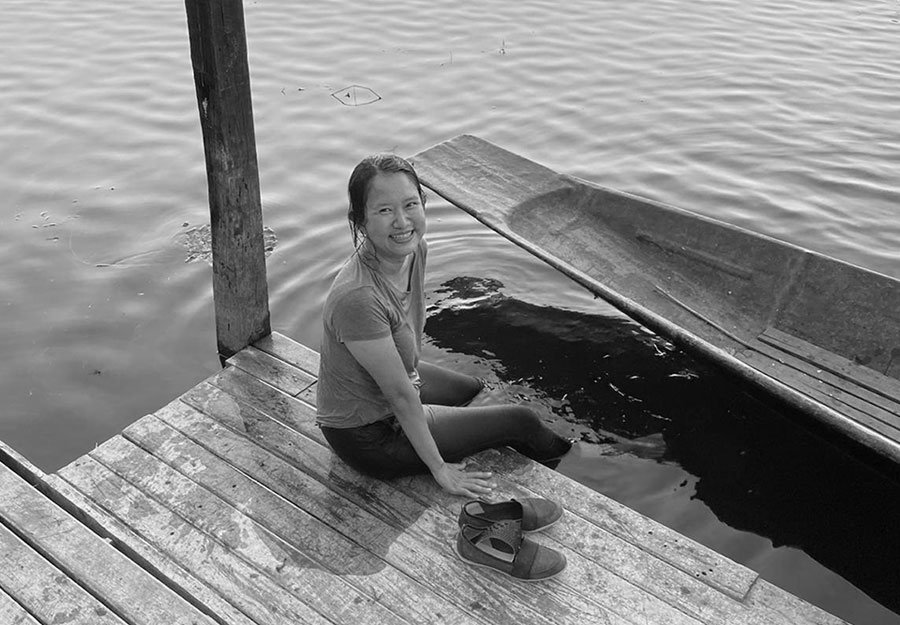
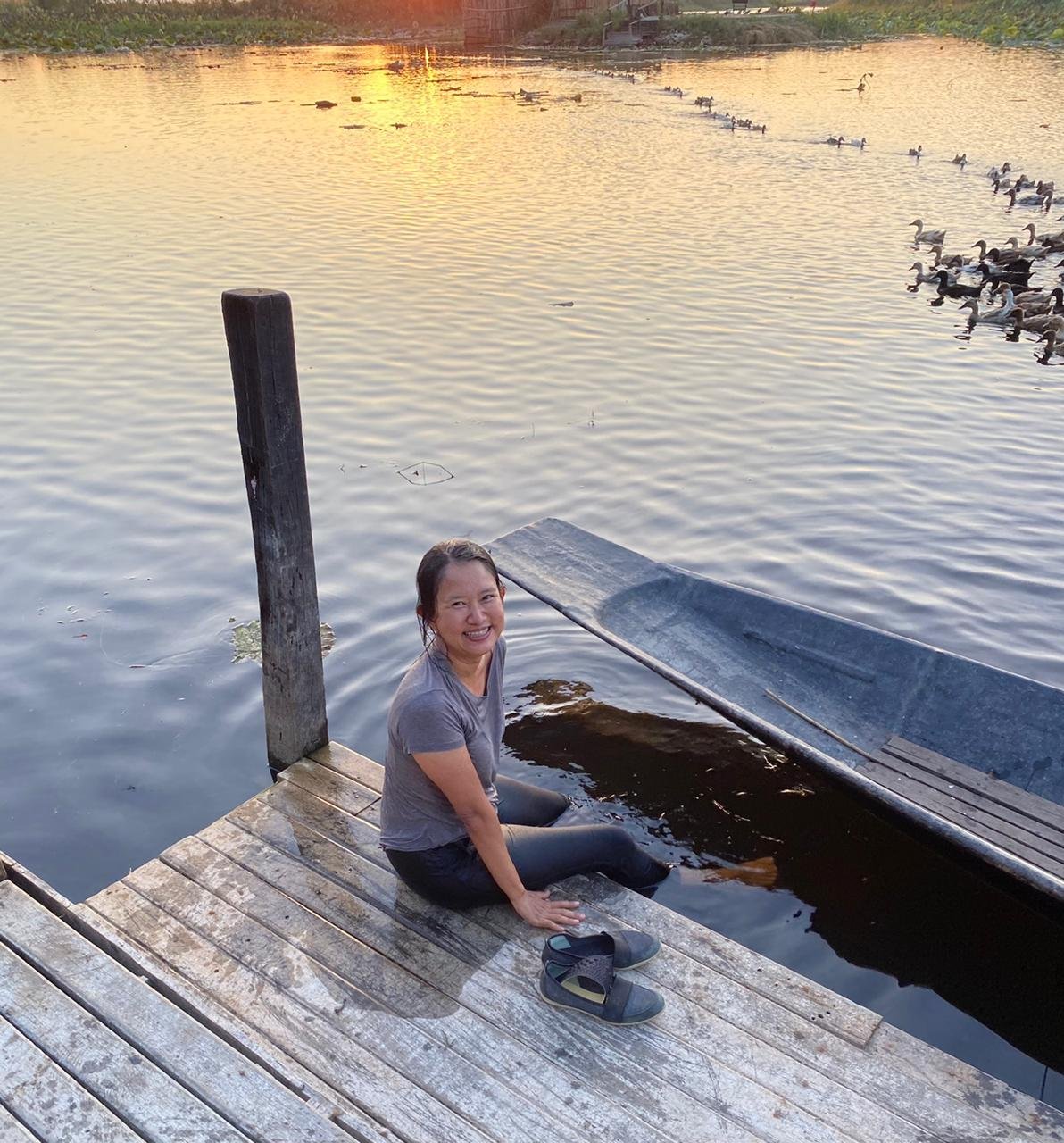
I have travelled to Inle Lake to record an interview with MiSuu, more formally known as Daw Yin Myo Su, managing director of the Inle Princess Resort and founder of the Inle Heritage Foundation. It is August 2020, the middle of the monsoon, and the last leg of my journey was by boat across the lake, buffeted by the wind and sheltering under a thin poncho and flimsy umbrella. I arrive on the terrace wet and disheveled and MiSuu is there smiling and offering me chocolates she has made that morning for a diabetic monk.
‘It is like how my grandmother cooked for the monks. Everything has to be perfect because you are serving divinity.’
MiSuu’s grandmother didn’t make chocolate, but the gesture was the same. She is someone that MiSuu speaks about often. The first project of the Inle Heritage Foundation was to renovate a traditional stilt house on the lake like that in which her grandparents lived in. The restaurant served ‘grandmother’s recipes’ and hanging on the wall were pictures of her ancestors.
MiSuu’s family are Inthar, the ethnic group based around Inle in the middle of Myanmar. The lake stretches to a size of over 100 square kilometres but is an average depth of only five feet. The surface is placid and it is famous for the ethnic Inthar fishermen that balance deftly on the edge of their sampans, standing on one leg while the other is wrapped around and steering the oar. The Inthar wear conical hats and baggy trousers in ochre and in the high season, boats carrying tourists putter out from the town of Nyaung Shwe and the fishermen pose for photographs.
When MiSuu was born in 1972, Nyaung Shwe was a small market town. Myanmar was in the grip of a military dictatorship and only a handful of intrepid tourists entered the country. MiSuu’s father, U Ohn Maung, spoke some English and so it fell to him to deal with lost travellers, inviting them in to eat and summoning MiSuu to perform traditional Inthar dance.
Eventually Ohn Maung opened Nyaung Shwe’s first guest house and MiSuu had the opportunity to inspect their international visitors more closely: their strange manners, unusual clothing, their smell.
‘Tourists were like the window to the outside world. Sometimes those tourists would bring Time magazine with coloured print and I used these to cover my exercise book so it was less boring.’
Decorating her school books was an exercise in enlivening an education she found dull and repressive. Whereas in her father’s guesthouse MiSuu was free to ask anything, curiosity was discouraged at school. The military junta regarded independent thought as a threat: rote-learning had been implemented as a political tool and teachers were trained to stamp out individual expression.
‘If you the follow the rules, then you can get to be the first in the classroom. Well then I don’t want to be first in the classroom, because that means I am just like a parrot.’
MiSuu was not the only one thinking like this. Among the young across the country there was simmering anger at the regime they were living under. In 1988 students in Rangoon gathered to demonstrate and the authorities responded by beating more than 100 to death. Female students were taken away and gang raped. Some suffocated in an overcrowded police van. On 8 August that year, thousands of people gathered in the city centre. When the crowd ignored demands to return home, army trucks pulled up and opened fire. More than 3,000 were killed.
Protests multiplied throughout the country. In Nyaung Shwe, MiSuu was inspired to take to the pulpit herself, joining the youth movement of Aung San Suu Kyi’s newly formed National League for Democracy (NLD).
But it was not to last.
It went very dark in September.
After allowing a state of near anarchy to consume the country, the army began two days of bloody suppression and the revolutionary atmosphere was quelled. Students that weren’t killed or imprisoned fled, either slipping over the Thai border or joining ethnic militias. Using his network of former guests, MiSuu’s father arranged for her to be sent to Europe. She flew out of Yangon on her nineteenth birthday. The same day the military came to look for her in Nyaung Shwe.
The 1988 demonstrations had not brought about democracy but they led to an end to socialist hibernation. MiSuu returned from France in the 1990s to a country that had begun welcoming foreign trade and tourists. She set up the Inle Princess Resort and later the Inle Heritage Foundation to protect the lake`s biodiversity and promote its cultural heritage.
How do you conserve and protect a culture if no one is telling you the stories and history of where you are from? MiSuu asked herself.
Her focus shifted towards education. Or, as she corrects me, curiosity. ‘I believe that you stop learning the day you stop asking questions.’
She shows me an article from the Myanmar Times reporting that nearly 70 per cent of students have failed to pass their high school matriculation exam.
‘We can accept 30 per cent drop-out, but 70 per cent? Where do we put all these young high-school dropouts? I daresay that those drop-outs are the ones [who] don’t like being told to memorise everything.’
The importance of the Myanmar matriculation exam cannot be understated as it is the only route into higher education. If you fail, there is no second chance to qualify for university admission.
In 2013, MiSuu opened a vocational training school on the lake to cater to these ‘drop-outs’. This was followed by a primary school in Nyaung Shwe, ‘where children are encouraged to ask as many questions as they wish’.
MiSuu’s schools go against the grain of an education system that deters dissent and independent thinking.
‘It is killing the good intention of the children. It is like putting an elephant in a jar.’
After the student-led demonstrations of 1988, universities were seen as hotbeds for troublemakers and were closed for a decade. Unsurprisingly, years later, Myanmar is struggling with a gaping capacity deficit.
When Suu Kyi’s NLD came into power after the 2015 elections, the National Education Strategic Plan was created. It identified the need to pivot toward a child-centred approach to learning in pre-school and kindergarten. But the plan has been difficult to implement, interpreted, by some, as challenging the authority of the teacher, and thus the social hierarchy.
Reforming the education system is further complicated by Myanmar’s ethnic diversity. More than 100 languages are spoken in the country but the language of instruction in state schools, even in ethnic regions where children may not be proficient in Burmese until they reach middle school, is always Burmese, the language of the dominant Bamar.
In a country as wracked by ethnic conflict as Myanmar is, the education system comes as close to a silver bullet as anything else in the quest for national reconciliation. I ask MiSuu how her promotion of Inthar heritage plays into the ethnic tensions that continue to plague the country. In her answer, she takes me back to her time in France, where a celebration of one’s culture doesn’t come at the expense of other cultures.
‘Those days in Europe made me understand about inclusivity and diversity. The French put those seeds in me. Protect by promoting. And if you don’t practice it, it will be lost. It is a life. You cannot hang it on the wall like a painting.’
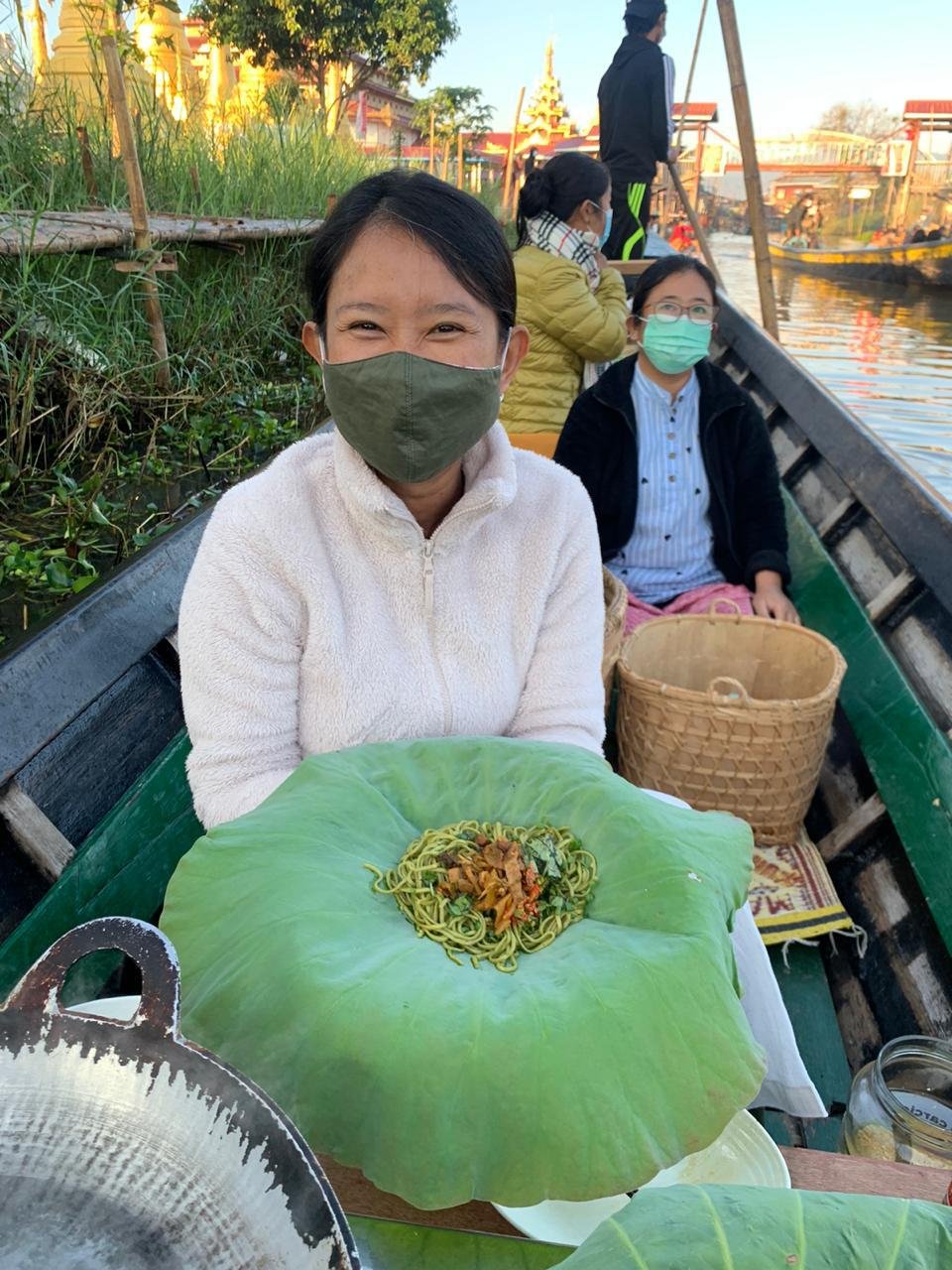
A few months after our conversation I check-in with MiSuu. Most of Myanmar is still in lockdown and commercial flights haven’t landed in the country for six months. The Inle Princess remains closed. So are MiSuu’s schools. But she is in good spirits and keeping busy. She has invited the children over to the hotel to join her in the kitchen preparing the next batch of chocolates for the monastery.
She gives me news from the lake. Migratory birds have returned for the winter and she has spotted a long-tail jacana. The swamphens are out and her ducks—the ‘home coming girls’—are laying eggs. Not very big ones yet, but she is optimistic. She proudly points out the ones with tufts, calling them her ‘punks’.

More from Mekong Review
-

A military coup in Myanmar
-
Myanmar is facing a health crisis without a functioning government
-
What Myanmar’s coup looks like far outside the cities
- Tags: Bertie Alexander, Free to read, Myanmar, Notebook
