


Returning Southeast Asia’s Past: Objects, Museums, and Restitution
Louise Tythacott and Panggah Ardiyansyahh (Eds)
NUS Press: 2020
.
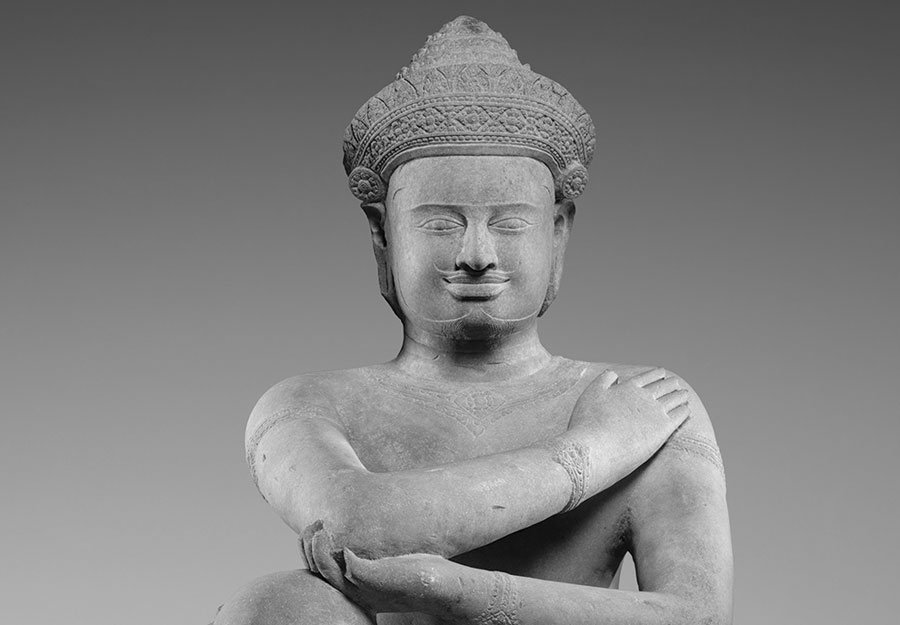
The day the Metropolitan Museum of Art reopened to visitors after New York’s pandemic lockdown, I joined the queues in the so-called Museum Mile. Once inside, I made my way through the ancient Egyptian galleries, walked some more and paused when I came across a familiar, unexpected smile in the Medieval Sculpture Hall. In a churchlike room decorated with Christian-inspired northern and western European art stood a twelfth-century Avalokiteshvara statue, unmistakably Khmer. It was a strange juxtaposition. ‘Cambodia or Thailand’, read the label. Or? Throughout the Southeast Asian galleries and beyond are more statues like this. I stared at them and a question bored into me: how did these antiquities make their way to the Met, and why haven’t they been returned home?
In 1923, the French issued a paradoxical decree that endorsed the sale of so-called debris to finance the conservation of higher-value objects and sites throughout its colonies in Indochina. Ostensibly, the most valuable objects were to be kept in museums in either Cambodia or France. But who was to decide what counted as pieces of lesser interest? Would the criteria be aesthetic or historical? Were these decisions supposed to stay unchallenged irrespective of an improved understanding of ancient Khmer civilisation? And, crucially, what space was allocated for Cambodians to voice agency over their heritage? Not much.
More from Mekong Review
-

Poetry from Rory Harris
-
Poetry from S Rupsha Mitra
-
The Burmanisation of language in Myanmar