

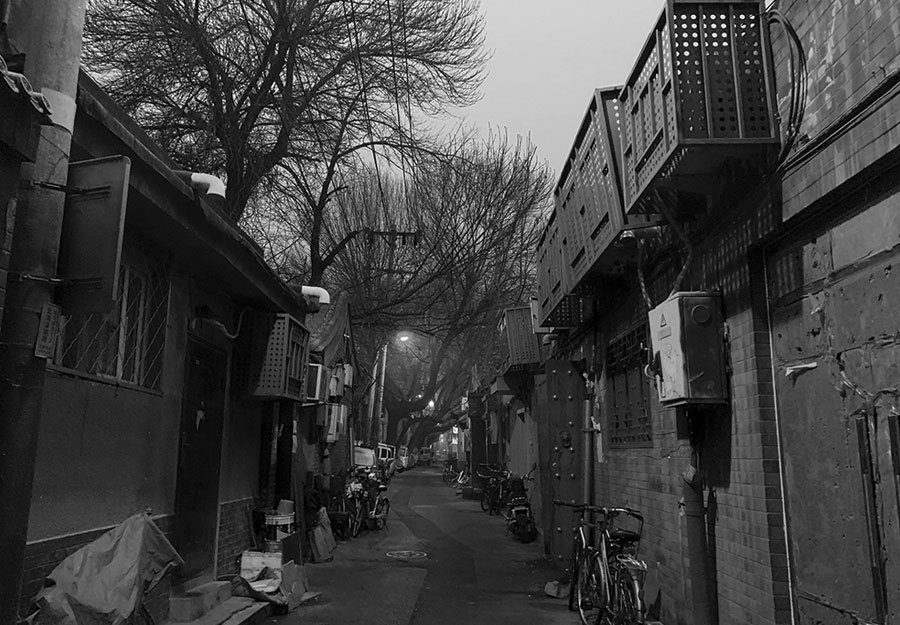

I live on a hutong—a narrow alley characteristic of old Beijing, now romanticised due to its scarcity—in a rented courtyard home. The flat has only three rooms, but the layout and design are smart, with a high slanted ceiling and tall glass doors and windows that let in swells of natural light. For much of the past year, realtors have been bringing people by every week. My landlord, a German architect who purchased this space ten years ago and overhauled the interior, is trying to sell it for 9 million yuan—about USD1.3 million, or just under US$2,000 per square foot. It’s an astronomical price, but understandable: there aren’t many hutong units left, especially ones with a private courtyard, and especially ones that used to belong to Liang Qichao.
Liang was one of imperial China’s most brilliant essayists and reformers, someone who weaponised words against the late Qing’s ruinous orthodoxy. But sometime during the First World War, he lost his faith in the modernity he preached and was gradually sidelined by history. Still, his influence was far reaching. ‘There can be no construction without destroying what’s already built,’ he wrote—words that inspired Mao Zedong, who destroyed many of Beijing’s hutongs to enact his vision of New China. Liang lived just across my alley in a large courtyard that has since been carved up into several dozen units; the only evidence that Liang used to be there is an engraving inside the courtyard’s entrance. On the site my apartment occupies was Liang’s personal library—so I reside among the ghosts of his books and ideas.
More from Mekong Review
-

One syllable brings the spice
-

A poem by Anthony Tao
-
2 poems from Anthony Tao
- Tags: Anthony Tao, China, Issue 22