

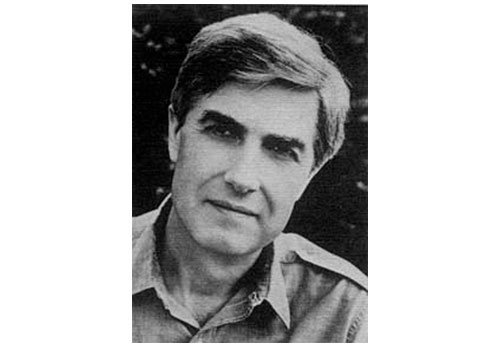
Neil Sheehan, 1936-2021
Neil Sheehan was an elder of the journalism tribe. At the time of his death last week, he was one of the few Vietnam War correspondents who had left an indelible mark on the history of the war. As a young reporter in Vietnam in the early 1960s, he examined performance on the battlefield so thoroughly that his reports challenged the very nature of US policy—several years before the US took over the fighting.
A decade later he led the publication of the Pentagon Papers in the New York Times, revealing how US leaders fought the war while knowing it was lost. The administration of President Richard M. Nixon initially blocked publication of the Pentagon Papers until the Supreme Court ruled in favour of the New York Times.
Then Sheehan spent sixteen years researching and writing A Bright Shining Lie: John Paul Vann and America in Vietnam, a searing indictment of the war told through the delusions, strengths and lies of one man. It became one of the most honoured books on the US war in Vietnam.
That list of stellar accomplishments is why he will be remembered in the annals of the Vietnam War.
For journalists of my generation, though, his work was something more. Sheehan gave us a blueprint for how to write about the US at war abroad and at home.
The son of Irish immigrants, Cornelius Mahoney Sheehan grew up on a dairy farm and won a full scholarship to Harvard, where he worked on a literary magazine. After graduation he joined the Army and was transferred to Japan to write a military newsletter. Tireless, he wrote on the side for United Press International. Two weeks after he left the Army, Sheehan was on an airplane to Saigon, the new correspondent for UPI. He was twenty-five years old.
It was 1962 and, like many reporters of the era, Sheehan was steeped in the Cold War certainty that the United States was fighting to defend democracy around the world against the threat of communism. He had faith in his country, that ‘it couldn’t be wrong, our causes would always be just, that our wars would always be victorious’.
That mind frame carried over from World War II, when all reporters covering the US military were part of the team, wearing uniforms and submitting their copy to censors. Since the US was not officially at war in Vietnam, there was no military censorship. In Vietnam, Sheehan discovered what it meant to be independent.
Within weeks, he saw evidence that the war was not so simple. Military spokesmen lied to him about casualties and successes. So Sheehan made the rule to report only what he saw or had confirmed, connecting the dots and contrasting the reality of Vietnam with the rhetoric from the US military.
Sheehan and his fellow reporters—notably David Halberstam of the New York Times and Malcolm Browne of the Associated Press—used this independence as did few others. They broke new ground figuring out how a free press covers a war. To the dismay of their military press handlers and briefers, they uncovered and reported the lies, deceptions and failures of the growing US presence. They soon stood out since most of the other reporters wrote about ‘our war’ and ‘our military’ and accepted at face value the rosy bulletins given at US briefings.
When the military restricted access, Sheehan and his colleagues had to find their own sources. Sheehan dug deeply and wrote fiercely about the corruption of the Saigon government that the US was supporting, so much so he was put on the regime’s assassination list. President John F. Kennedy asked the New York Times to pull Halberstam out of Vietnam. Defense Secretary Robert S. McNamara told President Kennedy that Sheehan and Halberstam were causing a lot of trouble.
The pressure was intense. These reporters were being treated like the enemy by the US and South Vietnamese governments. ‘We were out there exposed,’ Sheehan said in the documentary film Dateline Saigon. ‘I knew I could get killed, and I was afraid.’
Sheehan survived and excelled, demonstrating to reporters who followed him the value of taking risks to find the truth, even or especially in war.
Back in the United States, now with the New York Times, Sheehan didn’t lose his intense interest in the war. In a review of several books on the war, he suggested a case might be made to try President Nixon for war crimes in Vietnam. Soon afterwards, Daniel Ellsberg gave him access to thousands of pages of secret government documents now known as the Pentagon Papers. They had known each other in Vietnam. Ellsberg, a former Marine with a PhD, had been a Pentagon aide stationed in Vietnam as an intelligence officer.
Sheehan had no doubt that he had to publish the papers. The top leaders wrote these documents, detailing their lies, delusions and miscalculations. It was the proof that all the war reporting had been correct. He broke his word to Ellsberg and, rather than simply make notes about the papers, he photocopied every page with the help of his wife, Susan Sheehan. New York Times publisher Arthur Ochs Sulzberger approved the project even though the risks were enormous for the paper and the people involved—from financial ruin to years in prison. And after weeks of intensive preparation, the New York Times published the first story across the front page on 13 June 1971. The response was immediate.
The administration of President Nixon won a restraining order blocking further publication, saying the New York Times violated the Espionage Act. The New York Times, joined by the Washington Post, appealed the decision to the Supreme Court. The newspapers won. In New York Times Co. v. United States, the Supreme Court ruled that the government’s need to maintain secrecy of information did not override the constitutional freedom of the press guaranteed by the First Amendment.
With this reaffirmation of the strength of the freedom of the press, Sheehan’s imprint on journalism was now historic.
Sheehan’s final accomplishment was an epic accounting of the Vietnam War. John Paul Vann was a military figure admired by the military and the media, a man who embodied the delusions of the war. Sheehan knew Vann as a highly accomplished soldier in Vietnam who was considered a straight shooter who admitted the weaknesses of the Americans and Vietnamese. At the same time, Vann was idealistic, a brave commander who refused to give up on the war.
For sixteen years Sheehan researched and wrote Vann’s biography, discovering that Vann mirrored the war in darker ways. He was born out of wedlock, abused by a pastor and obsessed with sex, facing statutory rape charges and bedding women with abandon and with no regard for his wife and five children. He even invited the pastor into his home, where he abused some of Vann’s sons. When his son reached out to his father, Vann beat him for making the allegations. Then Vann escaped to Vietnam, to the intoxication of the war and his role of hero.
No one wrote better battle scenes and their aftermath than Sheehan. Whenever I researched some aspect of the war, I prayed that Sheehan had covered it in A Bright Shining Lie. I knew that I would find a complete and vivid account of the fighting and the cost to the Vietnamese. For Sheehan had an abiding humanity that resisted politicising the civilian suffering caused by competing forces and governments. The Vietnamese in his book paid the highest price of the conflict, whether on the battlefield, in the slums or in the bed of men like Vann.
A Bright Shining Lie was published in 1988 to immediate acclaim, winning a Pulitzer Prize and the National Book Award. Only Fire in the Lake by Frances FitzGerald won more honours for its depiction of the war. Reviews and features underlined Sheehan’s intense drive to write the perfect book, especially his habit of working at night and sleeping during the day to achieve maximum concentration.
To journalists, Sheehan’s masterpiece was a confirmation that reporters were wise to follow a story to its end—in this case the Vietnam War. We are not just writing the first draft of history but are well positioned to write the full story since we lived it, we were witnesses, and we have the instincts to know where the secrets are hidden.
In A Bright Shining Lie, Sheehan gave majesty to our profession.
It’s no exaggeration to say that the twenty-five-year-old reporter who landed in Saigon in 1962 fulfilled his promise not only to his country but also to Asia, honestly chronicling the Vietnam War in a way that inspires journalists to this day. He took risks in insisting that secret documents of the war belonged to the public and reaffirming the freedom of the press. And he was loyal to the story, dedicating sixteen years to a book that he hoped would open his country’s eyes to the folly of Vietnam. A rare hero.

More from Mekong Review
-

Inspired by the portraits of the deceased
-
The monsoon is the most poetic of seasons
-
Sand, once inexhaustible, is disappearing faster than ever
- Tags: Elizabeth Becker, Free to read, Neil Sheehan, Notebook, Vietnam
