

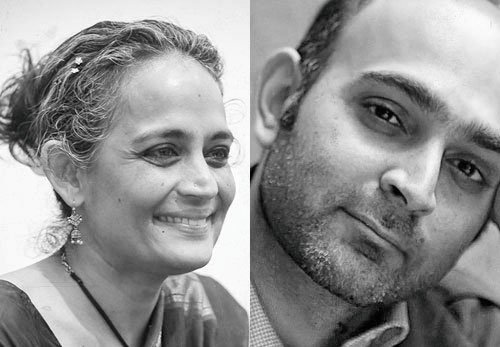

The difficult second novel, rather like the difficult second album for bands, is a problem that obviously faces all writers. Most of them — JD Salinger perhaps excepted — seem to manage it with a reasonable amount of timeliness. But now we have Arundhati Roy’s second novel, The Ministry of Utmost Happiness, coming nowhere near close on the heels of 1997’s wildly popular The God of Small Things.
That novel sold some 6 million copies around the world and was translated into eighteen languages. While most readers loved it, some, like me, found it fey and underwhelming, but there is no doubt that there is a huge weight of expectation on Roy’s glamorous shoulders.
While Small Things was a closely observed book focussing on personal and private losses, Roy’s second novel is deliberately much larger in scope, sometimes off-puttingly so.
The book opens with a baby being born in Delhi: instead of a much-wanted boy, Anjum is a hermaphrodite, who eventually goes to live in a hijra (transsexual) community. After the Gujarat riots of 2002, she moves out and lives in a graveyard, where she gradually builds a number of rooms, and invites a community of similarly outcast individuals to share her space. This narrative then abruptly ends, a third of the way through the book.
More from Mekong Review
-

Snacking in Calcutta
-

Modern-day India, where societal oppression is balanced by personal freedom
-

Nothing happens in Salt Lake, and that's all right.
- Tags: Arundhati Roy, India, Issue 8, Mohsin Hamid, Rupert Winchester