

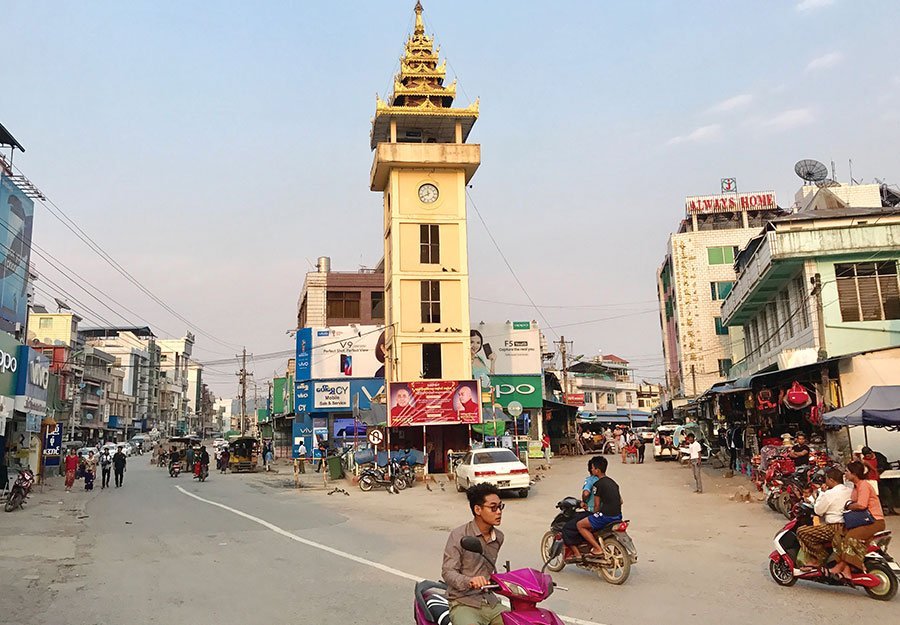

Muse, in Myanmar’s northeast, is the country’s most important overland trading post and a node in the global infrastructure network that is China’s Belt and Road Initiative. Oil and gas pipelines, a highway and a high-speed rail are to pass through Muse on their way from Kunming, the capital of China’s Yunnan province, to Myanmar’s coast on the Bay of Bengal—a remote border crossing as a valve for capitalism, pumping people and products in both directions. But little of this infrastructure, apart from the twin pipelines, exists. The road on the Myanmar side of the border is a ribbon of tarmac unblemished by lane markings; the railway line is a narrow-gauge track built by the British that ends hundreds of kilometres from the border. Add in the pandemic and the coup in February 2021 that returned Aung San Suu Kyi to detention and Myanmar to military rule, and Muse—despite promises of what Asian officials often call “connectivity”—is not an easy place to get to.
Last year, I needed to go to the border for a job I had in Myanmar at the time. I had visited Muse once three years ago and I was curious: What happens in a border town when the border is closed? It was the rainy season and Muse didn’t feel like the bustling, seedy place I remembered; it felt like an amusement park after hours. The casinos and karaoke bars—behind high walls, barbed wire and watchtowers—and the militias who run them were still there. But the streets were empty, the border gates quiet and forlorn. Even the sex workers had left.
More from Mekong Review
-

When Oliver Slow writes that the Myanmar military must return to the barracks, he presumably means they should only be in the barracks. Readers may wonder if they were ever so confined.
-

A poem from Maung Day
-
Poetry from Jack Malik
- Tags: Bryony Lau, Issue 31, Myanmar