



The Judgment (translated by Phongdeit Jiangphatthana-Kit and Marcel Barang)
Chart Korbjitti
Howling Books: 2007
.
Four Reigns
Kukrit Pramoj
Silkworm Books: 1998
.
Tales of Thailand
Pira Sudham
Rothershire: 1996
.
Finding some old, classic piece of Western literature set in Southeast Asia is usually straightforward. From Orwell in Burma, to Burgess in Malaysia, to Lewis in Laos, nearly all the nations in the region were colonised by European powers whose citizens had a knack for putting pen to paper, as well as a ready audience back home. Except for Thailand. Thailand avoided colonisation when the English and French designated its territory as a buffer zone. Good for Thailand, bad for Western literature. True, there is Somerset Maugham’s A Man in the Parlour, but this is a partially fictionalised travelogue that begins in Myanmar and ends in Vietnam; true, there are also some postcolonial page-turners like The Beach; and, true, there is the bar-girl genre. It all leaves one wondering what literature has been set in Thailand that was written by and mostly for, of all people, the Thais themselves.
Chart Korbjitti may be Thailand’s best-known living writer. He won the Southeast Asian Writers Award for his 1981 novel The Judgment, which tells of Fak, a poor young man from the countryside with a promising future who becomes a victim of circumstance. When his father passes away, Fak feels obliged to care for his young and attractive but mentally ill stepmother, instead of making her move out of the family home. Villagers misunderstand his motives and presume he has taken her as a lover. Fak tries feebly to manage the fallout as the rumour mill grinds out of control. The story highlights the effects that money and status have in forming people’s impressions and judgements. Fak finds himself musing on his predicament: “I’d really like to know, though: if I had a family, if I had a relics urn like the others, or if I had wealth and status … would the villagers dare claim that I sleep with my father’s wife?”
One might wonder why Fak does not stand up for himself more often and deny the accusations instead of brooding over his misfortune. But this may be an intentional feature of the narrative. A collectivist social orientation, common in both Thailand and in rural communities, is characterised by a disinclination to assert one’s individual interests, in deference to the group to which one belongs, but with reciprocity expected. Fak, then, may be ill-prepared to combat the rumours swirling around him, preferring to lose himself in work and to do what he feels is right without broadcasting his good deeds, which he trusts others will recognise in time. From this perspective, Fak’s final injustice is a commentary on the potential drawbacks of Thai collectivist culture. Two used-bookstore owners I spoke with in Bangkok told me that many Thai readers identify strongly with Fak and his difficulties.
More from Mekong Review
-

A poem by Rory Harris
-
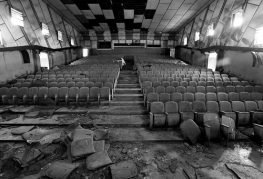
An ode to Thailand’s lost movie theatres
-
A poem by Jennifer Eagleton