
Chinggis worship
Munkhnaran Bayarlkhagva
The transnational reproduction of Chinggis worship in Mongolia is part of a concerted effort to bring back an identity-defining practice.


The transnational reproduction of Chinggis worship in Mongolia is part of a concerted effort to bring back an identity-defining practice.

It was hoped that social media would facilitate democracy. Today, we worry about misinformation polarising society and undermining democracy.

It’s hard to pin down exactly how to describe Đinh Nhung and what she does. Her work has spanned art installations, photography, curation and the compilation of lexicons of queerness in Vietnam.
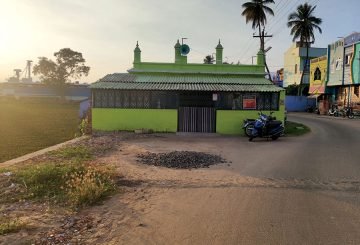
Hindu-Muslim relations are worsening across India. There have been no rumblings of communal strife in Kadayanallur yet, but news from elsewhere creates ripples of anxiety and worry.

Lifting the stone on ‘Big Conservation’, Sarah Milne’s book demonstrates how conservation is inherently political—an effort to impose meaning on to landscape and people.

When Oliver Slow writes that the Myanmar military must return to the barracks, he presumably means they should only be in the barracks. Readers may wonder if they were ever so confined.

Chiang Kai-shek might have put in place measures that eventually led to Taiwan’s economic miracle, but political freedom for the Taiwanese was the last thing on his mind.

What Philip J. Stern offers is a reflection on the nature of power—how organisations created to share risks and raise capital for economic activities ended up becoming a dominant force.

What happens in a border town when the border is closed? Bryony Lau travels to Muse in Myanmar’s northeast and reflects on its history and the effects of the Covid-19 pandemic.

Scot Marciel spent most of his time in service focused on one region. In Imperfect Partners, he brings readers through the evolution of US involvement and interest in Southeast Asia from Reagan through Trump.

Personal testimonies are always more powerful than hypothetical discussions, and Elaine Pearson’s extensive experience in investigating human rights abuses and advocating for positive changes serves as a practitioner’s handbook.

Fiona Sze-Lorrain’s novel Dear Chrysanthemums offers a provocative look at the defining events of the past half-century of Chinese history.

Unable to write openly about repression, Uyghur writer Perhat Tursun resorted to symbolism, invoking visceral descriptions in his novel The Backstreets to convey a sense of disconnect and despair.

Esther Yi’s debut novel grapples with social disconnectivity and fanaticism through an esoteric tale of a woman who falls desperately for a K-pop star and goes on a journey to integrate him into her life.

Queer Southeast Asia provides a multifaceted mosaic of the region, stretching for all to see the complexities that will always simmer beneath the volume’s name.

A short story by Katrina Yu.

Baek Sehee writes: “The world tends to focus too much on the very bright or the very dark.” She steers clear of both extremes in her book. For this alone, it merits attention.

More than a conventional detective story, The Soul of Beijing unfolds into a vivid portrayal of the bustling metropolis, filled with colourful characters from all walks of life.
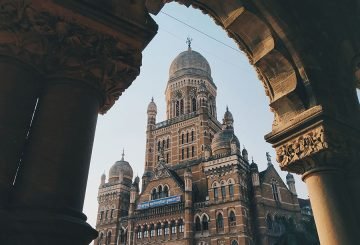
It is impossible to mention Mumbai without alluding to its former name, Bombay. Radhika Oberoi reflects on reading Salman Rushdie’s writing about the city.
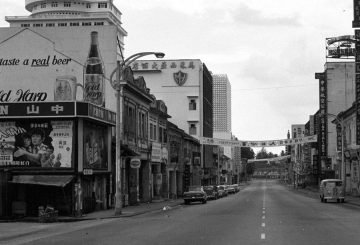
The publication of The Age of Goodbyes—the English translation of the award-winning novel by Li Zi Shu—was a celebrated event, eagerly awaited by connoisseurs and enthusiasts of Malaysian Chinese literature.

In Melody Kemp’s debut novel, Tree Crime, a young Lao teenager turns detective as a deadly virus circulates in her village. Marco Ferrarese reviews a story about the costs of ‘progress’ at the expense of natural ecosystems.


Mak Yong encompasses elements of dance, drama, storytelling, music and ritual, and is a women-centred folk tradition nurtured by community bonds.
Poetry by Zakariya Amataya, translated by Preeyaporn Charoenbutra and Sunida Supantamart.

‘Tò-uat’ means ‘turn left’ in Taiwanese Hokkien—a signal of political orientation rather than literal direction—and the bookstore’s website describes itself as “Taiwan’s only social movement–focused bookstore”.