
Cybercrime unchained
Nick J. Freeman
Cybercrime is a big business, and some of its leading perpetrators are playing a cat-and-mouse game with the authorities in Southeast Asia.


Cybercrime is a big business, and some of its leading perpetrators are playing a cat-and-mouse game with the authorities in Southeast Asia.

Meeting with Pol Pot adds to Rithy Panh’s resume as the most prolific maker of films about the regime that took his family and terrorised his country.

Playing with nationalism is to take part in a risky game.

Stephen Simmons has produced an important record, with a wealth of historical information, that highlights the work of artists during the Sangkum era.

In the face of funding cuts and growing oppression, Cambodian reporters cling on to hope through memories of a golden age of journalism.

Khieu Ponnary, once called the “mother” of the Khmer Rouge, had seemingly vanished from history while the regime was at its height.

Publishing in Cambodia is still a fledgling, fragile industry, but it’s growing fast.

Luise Ahrens, a Maryknoll nun and education innovator from the US, worked with seismic stamina for twenty-six years to build up higher education in Cambodia.
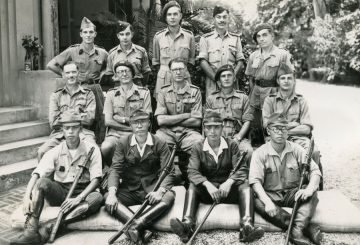
Lieutenant Colonel E.D. Murray—“Moke” to friends and fellow officers—knew nothing about Cambodia, but for a few brief weeks towards the end of 1945, he was, in his own words, its “uncrowned king”.

Gordon Conochie’s book amounts to perhaps the most detailed autopsy yet of the death of Cambodia’s democracy.
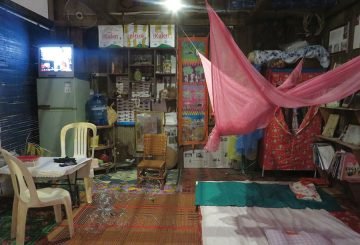
The arts can remind us of our connections to home and nature as we are propelled forward by development projects that prioritise profit over nurturing rootedness and well-being.
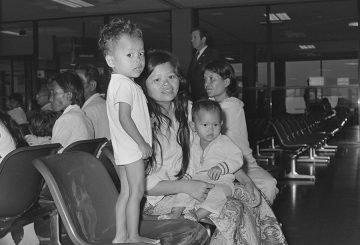
In short vignettes, Y-Dang Troeung gives a compelling account of the journey which brought her family from Cambodia’s Kampong Thom to white rural Canada, beyond the feel-good newspaper headlines.

Street 200 in Phnom Penh is where people come together with a common passion for cinema.

Touching that sensitive Cambodian topic of land ownership and dispossession, Further and Further Away questions the nature of relationships entertained with the land.

Tracing a Khmer-language dictionary’s trajectory across the past century of Cambodian history offers insights into the ways language has been called on to construct—and to challenge—notions of national identity and community.

A sordid saga of greed, corruption, desperate despots and out-of-control dam-building corporations—propelling the rapid demise of the Mekong River.
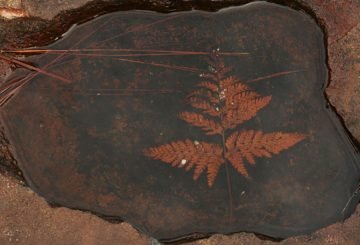
Lifting the stone on ‘Big Conservation’, Sarah Milne’s book demonstrates how conservation is inherently political—an effort to impose meaning on to landscape and people.

Truth and reflection at the Khmer Rouge Tribunal

Where does the national language of Cambodia come from?

A new book examines the challenges facing Cambodia’s ‘Great Lake’
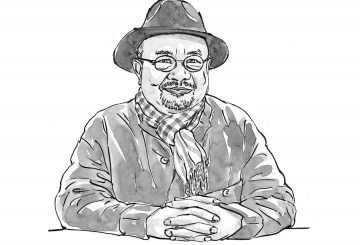
The cinema of Rithy Panh

The day I met a Russian oligarch

The Cambodian house is getting the attention it deserves

A bookshop in Phnom Penh adapts to the times

The hidden diaries of the Khmer Rouge era

On translating Soth Polin’s L’anarchiste

One-party state in Cambodian politics
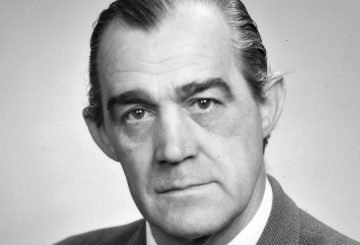
A British mission to supply Saigon

Out with old, in with the new in Cambodia

Bird watching in the Mekong
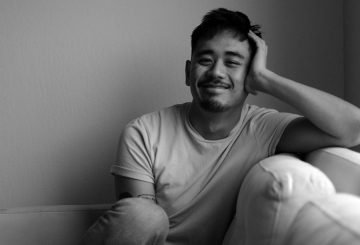
Anthony Veasna So’s posthumous debut

The sounds and smells of Phnom Penh

When Cambodia opened up
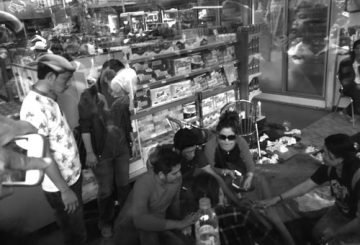
A killing remembered in Cambodia

Remembering Anthony Veasna So

Three female journalists shaped how the Vietnam War was understood

The Tonle Sap, a tributary of the Mekong, is dying

How did the Jarai survive colonialism, nationalism, even the Khmer Rouge?

A teacher in Cambodia believes dancing can help overcome trauma

Another Western account of Cambodian history fails to hit the mark