

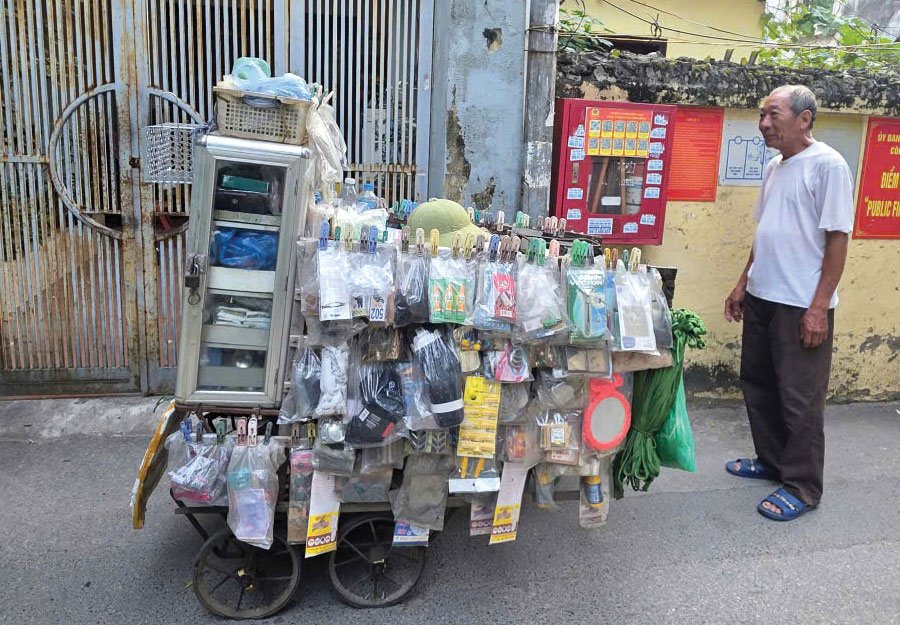
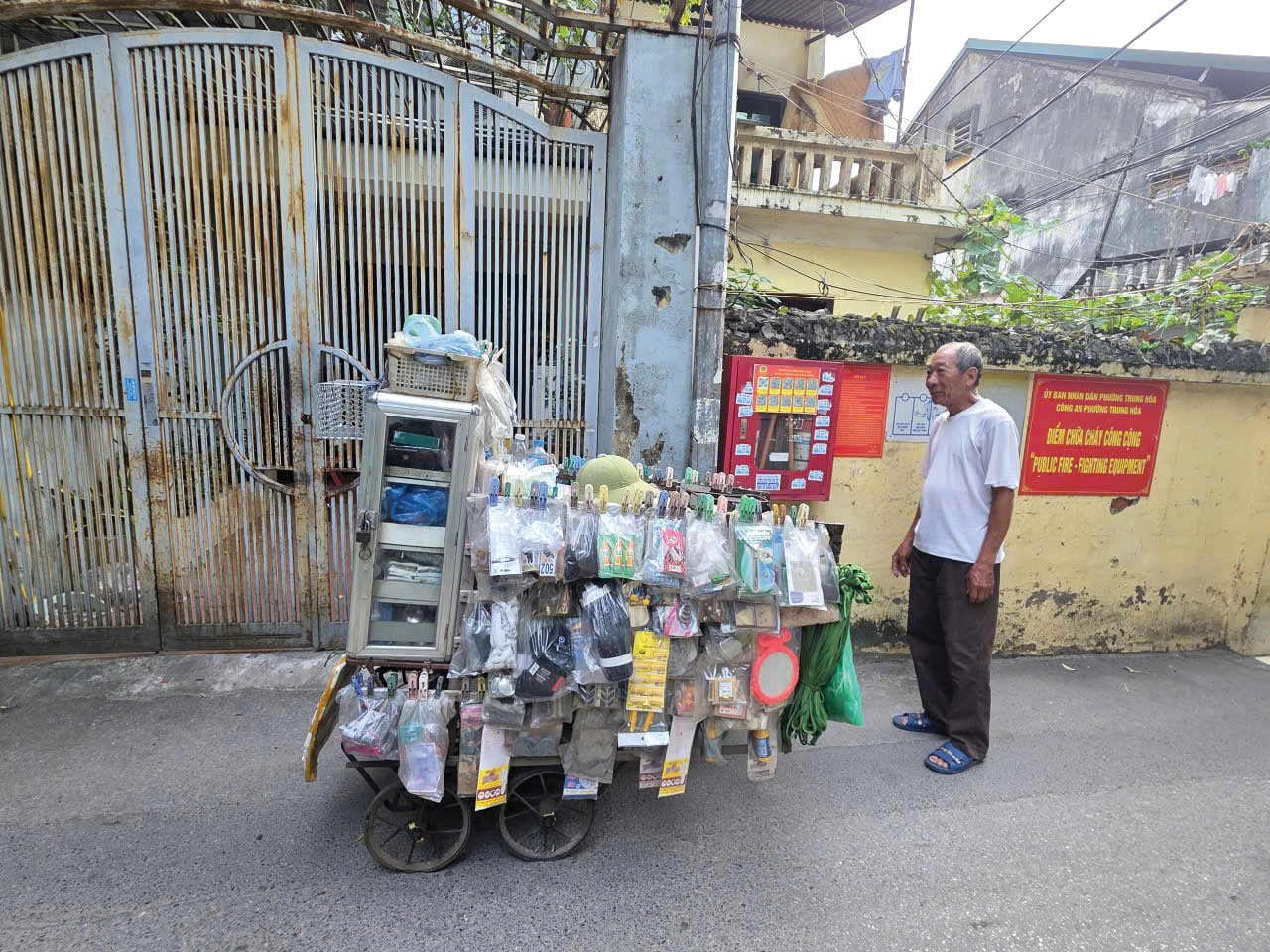
Days used to begin with a sort of music in Hanoi—the long, bending syllables of street vendors’ calls drifting through narrow alleyways.
“Xôi xéo đây (sticky rice with mung beans)…”
“Bánh giò nóng đây (steamed rice dumplings)…”
The city would wake to these voices and the clatter of pushcarts rolling over uneven pavements, carrying breakfasts to doorsteps. These were the sounds that informed me of daybreak.
Recently, something shifted. The street outside my home has grown quieter. The mornings are now punctuated less by human voices and more by the constant hum of motorbikes, the intermittent coughs of construction, and the distant drone of public loudspeakers. I find myself straining to hear something familiar, and it’s only later that I realise what’s missing. It’s not just the street vendors themselves, but the sense of memory embedded in sound—a city once navigated by listening as much as by sight.
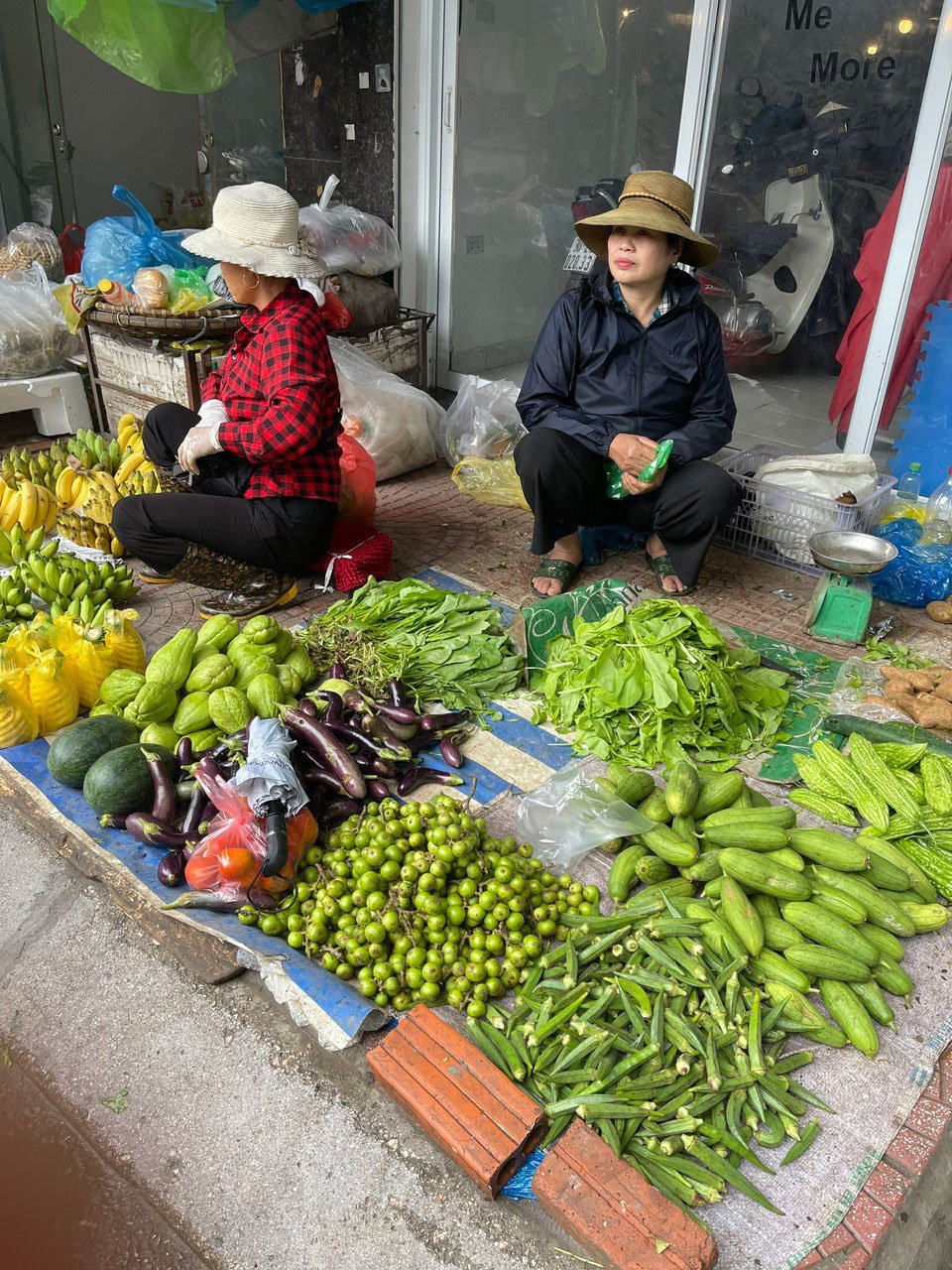
Street cries in Vietnam are more than calls of commerce; they form an urban soundscape—a way of sensing time, place, and season. Long before clocks or phone alarms dictated daily routines, these voices have kept time for our lives. Calls of “bánh khúc nóng (steamed rice cakes stuffed with mung beans)” signal early morning. The midday heat might carry casual shouts of “bánh mì đây (bread here)!” down narrow streets. By afternoon there’ll be familiar chants of “ve chai, đồng nát (scrap metal, junk)!” from scrap buyers, followed by the evening’s gentle calls for boiled corn—“bắp luộc nóng đây”. Each phrase has its own melody—drawn-out syllables, tones rising in question, gentle cadences—as if parts of a folk song learnt through repetition rather than formal instruction.
For the vendors, street cries serve as the most basic form of advertising. For customers, these calls represent accessibility: food and services arriving directly at one’s door, bypassing shops, menus, and online food delivery services. For the city, street cries mark the presence of Vietnam’s vast informal economy, sustaining tens of thousands of households. These are sounds of livelihood as much as of cultu
On a more intimate level, the voices of the vendors are stitched into our memories. Children who grew up amid these calls often remember their city not only by sight—the cramped alleys, the tangled wires—but by sound. Many Vietnamese who return after years abroad say the same thing: it’s not the skyline or the food that makes them feel like they’re home again—it’s hearing a distant street cry, floating in the air.
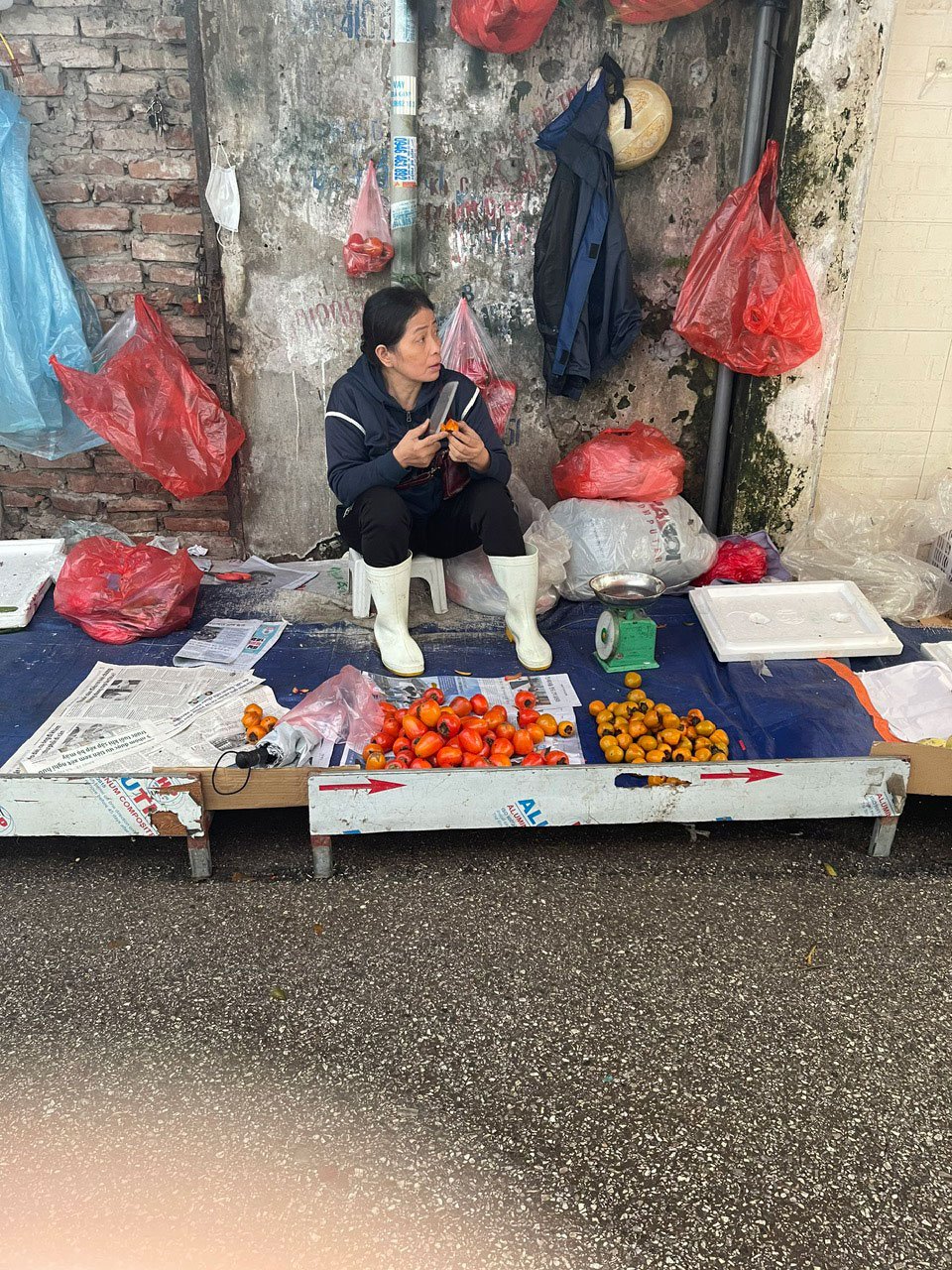
At first, I thought the calls were fading just because the city was getting quieter overall. Then, in mid-2025, a message began circulating online, first on Facebook, then in neighbourhood Zalo groups. There was a blurred image of what looked like an official notice, accompanied by the claim that, from August onwards, street vending and informal sidewalk markets would be banned nationwide.
The rumour spread quickly, and comment threads on social media were filled with worry and confusion. Emotional posts multiplied—people shared memories of familiar vendors and expressed concern for those who depended on these small sidewalk trades to make a living.
I searched for confirmation and found nothing. There was no blanket prohibition. Official information sources pointed only to Hanoi’s usual cycles of sidewalk management: short-term clearance campaigns aimed at traffic safety, fire prevention, or visual order. These were not permanent bans but recurring efforts to regulate public space. Yet the rumour resonated powerfully and would not die. Years of watching street stalls appear, disappear, and pop up again had left people with a sense of uncertainty. The vendors never knew how long a familiar corner would remain theirs, and their customers grew accustomed to finding their favourite stalls gone without warning. The false narrative of a ban gained traction because it tapped into a shared unease about an urban economy that has always operated without formal guarantees.
Many livelihoods in Vietnam rest on arrangements that shift with circumstances—changing regulations, neighbourhood enforcement patterns, and evolving ideas of what a ‘modern’ city should look like. The rumour wasn’t just misinformation; it was also a reflection of how fragile lives and opportunities feel in an environment where stability is rarely promised. It gave the impression that the street cries were vanishing completely. But, through my daily walks, I realised that the story was much more complicated.
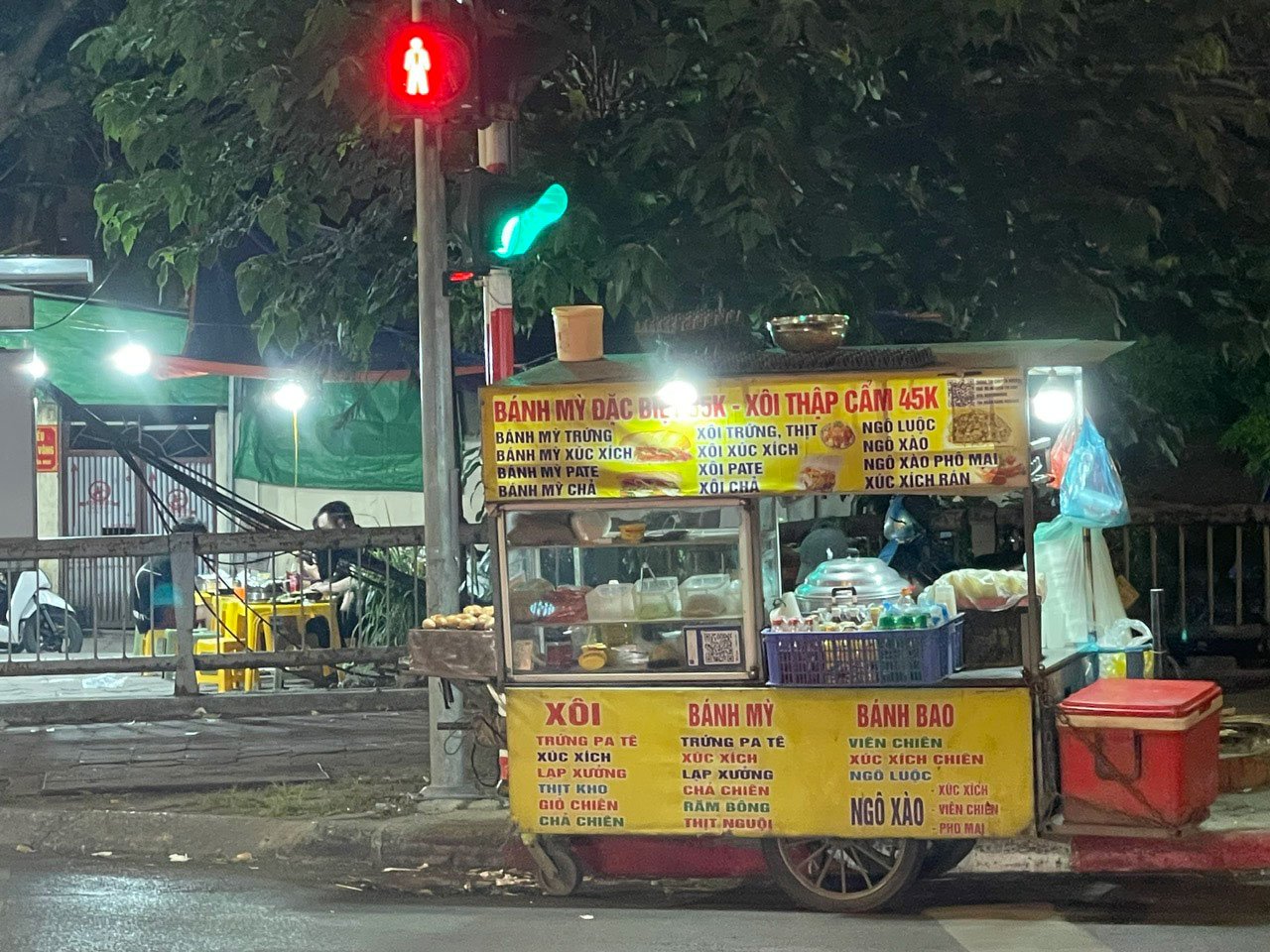
When I walk through Hanoi today, the street cries I hear most often no longer come from human throats. Instead, many vendors are relying on portable loudspeakers or small Bluetooth speakers strapped to carts, looping pre-recorded messages: “bánh mì nóng giòn đây (here’s some crispy hot bread)”, “ai bánh giò không (anyone for steamed dumpings)?” The sound of these recordings can carry farther and require less effort, making them practical solutions for vendors whose voices once strained to be heard above traffic. Yet something subtle is lost in this efficiency.
The individuality of the street cry—the rasp of a hoarse voice, the playful rise and fall of a familiar melody—fades when every call sounds the same. What used to sound like a personal greeting has now transformed into an anonymous broadcast, repeating without need for breath or variation.
This soundscape is also increasingly filtered, constrained, and challenged by new norms of urban life. Noise complaints circulate in residential forums and community chats, where quietness is framed as a marker of order and modernity. Silence, rather than sound, has come to signify progress. The cries of vendors—especially when amplified—are sometimes perceived as intrusions into spaces increasingly defined by expectations of ‘calm’ and ‘privacy’.
The street vendors also have to compete with new elements. Convenience stores behind sliding glass doors operate around the clock. Delivery apps hum quietly on smartphones, punctuated by notification chimes and automated voice alerts. TikTok advertisements replace chants once heard on the street. Commercial sounds haven’t disappeared—they’ve simply changed form, replacing human voices with algorithmic prompts.
Perhaps what’s vanishing aren’t the cries themselves, but the intimacy of human connection and exchange. Where vendors once traversed alleys, calling to potential customers throughout the neighbourhood, commerce now operates through taps and swipes. Instead of speaking to another human, purchases are made by pushing buttons that say “confirm order” on glossy smartphone screens.
Economic pressures have accelerated this shift. Rising living costs push many long-time vendors to abandon their precarious sidewalk trades, and younger family members prefer more stable employment—on factory floors, in office cubicles, or through delivery platforms. While one generation plied their trade with their bodies and voices, the next now moves through life with glowing screens in pockets. With these transitions, the informal language of the street thins out. The rhymed phrases, affectionate forms of address, and localised accents begin to fade.
Vietnam isn’t alone in this. Elsewhere in Southeast Asia, similar transformations echo. Although vendors in Manila still hawk pan de sal from bicycles, many now supplement their voices with whistles or horns. Ice cream carts selling sorbets announce themselves with familiar jingles—a nostalgic feature for generations raised on the promise of small, colourful treats. In parts of Jakarta, noodle sellers tapped bowls or struck gongs against their carts, performing a metallic symphony that has become increasingly muted as pushcarts are redirected away from redeveloped districts towards the city’s less visible outskirts.
The pattern repeats across the cities: street-based economics reorganised to accommodate expanding traffic flows, changing ideals of public space, and more regulated urban enterprises. Personal calls yield to standardised signals—or fall silent altogether.
Few regional cities match the sheer layering of voices that once threaded through Hanoi and Ho Chi Minh City—that complex weave of food sellers, scrap buyers, vegetable vendors, and itinerant repairmen. This richness makes the growing quiet feel even more pronounced. The thinning out of sound isn’t merely aesthetic; it signals the loss of the city’s most accessible expression of human activity.
The cries haven’t fully vanished. They’ve retreated into smaller streets, workers’ quarters, the edges of neighbourhoods rarely featured on postcards or tourism campaigns. Sometimes they emerge distorted, filtered through speakers to spare tired lungs.
One evening, as I sat typing the final lines of this essay, a cart rolled past my window. From its speaker came the warped echo of a call, stretched thin by tinny amplification and repetition: “ai bánh mì nóng đây (hot bread for sale)…”
I paused to listen. Was I catching a living sound still evolving with the city? Or was this a mere recording, a sound that carries farther but resonates less than the human voice that came before?
Phạm Thu Trang is a Hanoi-based writer whose work explores urban memory, everyday life, and cultural change in Vietnam
More from Mekong Review
-

A quarantine, and food, in Ho Chi Minh City
-

A poem by Leigh Doughty
-

Susann Pham’s Vietnam’s Dissidents is a bold piece of empirical work and a welcome and timely addition to the literature on contemporary Vietnam.
- Tags: Issue 42, Phạm Thu Trang, Vietnam