

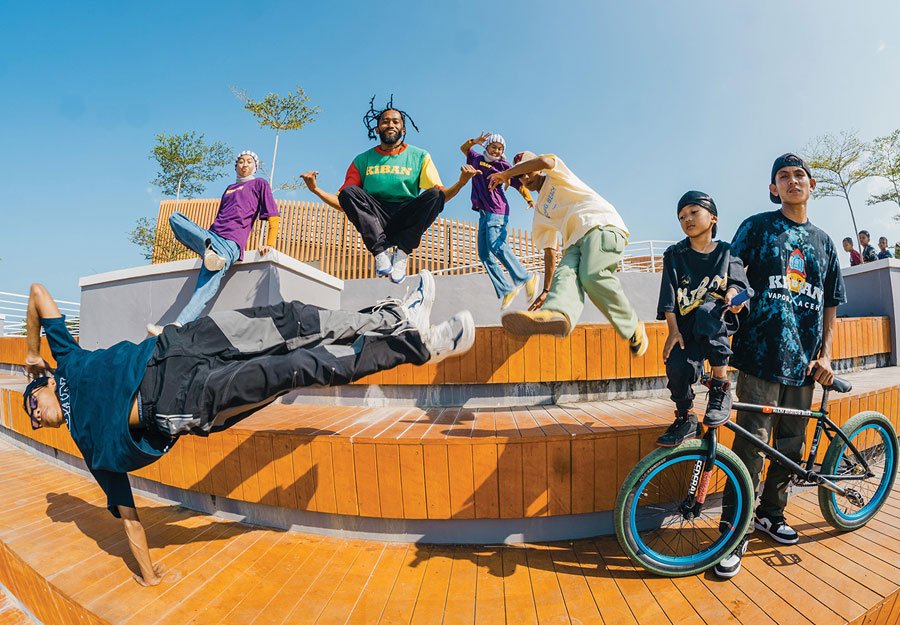
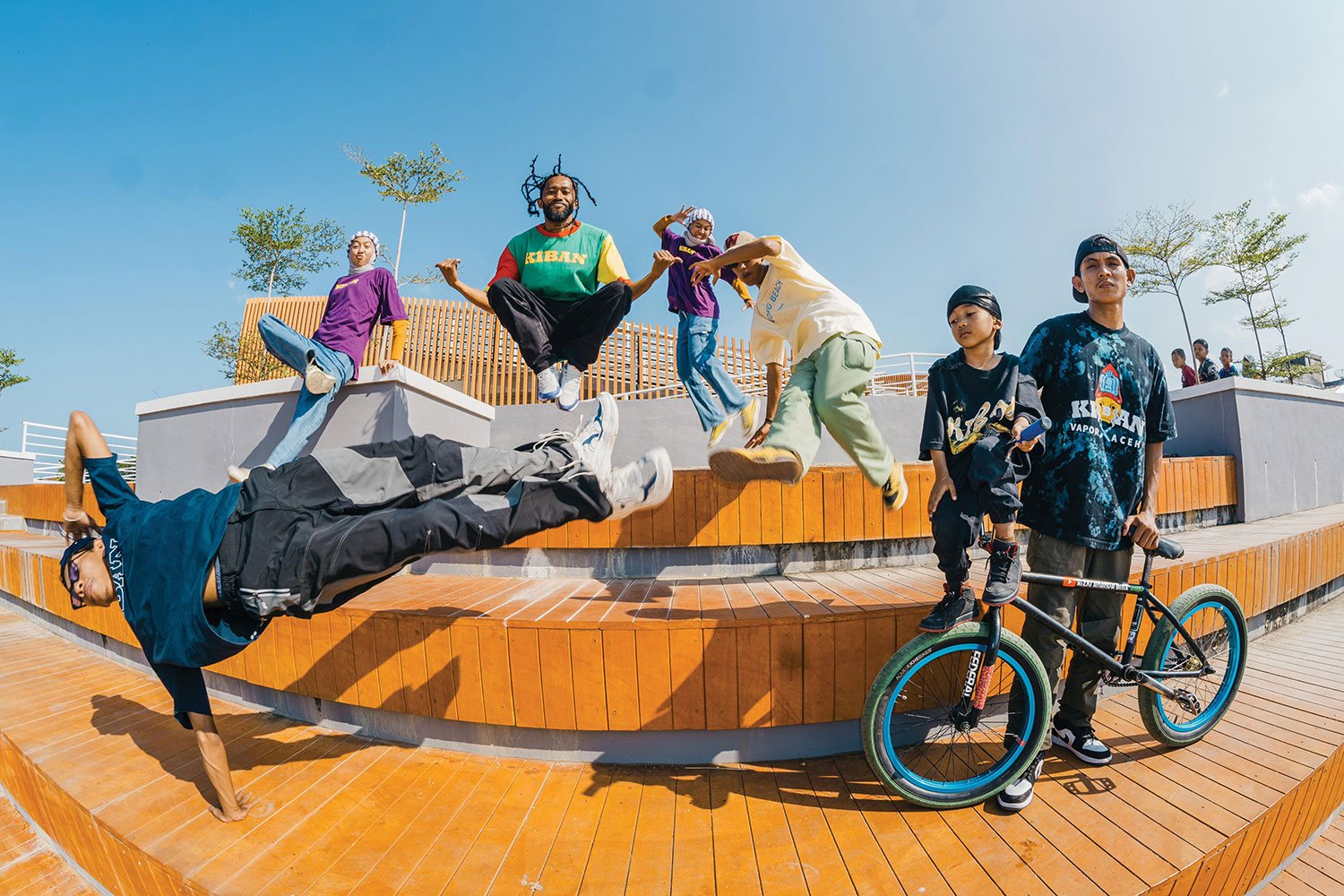
One night in July 2019, I found myself in a multi-purpose hall in Banda Aceh, the capital city of Aceh, Indonesia’s westernmost province. A group of DJs positioned themselves behind a long table on a stage as catchy beats pervaded the cool air, drowning out the sounds of raindrops hitting the roof. Rappers took turns to perform original songs, some in Acehnese, others in Indonesian, a few in English. Heads bopped in the mosh pit, arms swayed up and down. Earlier in the day, a chequered black-and-white mat had occupied the space where the crowd stood, bearing witness to dance battles between breakers. Makeshift walls near the doors greeted incoming visitors, and artists busied themselves with brushes and cans of spray paint. Rain wasn’t enough to dampen the spirits of the men and women who’d come from all over Aceh and beyond to revel in a common passion—hip-hop.
When hip-hop first made its rounds in Aceh in 2000, it wasn’t well-received by the wider community. In a place where religion and adat (customary practices) permeate social life, it was unsurprising that a foreign genre—often associated with swearing, gang violence, and the pursuit of material and sexual pleasure—would be frowned upon. Twenty-five years later, hip-hop has gained a more favourable position in society. Rappers, dancers, and beatboxers are now invited to perform for the masses, while graffiti artists work on walls in urban areas. The scene had started out and thrived without institutional support, but it has now forged a strong working relationship with the provincial government, paving the way for practitioners to be formally recognised. Every year, the hip-hop community attracts new faces eager to follow in the footsteps of their predecessors while paying homage to the region’s artistic tradition.
More from Mekong Review
-

Magical realism meets gritty realism
-

Indonesia in the 1960s, through the prism of post-colonialism
-

In a short time wearing face masks became the norm in Ubud
- Tags: Ilya Katrinnada, Indonesia, Issue 42, music