

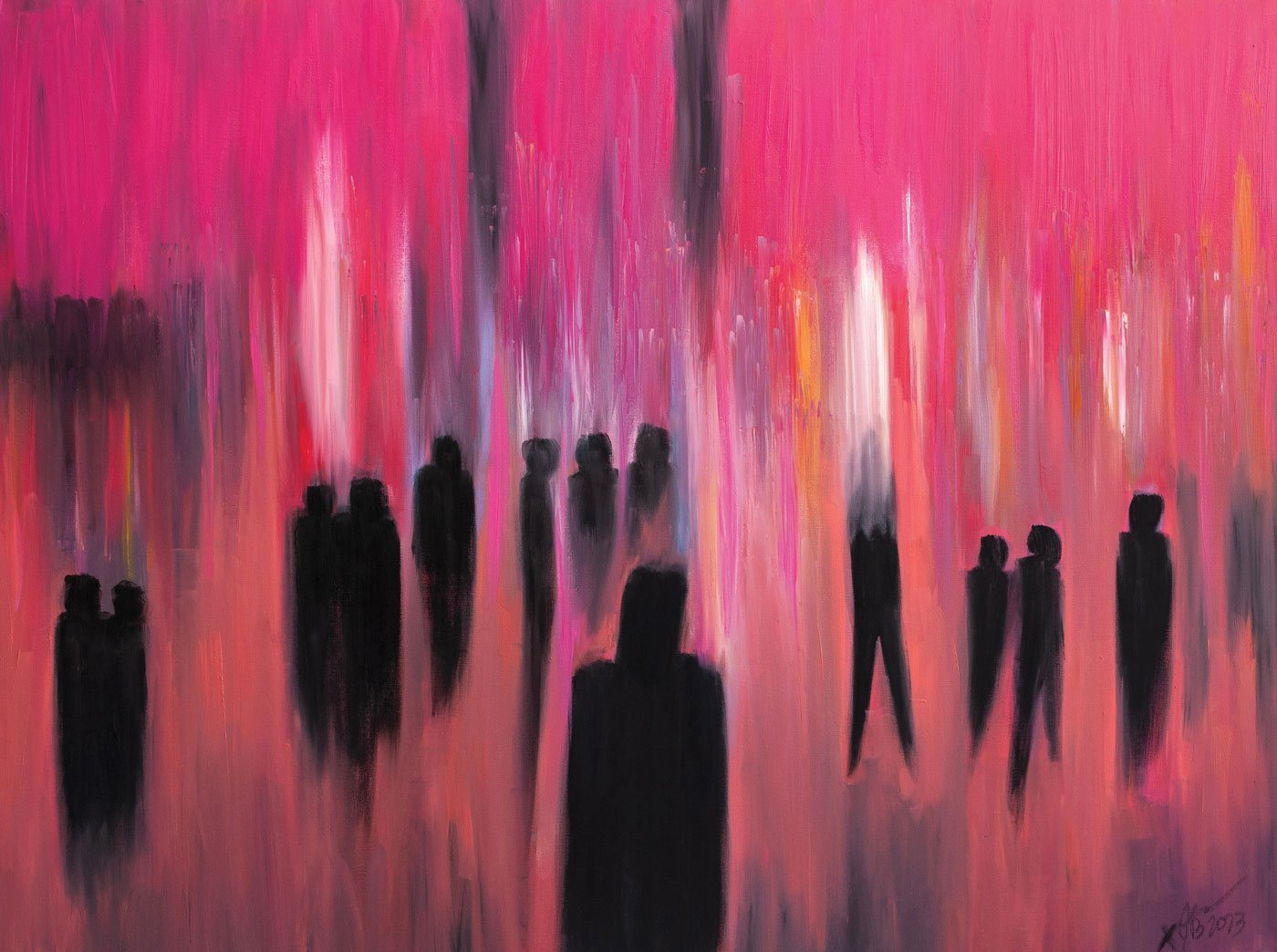
It’s a grey afternoon in early March, and the painting pinned to the wall in Xyza Cruz Bacani’s studio in Queens, New York, thrums with melancholy. Featureless human figures stretch towards the pale spectre of a city skyline, bleeding into a bright pink sky. By the time the painting is completed a month later, its mood has lifted. Brightness undergirds the forms; assured strokes of gold and white and blue convey hope. Resilience. The painting is titled ‘Homesick’, and on an Instagram post Bacani stresses how complex such an emotion is. “Even in the face of the adversary,” she writes, “light could emerge.” But today, on this blustery winter day, the unfinished painting has a different feel. It’s a process, after all, this accumulation of colour to shift tone and meaning. If a photo captures a moment, oil painting captures life itself: in all its frustrating slowness, in all its waiting for things to change, to improve. In the trust one must hold that the process will work.
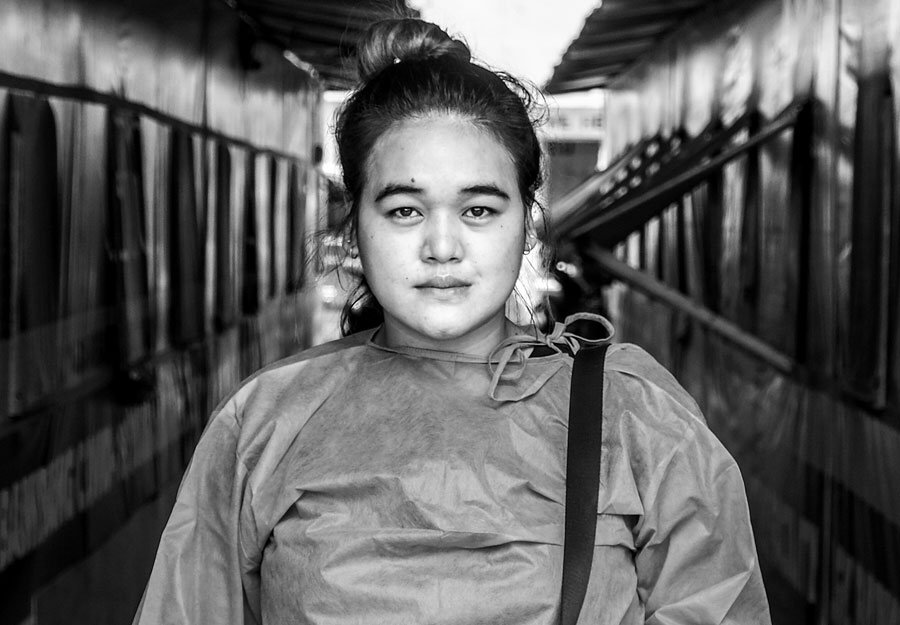
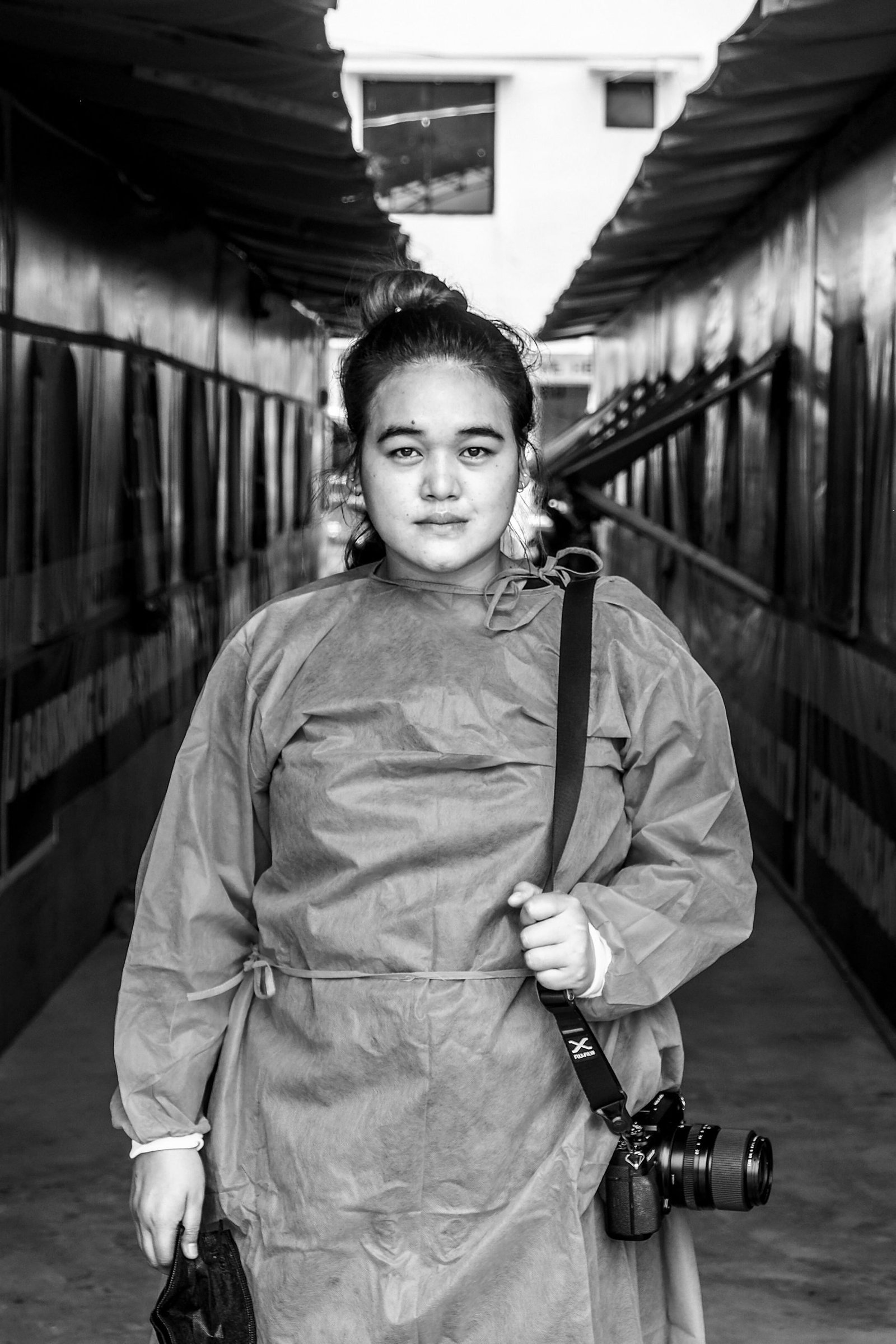
For much of her adult life, Bacani has been known for her photojournalism. Born in the Philippines, she moved to Hong Kong at the age of nineteen to work with her mother, who had by then been employed as an overseas domestic worker for a decade. Bacani began photographing Hong Kong’s streets and then more intimate spaces: her mother at home and work, her employer and her family, other domestic workers across the city. The work culminated in her 2018 book We Are Like Air, an extraordinary documentation of her mother’s life as well as that of other domestic workers. Along the way, Bacani garnered a slew of awards and fellowships from international institutions of the highest calibre. In the ensuing years, Bacani has extended her practice considerably. She photographed the Umbrella Movement in Hong Kong, reported on the human impacts of palm oil in Indonesia and embedded herself among communities in Mindanao pushing on amid a decades-long conflict. In New York, where she has been primarily based since receiving a Magnum Foundation fellowship in 2015, Bacani befriended members of the Bangladeshi American community, starting on a project that would span nearly a decade and counting. Her long-form approach is not so different, in the end, from painting. Such projects move slowly and take trust. There is melancholy, conflict, homesickness, loss. But always and ultimately, the humanity and resilience of her subjects shine through, drawn out by Bacani’s practised eye. By her patience.
More from Mekong Review
-

Americans celebrate the end of the Trump presidency
-

Poetry from Lawdenmarc Decamora
-

Poetry from Tilde Acuña
- Tags: Abby Seiff, Philippines, Xyza Cruz Bacani