

Bangkok Is Ringing: Sound, Process, and Constraint
Benjamin Tausig
Oxford University Press: 2019
.
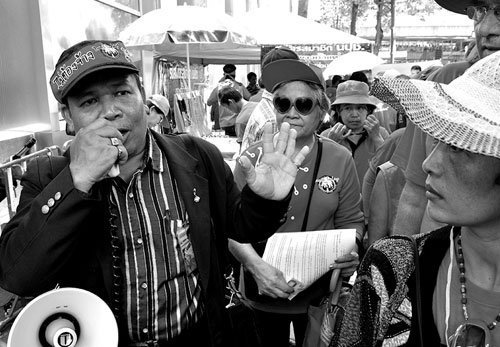
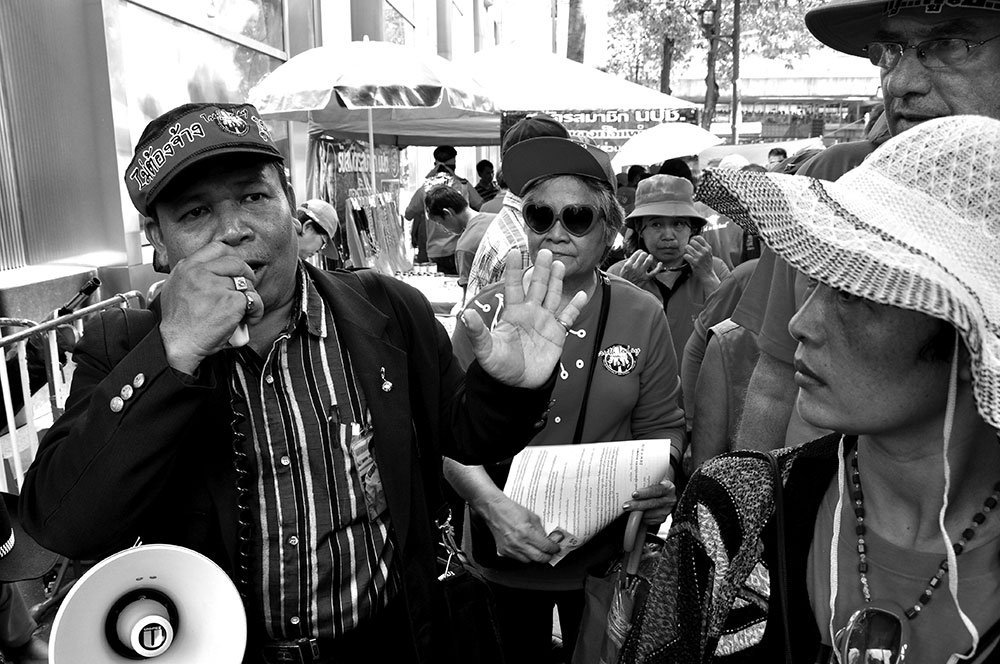
Benjamin Tausig arrived in Bangkok two months before the army’s brutal dispersal of the Red Shirts on 19 May 2010. Though he was present during the awful climax of the protest, his account, Bangkok Is Ringing, tells the story of the aftermath, when the Red Shirts are defeated and confused. The author is interested in sound — the music on the protest stages, but also the aural experience of being there. He begins with an image of a traffic jam, of going nowhere. The swagger of the earlier protests has vanished. The remaining protesters are keen to present themselves as orderly (riaproi), worthy of pity (na songsan) and examples of civility. Only occasionally does the frustration show. A man yells “We demand freedom!” through a cheap megaphone at air-conditioned cars speeding past with the windows firmly rolled up.
Tausig, an associate professor in music at Stony Brook University, describes his book as “an ethnographic study of the mediated sonic spaces of the Red Shirt protests”. Although he writes beautifully, when addressing theory he adopts an academic dialect, which is often not clear. This is what I think he is arguing: some sound theorists treat sound as a thing in itself, a matter of decibels, pitch and so on, with its own intrinsic power. Tausig dissents. Sound has to be consumed to have any effect. Between the production and consumption there are media, including things like whistles and megaphones. Such media are subject not only to physical limits and barriers but also to political controls. The government suppressed the network of radio stations through which the Red Shirts could communicate nationwide.
Tausig presents the “mediated sonic spaces of the Red Shirt protests” through a collage of about thirty themes, ranging from a single paragraph to twenty pages. The shorter ones cover things such as whistles, car stereos and spontaneous chants. The mid-length subjects are not only sonic but also visual, and sensual in other ways (heat, smell, touch). Besides being a sound man, Tausig is a very good photographer and a dab hand at description. These little dramas include an army psy-op unit that counters protest music with calming melodies and nationalist songs, and a protester who sits at the site where a Japanese journalist died — costumed, white-faced, mute, meditating.
More from Mekong Review
-

Prabda Yoon shifts his absurdist lens to the body
-

Examining public and private violence in Thailand
-

The past is ever-present in Bangkok’s neighbourhoods
- Tags: Benjamin Tausig, Chris Baker, Issue 15, Thailand