

Be a good girl. Cool your head.” Papa kisses my forehead goodbye. It feels like a curse instead of a blessing. I’m only eleven but I know that I’ll be an angry child, a pest in a field, ravaging it with disease, an unstable and unlovable mess until I find a way to get my hunger curbed.
He hands me my backpack. “My child, be the best child. Not a soul will hurt you, I promise.” He holds my hands tight and I fear something terrible is about to happen. The roof will cave in, the windows will shatter, a typhoon will drown us. “Eat well, okay?” Papa says. I nod and don’t say a word.
Papa calls for me to get on the motorcycle. “Come ride the bike and let’s get snacks. I’ll get you a lollipop, some fish crackers, and your favourite chocolate. Get your slippers. The ones for outdoors.”
I ask him, “Can we go farther this time? Not just the store, but to the bigger outside?” He says it’s not time. “Let’s get snacks and we’ll be back.” We ride and arrive at the sari-sari store—it’s really just the neighbour’s house, where they sell soap, sugar, chips, chocolates, sodas, and top-up money for prepaid SIM cards. I can’t reach the counter, so I stare at the rocks in their small yard. Once Papa finishes paying, I scramble back to the motorcycle. I feel bad that he uses his money to buy me so many sweets.
“Papa, OK lang po ba kayo? (Papa, are you okay?)” I can’t recall if he ever bought anything for himself. Maybe there were cigarettes.
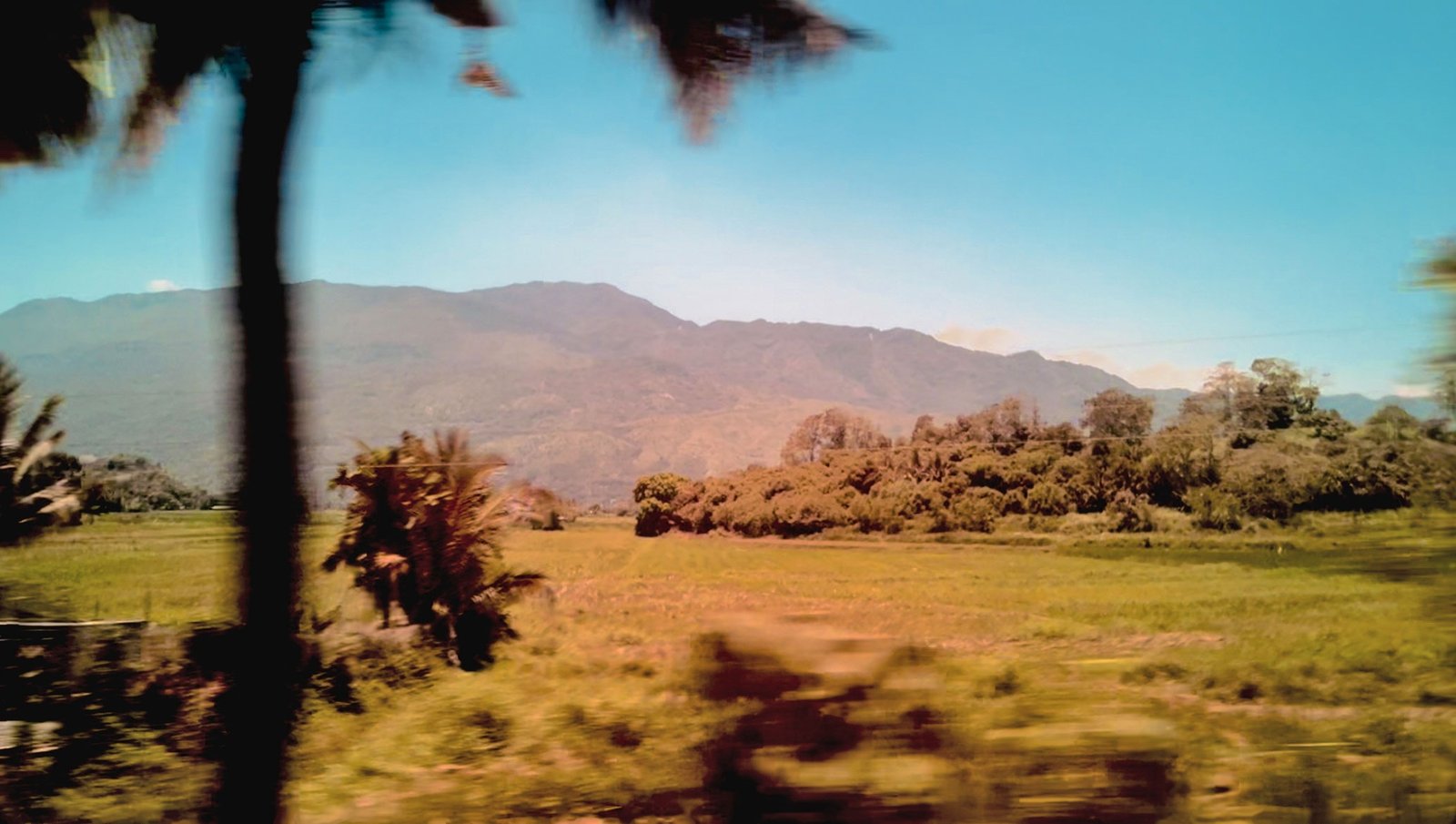
We ride a bit longer, zooming by the rice fields. The amber haze, the flowers, the carabaos, the best feeling of being close to the ground but feeling like I’m flying. I observe the blurring dance of the paddies as I hug my Papa tightly to stay on the seat, riding over a bumpy, unpaved road. I blink to dry my eyes.
Despite the mundanity of being a salarywoman, I think tapping away on a keyboard to magically conjure nature into spreadsheets is a transformative power: water flowing between levees in rice fields, the humid exhale of tropical soil, and the sweat of the parents who dedicate their bodies and land to children who have left them for a better future in the cities.
Column A: province name. Column B: temperature. Column C: GHG flux. Column D: water level. Column E: yield per hectare. The Philippines laid out under my hands. Life under control. Money for farmers. A way back home.
The cells hypnotise me. My back will ache and I’ll be hungry at the end of these twelve-hour shifts managing agricultural datasets, but I’ll do it all over again. I do it because I miss the golden rice fields; I miss home. Today, the cool blue of the screen burns my retinas, and I feel a teardrop fall on the back of my right hand. I keep my eyes closed for a second, enjoy the tear on my cheek, and breathe deep.
The harsh cold of the air conditioning blasts towards my desk. On one screen I receive news that Papa is in the hospital for his liver, but he is recovering. On the other, I learn that I’ll be going on a business trip to the Philippines. I can go home. It’s as if Papa prayed for it. Maybe I can bring him some Japanese remedies, high-quality medicine.
A couple weeks later, I’m fighting to finish my onigiri at lunch. I eat only three or five grains of rice at once or I cannot swallow. I haven’t scheduled my business trip yet. My head feels heavy when I look out of the window and see the city. I barely notice time passing, until it’s been two months since the news of the hospital. I’ve been busy with my job, hiking Japanese mountains, going on business trips to rice fields in Vietnam—all the while collecting stories to tell Papa when I finally see him. I text my grandfather: “Papa, OK lang po ba kayo?” I get no response.
The next day, I stare into my bento box. I line up six rice grains and make a small man: head, torso, arms, legs. On one screen, my boss asks if I’m joining the meeting. On another, I finally get a huge push to book my flight. Who knew it would be to honour Papa’s passing?
I dream that I’m an auditor in an open field. The farmers are fathers. They aren’t my own father, but they look deep into my soul. “Anak, why haven’t you been home?”
I slip up and call them ‘father’, too. “Tay, OK lang po ba kayo?” They look confused. I’m a businesswoman to them, asking them to add labour and technology to their traditions.
Blank stares in an open field. How do farmers tell time? Do they think of life as a series of harvests? A way to help others instead of themselves? A farmer’s work is hopeful. I, too, strive to become someone breaking my back to harvest something better. A way to be home with my loved ones.
When I wake from my dream, I learn that I’ll be missing everything. Papa’s funeral will take place a full week before my arrival in the Philippines for work, and the burial a week after I’ve returned to Tokyo.
I’m on a video call and I see Papa. A white coffin lowers into the ground. He is buried back home and I’m not there. Yet, I feel a wave of warmth and love, knowing my memories with him will continue to teach me that the toils of everyday life will help me reap the rewards of knowledge and new ambitions.
The whole family gets together on a phone call. I understand now why Papa always told me to eat well, feeding me what I wanted without restriction. Eating means I feel well enough to feed myself. Eating means I can digest the food given to me. Eating means I have something to live for.
The sounds of family and the deafening wind at the Filipino cemetery pierce my headphones. How lovely it is that we are all together now. I hope my energy goes into work that will lead to others eating well.
I close my tired eyes and gradually become immersed in a warm glow. I think of the blurring shimmers of vast fields as I hug Papa tightly, holding on fiercely as we ride the bumpy, unpaved road. This dream again. I hear water rushing, then feel a thirst for it at the back of my throat. It’s late at night, and I haven’t had a single drop of water all day. I’m back at my office in Tokyo, holding back a flood of tears. A thirst to be fed and a thirst to feed.
Every now and then I feel like an exported sack of rice, so removed from the mud in which I’ve grown up that I forget the moments of stress, drainage, and pouring rain. At the same time, I nurture others, prevent sickness, and make space for the creation of memories—at dining tables, across meals, lunches, and sunny breakfasts. Every day contributes to the seasonal harvest.

More from Mekong Review
-

Poetry from Lawdenmarc Decamora
-

A poem by Alyza Taguilaso
-
Poetry from Tilde Acuña
- Tags: Alyssa Castillo Yap, Issue 43, Philippines, RMIT
