


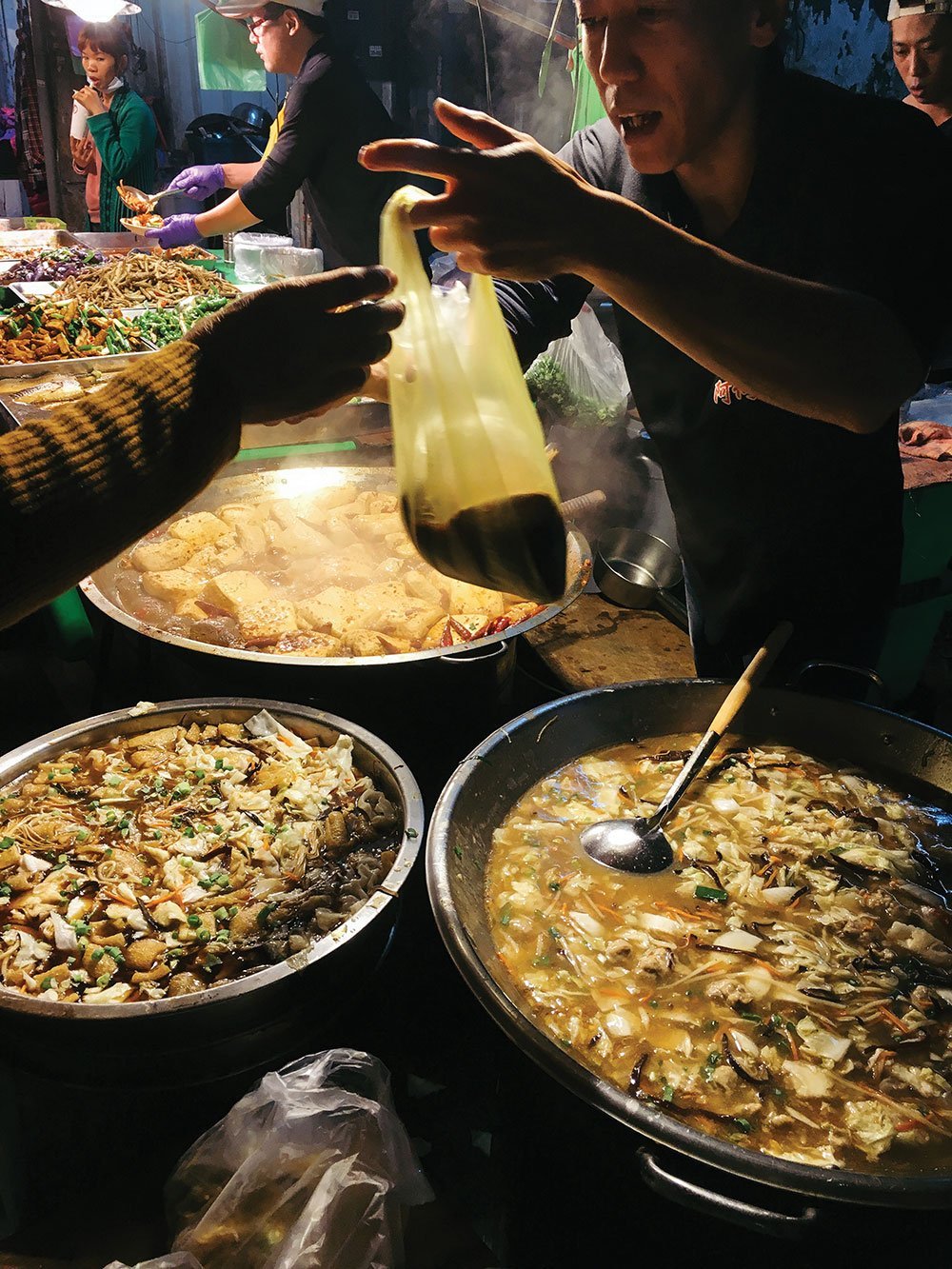
The mere thought of some places conjures up certain food memories for me. Taiwan is a case in point. Walking down a side street in the less gentrified part of the capital city, Taipei, one will stumble upon tiny family-run food stalls that have been in business for decades. There’s beef shank soup with hand-pulled noodles and scallion pancakes shattering into flaky shards at gentle tugs—dishes that illustrate delicious collisions born out of Taiwan’s diaspora history. But the tiny island nation is also famous for pioneering culinary trends that get exported abroad. The last time I visited in 2019, brown sugar boba milk tea with gold foil and cheesy matcha cream puffs were in high demand.
My favourite foods are those with winding, intimate histories—dishes that have nourished and brought comfort to my forebears against the backdrop of a tenuous post-war era and tumultuous politics.
American aid to Taiwan just after the Second World War played a vital role in establishing the wheat flour industry and even reshaping the Taiwanese palate. Waves of immigrants, from regions of mainland China where wheat thrived in temperate and cold weather, further reinforced a growing appetite for floury foods. Today, the prominence of wheat in the quotidian life of Taiwanese people is unmistakable, from the crispy you tiao (savoury fried dough sticks) served with soy milk for breakfast, to the xiao long bao (soup dumplings) that one never seems to tire of for dinner.
More from Mekong Review
-

Chinese - and Taiwanese - identity in the New World
-

Ducky Tse was an established photographer in Hong Kong when, at the age of fifty, he decided to uproot and relocate to Taiwan. He bought a van and refurbished it, driving it around the country. Through his photographs, he reflects on a new chapter of his life.
-

Poetry from John Brixter Tino
- Tags: Issue 35, Kang-Chun Cheng, Taiwan