


Welcome to the Mekong Review Weekly, our weekly musing on politics, arts, culture and anything else to have caught our attention in the previous seven days. We welcome submissions and ideas and look forward to sparking lively discussions.
Thoughts, tips and comments welcome. Reach out to us on email: weekly@mekongreview.com or Twitter: @MekongReview
To sign up for the newsletter, click here
c
The ASEAN Way?
c
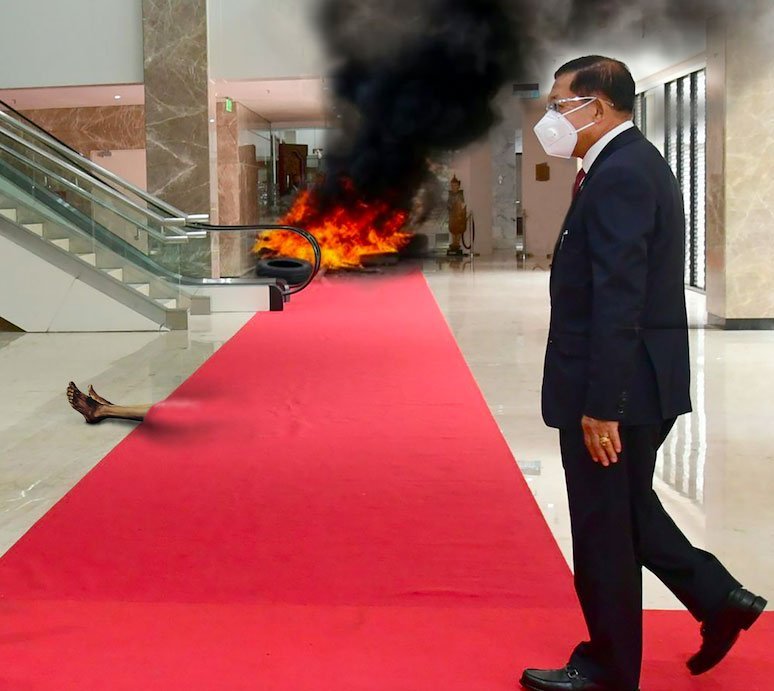
Southeast Asian leaders gathered in Jakarta last Saturday for an emergency summit on Myanmar. Famed for its principle of non-interference, the Association of Southeast Asian Nation’s effort to come to any sort of consensus on the situation in another country is striking. As such, the bloc was bound to disappoint. The five-point consensus released Saturday called for immediate cessation of violence, but failed to call for the release of political prisoners. Without a concrete timetable or consequences, what value could such a statement hold?
Then, too, the thorny question of who was invited to attend—the junta—and who was not: representatives of the democratically elected government, deposed on 1 February, and many of them jailed.
The summit marked the first trip abroad for General Min Aung Hlaing, the army chief who seized power from the civilian government and has overseen a ruthless military campaign against those who have been protesting ever since. Was his presence a necessity—the only chance to negotiate a possible end to military violence that has killed more than 700 people? Or was it a whitewashing?
‘It’s a process, not an event,’ a weary Marty Natalegawa, former foreign minister of Indonesia and a prominent ASEAN hand, said days later at a Foreign Correspondents’ Club of Thailand panel. ‘At least with the summit now there is no going back. ASEAN is out there and publicly connecting itself to be part of the solution in the development of Myanmar … there is no turning back.’
For his part, Marty did not mince words, likening the summit to ‘a red carpet for the junta,’ and urging that ASEAN ‘be seen, not only to be doing, but to be seen and engaged with the National Unity Government, with the Civil Disobedience Movement … because a dialogue must be inclusive in nature.’
But, with the consensus, he stressed: ‘We are better today than we were last week. We have a script and ASEAN has come forward, and ASEAN deserves recognition and support from the international community.’
If the five-point consensus fell short of an ideal, the far bigger question is what happens in the days and weeks ahead. Myanmar netizens continue to circulate videos purporting to show soldiers abducting civilians or attacking them. On Monday, the military bombed Kachin villages. On Tuesday, it bombed Karen villages. With brave protesters still hitting the streets daily, and Min Aung Hlaing saying he will consider the consensus only once ‘stability’ is reached, the chasm between ASEAN’s minimal expectations and Myanmar’s reality is already rapidly widening. So which way will ASEAN go now?

FOR OUR READERS
Click here and enter the code MAY21 to get your offer. Offer expires on 26 May.
Notebook: Empty Delhi
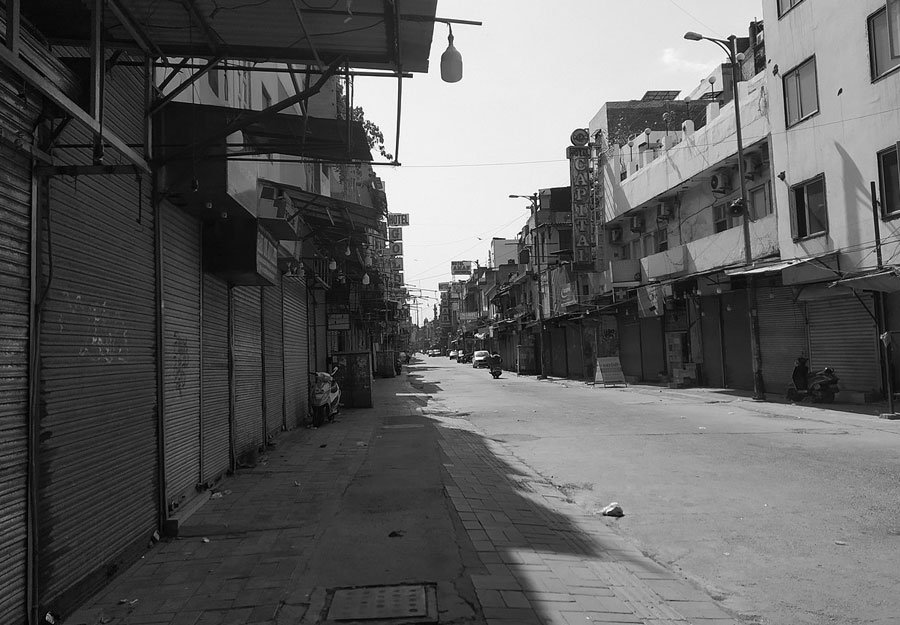
These days it feels surreal to wake up in Delhi. Nothing that was synonymous with a typical Delhi morning exists: no irate car horns sound in the street. No Bollywood film songs play in chai stalls. No two-wheelers or three-wheelers weave in and out of traffic. The streets are empty. The shops and stalls are shuttered. The hawkers’ carts stand abandoned. Even the stray dogs go about with their barks stuck in their throats. The sky stretches clear and blue as far as the eye can see. There is no smog to invade your nose or clutch at your throat or poke in your eyes. Only the birds seem to delight in that. As they fly about squawking, you wonder if they are cackling at the sight of humans locked up in their homes below.
The last time I felt like this in Delhi was way back in 1984 when Prime Minister Indira Gandhi was assassinated by two Sikh bodyguards and vengeful goons took to the streets to teach Delhi’s Sikhs a lesson. Back then, the empty streets spoke of fear and apathy. The Sikhs’s fear of being hunted and the apathy of the rest of the city unwilling to come to their aid. That was when I realised that cities are not meant to be empty or quiet. When they are, it means something is wrong. In the case of Delhi, you can add blue skies to this scenario. A quiet Delhi under clear skies is a sure sign of catastrophe.
Today the catastrophe can be seen in city hospitals that have run out of available beds and oxygen cylinders and in crematoriums that are unable to keep up with the number of dead bodies piling up despite working day and night. It is at the city’s psyche, however, that the second wave of Covid-19 has struck most tellingly…
Vikram Kapur on India’s horrifying second wave, as seen from the heart of Delhi. Read his full essay here
See it
Print For Crisis is selling prints by some of Southeast Asia’s top photographers to raise money for groups and individuals defending free expression in Myanmar. View the full selection here.

More from Mekong Review
-

Who makes up Myanmar’s rightful government? The officials elected by the public? Or those who are currently ruling, having deposed the civilian leadership in the 1 February coup?
-

Five years ago last Saturday, Kem Ley was gunned down in broad daylight at a Phnom Penh gas station.
-

In May 2018, the mood in Malaysia was jubilant. One of the greatest get-out-the-vote drives in history had resulted in an overthrow of a party that had ruled Malaysia for 61 years.
- Tags: Newsletter