


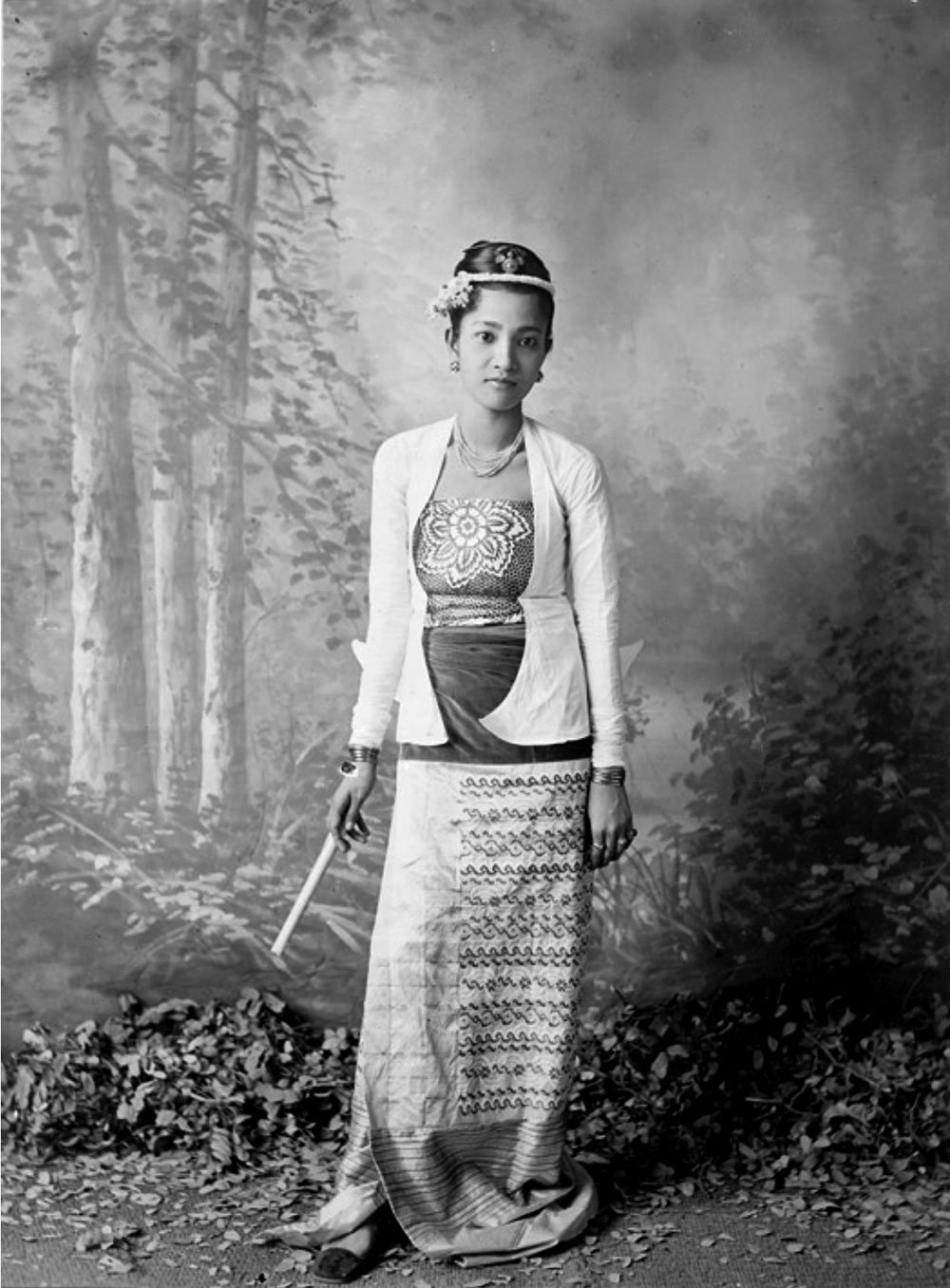
The longyi — known as paso for men and htamein for women — is the predominant article of clothing for everyone in Myanmar, from politicians to day labourers. It comes in a dizzying variety of fabrics, colours and patterns, and, while it is not the most secure of garments (one of the principal gags of Burmese comedy is someone’s longyi falling down when they get angry), it is functional and flattering.
The versatile longyi can be used as a towel when showering, as a pillow on a hard train seat, or as a blanket on those rare nights when the temperature dips below 15 degrees Celsius. The cheapest versions are made of cotton and cost US$2, while the most luxurious are made of embroidered silk and cost well over US$100. Different patterns are associated with different ethnic groups, but Burmese schoolchildren are all required to wear an identical uniform of white shirt and forest-green longyi to class every day.
The garment’s history has mirrored the immense social and political changes that have rocked the country over the past two centuries. W Somerset Maugham, visiting Yangon (then Rangoon) in 1923, remarked, “It seems to me so obvious for the Burman to wear a coloured paso that only by a deliberate effort can I make the observation that he is not dressed as I am.”
More from Mekong Review
-

Poetry from David Chandler
-
Poetry from Rory Harris
-
Poetry from Maung Day
- Tags: Christian Gilberti, Issue 15, Myanmar