


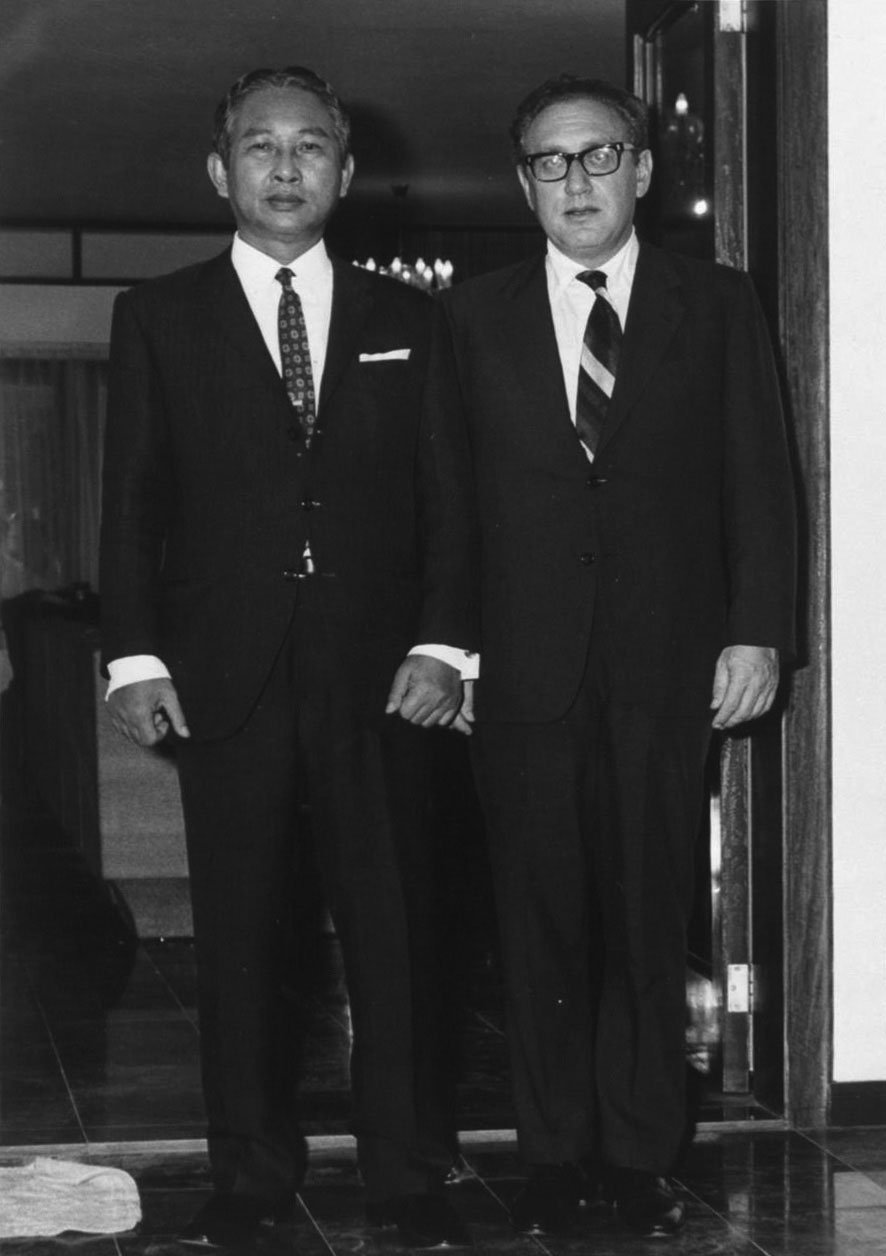
Much has been said and written in recent months about the United States’ role in the 18 March 1970 coup that overthrew the Cambodian head of state Norodom Sihanouk, engulfed the country in the Vietnam War and paved the way for the Khmer Rouge genocide. I do not wish to disrespect the opinions of others, but having dedicated well over ten years of research to this topic, I feel that the historical record would be poorer were I not to share some of my findings.
At the outset, what needs to be understood is that in the US, unlike in most Western countries, there are many institutions involved in foreign affairs, and not always in cooperation with each other. For instance, every branch of the armed services has an intelligence arm, its own small CIA, unknown to the public and with its own, almost unlimited, operational funds.
These intelligence arms operate independently of the CIA and, as happened in Vietnam, Cambodia and Laos, they report only to their superiors in the armed services. The State Department, which should be the entity in which power resides in matters pertinent to foreign affairs, is often overruled — as it was, in particular, during the Nixon–Kissinger regime.
More from Mekong Review
-

Poetry from David Chandler
-
Remembering the founder of the Cambodia Daily
-
Poetry from Rory Harris