

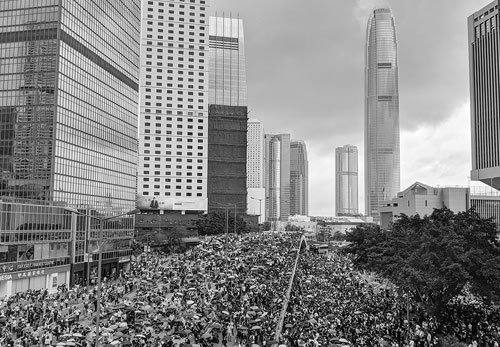
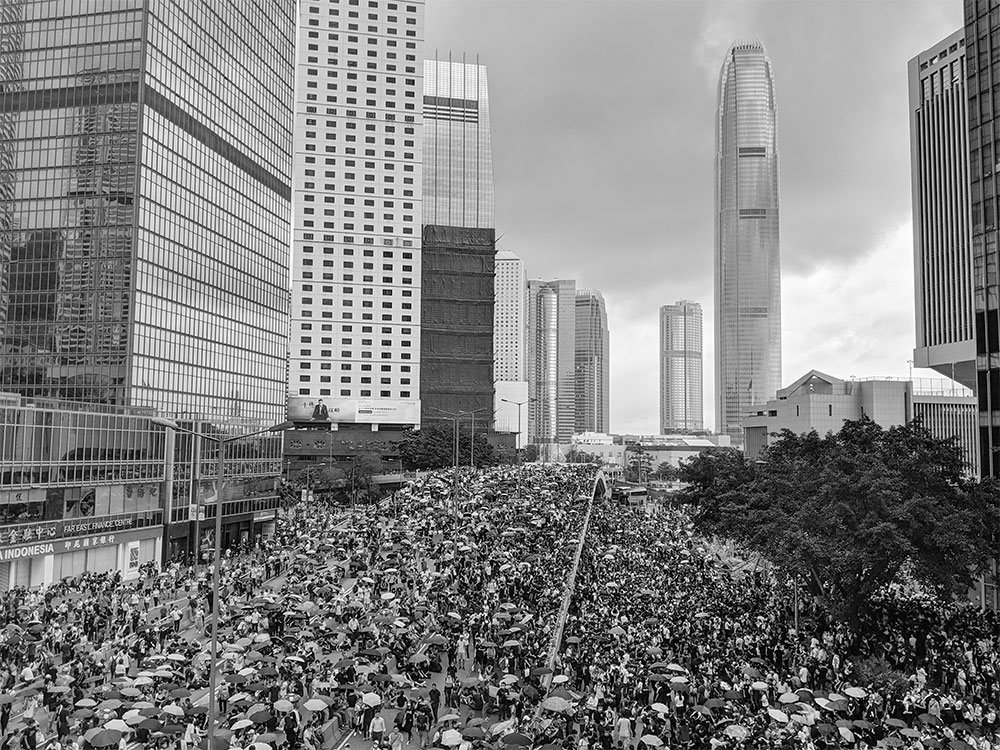
The financial services industry in Hong Kong is largely split between Hongkongers, mainlanders and Western expats. In the initial weeks of the protests, there was a general feeling of support for the movement as a means of defeating a poorly conceived bill. Within this group, Hongkongers were most enthusiastic about the protest and saw it as a make or break moment for the city’s democracy movement. Many professionals even joined the demonstrations.
The mainlanders were split. Many young professionals had mixed feelings about the protest, as the Hongkongers have long been perceived as arrogant and racist against mainlanders. Initially, they supported the protest’s aims, but the support was fragile at best. Others harboured little sympathy and saw people who went on unsanctioned marches as lawbreakers. The day after the 12 June clashes, a mainland banker at my firm remarked: “The police were right to clear out the protesters. We learned from 2014 that you need to remove these people quickly or they’ll occupy the area for months.” I pointed out that Hong Kong’s semi-democratic electoral system gives an insufficient voice for people to air their grievances, making protests their only recourse. “They broke the law, and the police were right to beat and remove them,” she returned. End of conversation.
The expats have largely stayed above the fray, espousing neutrality and appealing for calm and restraint. A British banker said, with typical understatement, he “hoped that there could be a reasonable path to de-escalation”. Another foreign banker was quoted in the press saying: “Ultimately, we expats only start to care when we cannot get our lattes and go to yoga class.” While hyperbolic, the statement was true. The expats have largely stayed out of the protests.
As the protesters adopted ever more violent and disruptive tactics, however, the financial community began to wonder if Hong Kong’s status as Asia’s gateway to China and pre-eminent financial centre was under threat. From July through August, several general strikes paralysed Hong Kong, while flash mob protests made it near impossible to conduct business. Attendance at investment conferences has dropped significantly, as foreign investors skip Hong Kong during their Asia tours.
More from Mekong Review
-

A poem by Jennifer Eagleton
-

A poem by Leung Rachel Ka Yin
-

The history of mass protest in Hong Kong