

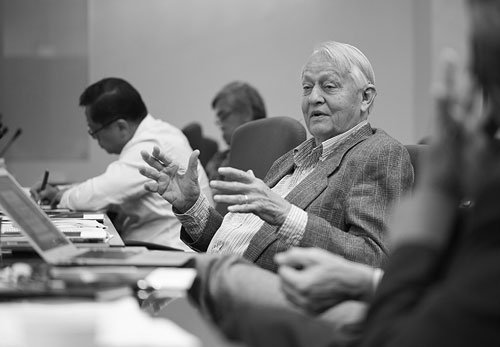
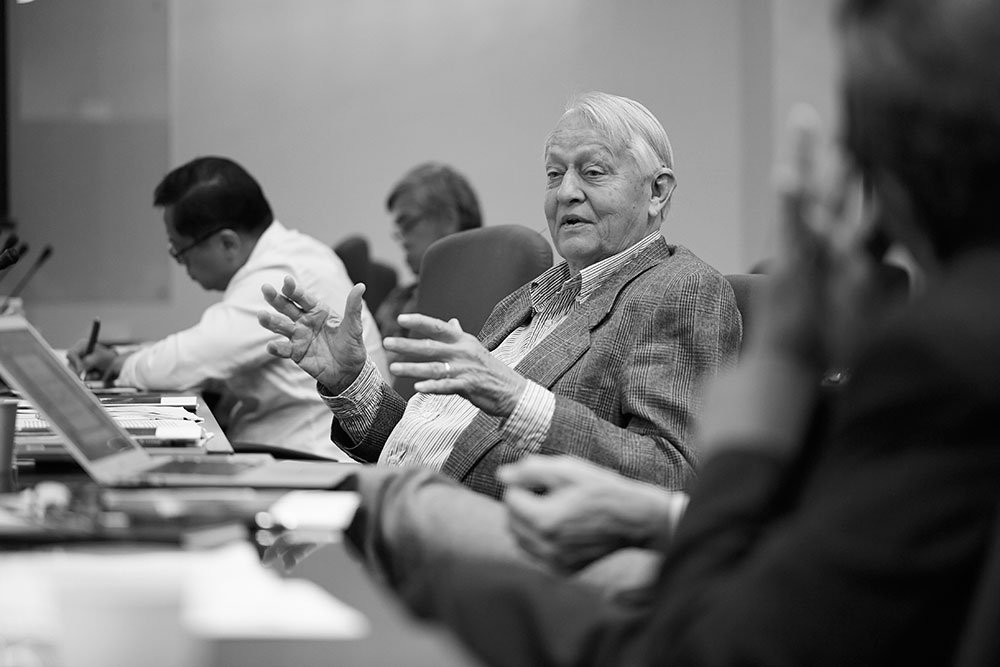
Engaging Asia: Essays on Laos and Beyond in Honour of Martin Stuart-Fox
Desley Goldston
NIAS: 2019
.
Inevitably perhaps, the well-worn clichés are spouted. “What you have to understand is that Laos is made up of many layers,” the weary expat at the bar forlornly expounds. “There’s what you think you see on the surface, and then there’s all this other stuff going on below.” The temptation to roll one’s eyes is almost unstoppable.
Although, to be fair, Laos is an intriguingly complicated and frustratingly opaque place to try to fathom, and that’s always been part of its appeal. Modern day Laos is, after all, a self-proclaimed people’s democratic republic that is run, undemocratically, by a congenitally secretive people’s revolutionary party, backed by a public security [sic] apparatus serving as uncompromising enforcer of the status quo. On a more spiritual level, the teachers Marx and the Buddha jointly guide contemporary Laos and its people. What’s not intriguing about that?
Notwithstanding a twenty-year struggle for ascendency, and more than forty years of power, the ruling party did not always appear wholly convincing as an entity fully versed on, and suitably fired up by, the teachings of Marx and Lenin. The imposition of a centrally planned economy after 1975, for example, was not as avidly pursued in Laos as it was in other parts of newly communist “Indochina”. And similarly, when the word went out in the mid 1980s that economic reform was to be the “new red”, Laos’ leaders never seemed to fully embrace this notion either. (And there was arguably less to unwind.)
More from Mekong Review
-
A manuscript from a place no one knew existed
-

Poetry from Melinda Jane — The Poet Mj
-
How war lives on in Laos
- Tags: David Stuart-Fox, Issue 14, Laos, Nick Freeman