

When I first moved to Phnom Penh, Cambodia’s capital, in early 2012, I’d wander the streets shortly after dawn, marvelling at the wide, shady avenues, the people exercising in the cool of the morning and the general feeling of optimism: after so many years of heartbreaking self-inflicted disaster, of seemingly intractable ideological warfare, things looked to be getting better.
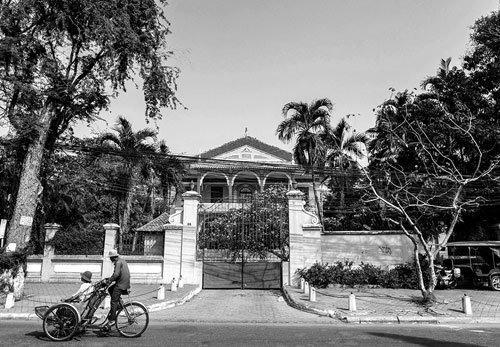
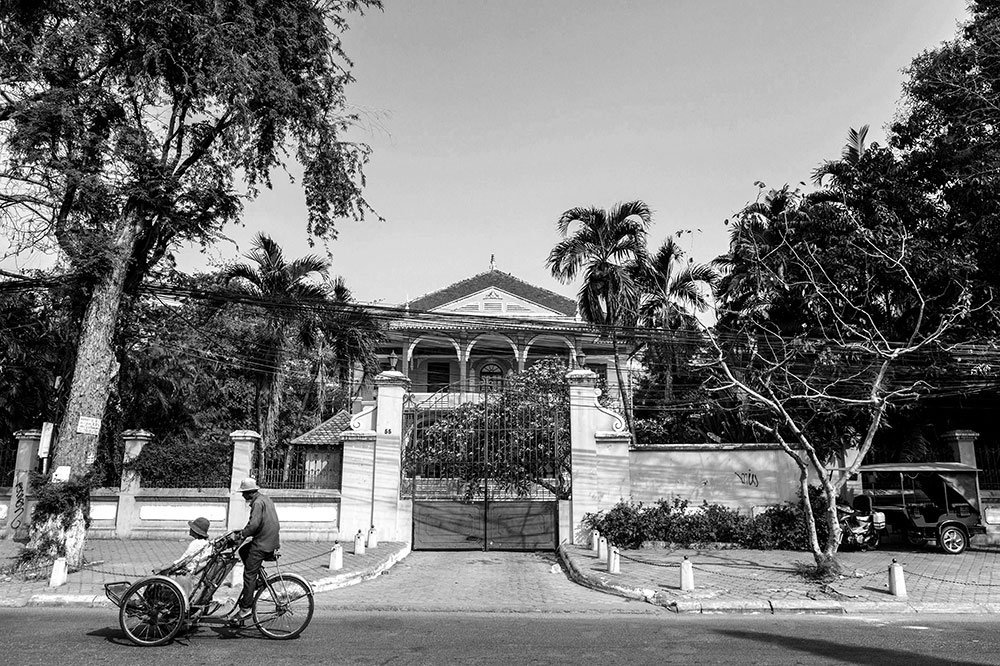
One morning, ambling down Street 178 — long and shaded with tamarind trees, stretching east to the Tonle Sap river, past the National Museum and the Foreign Correspondents’ Club — I passed a wonderful canary-yellow villa, clearly old, clearly much loved. Behind its high but not impassable fence, tuk-tuk drivers snoozed on the badly mown lawns, their plastic bags of soft drink hanging from the trees.
Detailed information on the villa is difficult to come by. Most of the records disappeared into the maw of the Khmer Rouge regime after 1975. But the consensus is that the mansion was originally built as a royal villa between 1900 and 1910. Anecdotal evidence has the villa being constructed in 1905 as a residence for lesser royals, and belonging to a Prince Norodom Phurissara, a cousin of King Norodom Sihanouk, until 1975. In 1979 it reportedly belonged to a member of the royal family called Bin Dara.
More from Mekong Review
-
The story behind the Concert for the People of Kampuchea
-

A poem by Theophilus Kwek
-
A poem by Aiden Heung
- Tags: Cambodia, Issue 16, Rupert Winchester