

Giants of the Monsoon: Living and Working With Elephants
Jacob Shell
W.W. Norton & Company: 2019
.
With news reports and satellite images documenting the ongoing demise of Southeast Asia’s tropical forests, it can seem remarkable that the world’s second largest terrestrial animal — the Asian elephant, its African cousin is the largest — somehow survives in the remoter corners of the region. Yet persist they do, a wild population of 40,000 animals, clinging on, an echo of a bygone age when they, rather than bulldozers and chainsaws, held sway over the subcontinent’s tropical climes.
In 2003, my work took me to the Elephant Hills of southern Cambodia, where, before I arrived, I entertained visions of pachyderms gazing at me through my kitchen window. Alas, upon arriving, I quickly learned that the rangeland elephants were gone. Later, working in the nearby Cardamom Mountains, I occasionally crossed paths where elephants had bedded down for the night, the piles of dung and crushed vegetation were their signature mark.
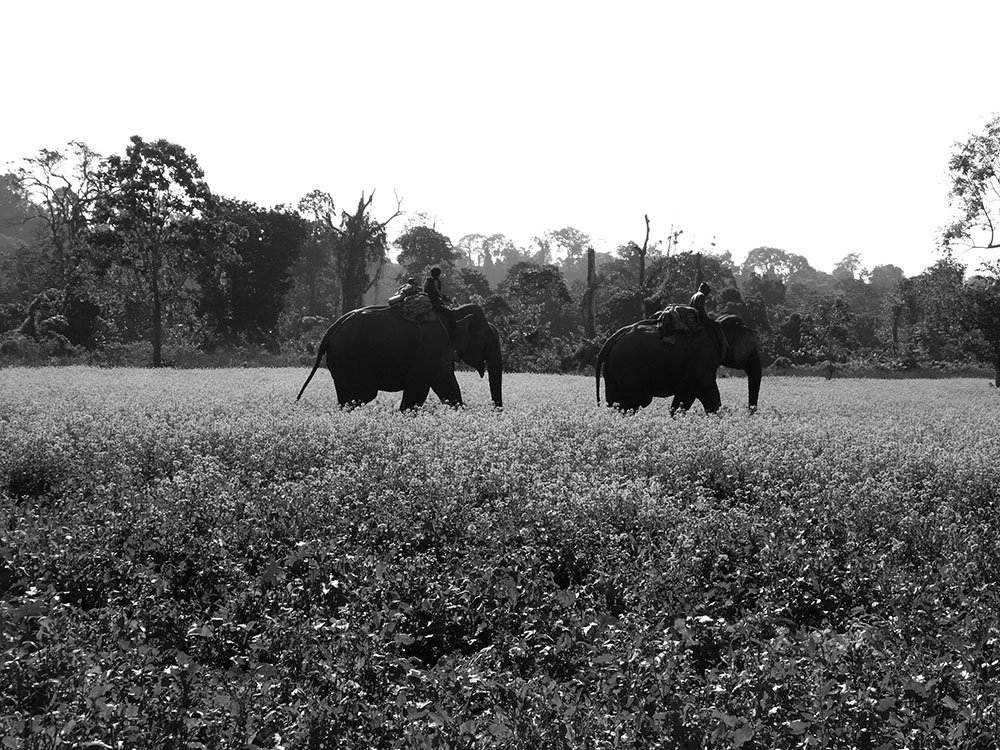
Today it is the moist and dense rainforests of northern Myanmar that support some of the largest populations of the endangered animal, an existence that is owed in part to the importance of the elephant to the region’s teak-harvesting economy. These elephants and the relationships they share with their human masters form the centrepiece for Jacob Shell’s Giants of the Monsoon.
More from Mekong Review
-

A poem by Aiden Heung
-

Back to bricks and mortar
-

From Myanmar to Ireland
- Tags: Issue 16, Jacob Shell, Myanmar, Wayne McCallum