

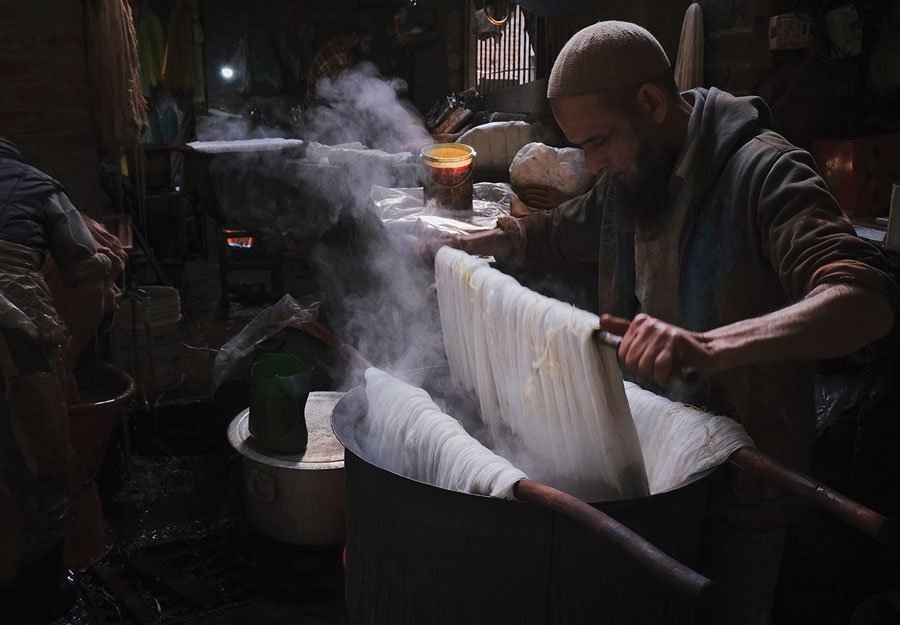

Almost two decades ago, the ancient practice of dyeing yarn in Indian-administered Kashmir was the source of livelihood for hundreds of families across the region, but modern techniques and tools have slowly pushed the people associated with the trade into the margins.
Dyeing yarn is a major industry associated with Kashmiri handicrafts. This ancient practice began in Kashmir around 781 AD when a Sufi Saint, Mir Sayyid Ali Hamadani, arrived from Iran. Hamadani played an important role in spreading Islam in Kashmir, and was said to have brought the methods and techniques of dyeing to the people in the region. Natural dyes were used to colour yarn, before they were used to make shawls, carpets and other products that were then sold to eager customers in other parts of the world.
More from Mekong Review
-

Poetry from Siddharth Dasgupta
-

Cities are not meant to be empty
-

Snacking in Calcutta
- Tags: Adil Hussain, India, Kashmir, Owais Gul