

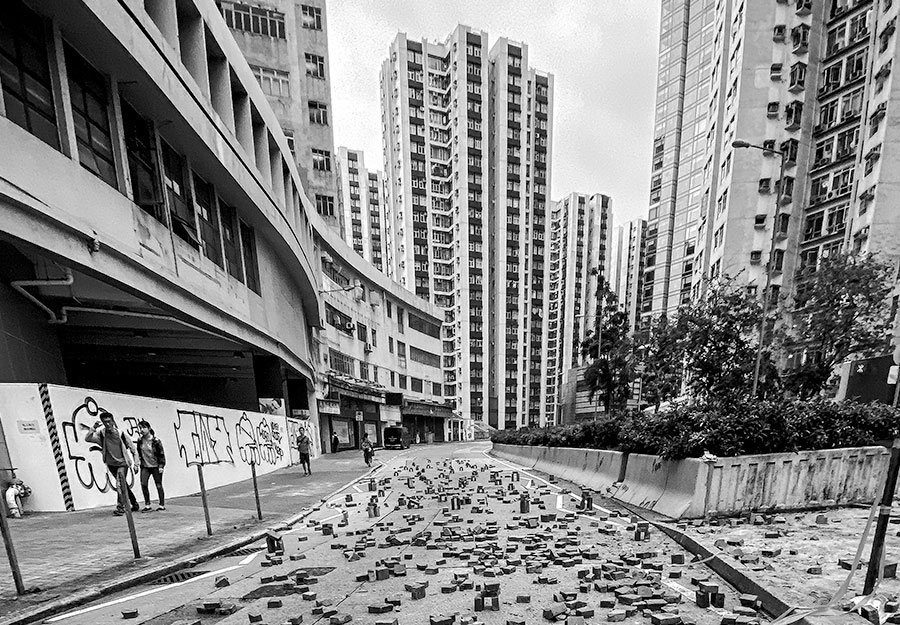
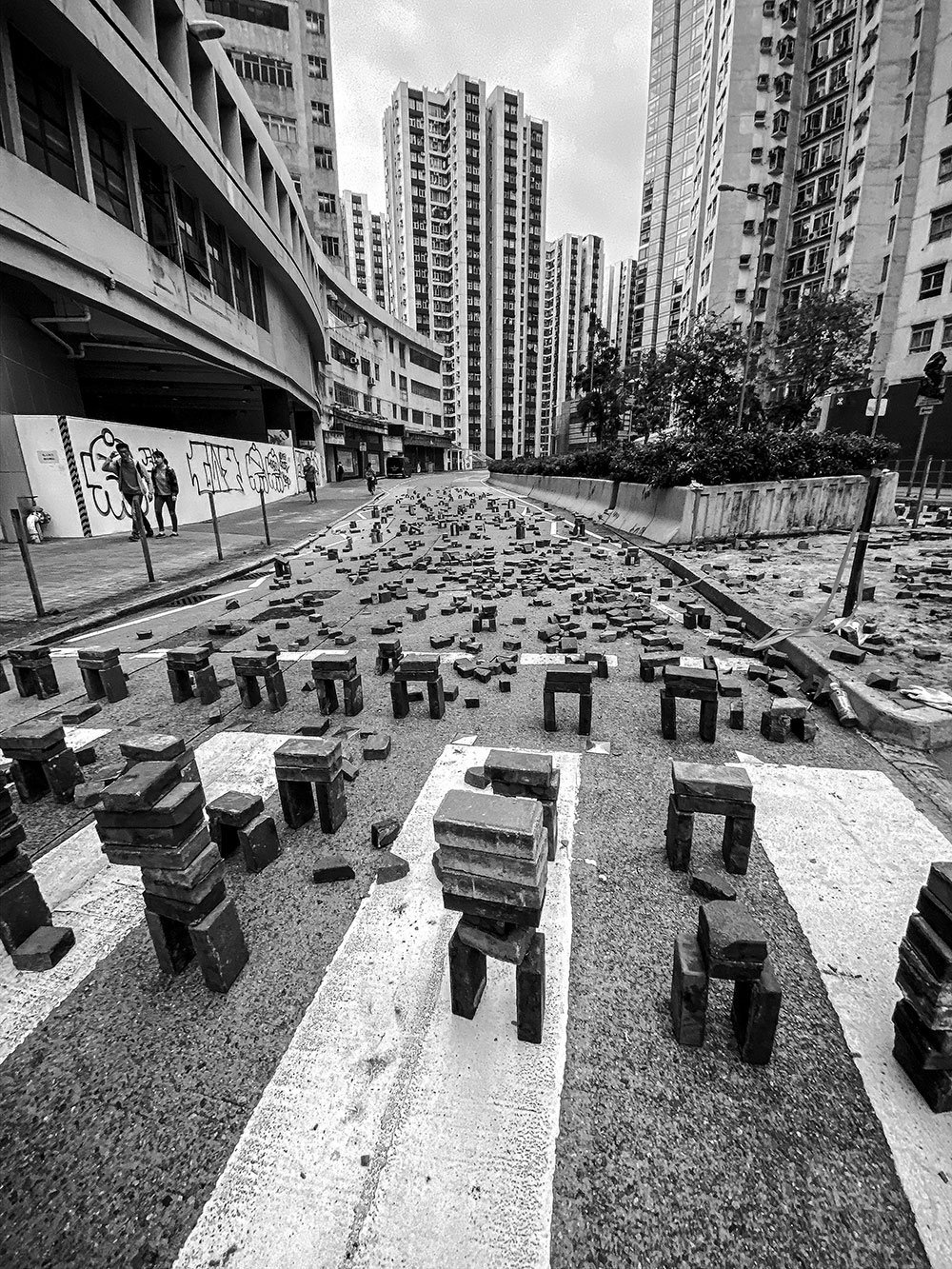
So much of Hong Kong’s life is found on its streets. Cramped living spaces send people out to socialise, exercise, air a pet bird, stroll (in pyjamas), ‘sit out’. ‘Sitting out areas’ are often wedged between high-rise towers on a scrap of land too small to be developed: tiny, concreted areas with metal seating and neglected plants. Street dwelling means napping in public is not frowned upon and, most famously, the beds in IKEA are fair game, but so is a street corner or a stall in the wet market. A more recent opportunity for napping is the addition of a bus specifically fitted out for the purpose, which will take you all over the territory on a five-hour route—plenty of time for a decent snooze.
However, unlike the more residential areas of the city, in the central business and high-end shopping districts, loiterers are moved on: sitting is not allowed—benches are few and far between—and ID cards are routinely requested by police if they suspect you are non-resident. The city centre is an unfriendly environment if you do not have a reason to be there, and navigating its streets is a convoluted process. Rarely are you on street level; most pedestrian routes are above ground: overhead bridges and paths that weave through privately owned shopping malls and office buildings where bathrooms are locked on the weekend to keep domestic helpers out on their day off. In Hong Kong there is little accessible public space because, apart from the buildings (private) and the roads (non-accessible), there are few open areas in which to gather.
More from Mekong Review
-
How do we know when a place has become history?
-

Poetry from Lok Man Law
-

How a teenager from Hong Kong came of political age
- Tags: Hong Kong, Issue 26, Susan Acret