
Chinggis worship
Munkhnaran Bayarlkhagva
The transnational reproduction of Chinggis worship in Mongolia is part of a concerted effort to bring back an identity-defining practice.


The transnational reproduction of Chinggis worship in Mongolia is part of a concerted effort to bring back an identity-defining practice.

Throughout ancient China, mortuary cultures had been evolving for thousands of years before the Qin dynasty, even long before the date of the oldest extant form of systematic Chinese writing.
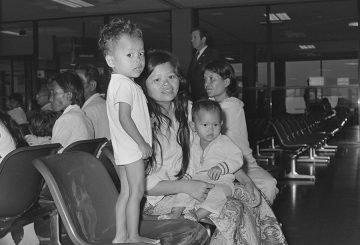
In short vignettes, Y-Dang Troeung gives a compelling account of the journey which brought her family from Cambodia’s Kampong Thom to white rural Canada, beyond the feel-good newspaper headlines.
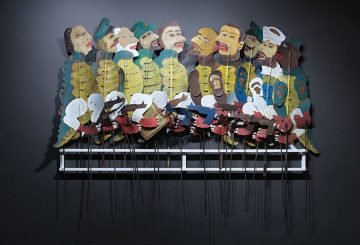
Bali is home to a thriving community of local artists with international pedigrees, all actively working from the island, opening their studios to visitors and fostering a local art community.

The China-Australian Migration Corridor delves deep into historical foundations, contemporary trends and policy considerations related to movement between China and Australia.

The Second Link curates writing that moves beyond the “exhausted metaphors and dusty tropes” of the longstanding rivalry between Malaysia and Singapore.
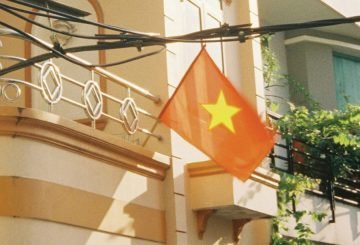
Susann Pham’s Vietnam’s Dissidents is a bold piece of empirical work and a welcome and timely addition to the literature on contemporary Vietnam.

A renga by Mariyam Haider and Emilie Collyer. Commissioned as part of a collaboration between RMIT’s nonfiction/lab and Mekong Review.

Poetry from John Brixter Tino

The End of August centres voices rarely heard in English-language fiction—Koreans living in Japanese-occupied Korea and the zainichi Korean diaspora of Japan.

An interview with Sudeep Sen, a poet who has edited influential anthologies and offered poems to a polarised world in times of crises.

Among the Braves is an attempt to tell the story and struggles of a city, through the lives of the people who have been active in a decades-long movement for democracy.
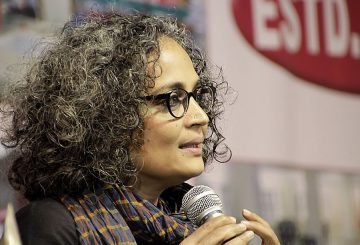
Arundhati Roy’s fiction and non-fiction offer a worldview bristling with the fervour of a pamphleteer, the intuitiveness of old lovers, the curiosity of a child.
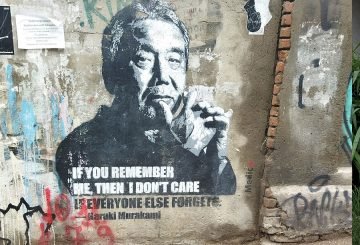
Beyond healing himself, Haruki Murakami, through his stories, has grown more interested in helping others heal.
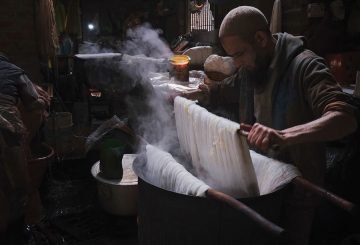
The ancient practice of dyeing yarn in Kashmir used to be the source of livelihood for hundreds of families, but modern techniques and tools have slowly pushed the tradespeople into the margins.
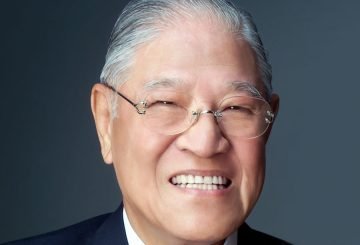
Many Taiwanese have developed a new sense of self, proud of the island’s unique history, and Lee Teng-hui played a key role in that process.
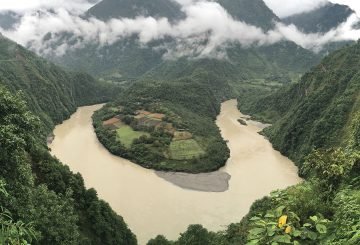
The Kawa Karpo is one of the most sacred mountains in Tibetan Buddhism. A 250-kilometre circumambulation is completed by thousands of pilgrims every year.

As a mainland Chinese kid, I saw Hong Kong portrayed on TV as the epicentre of capitalism and sophistication; Hong Kong in real life, when I finally got to see and feel it for the first time, was much more than that.

The twenty-six films screening in Retrospective: Wang Sha & Ye Feng are a testament to the legendary comedians’ breadth both as solo performers and a beloved pair.

bani haykal’s work embodies durational labour, culminating in serial ruminations on topics that keep him awake at night—capitalism, environmental protection, widening inequality divides.

A short story by Marbin Gesher Jay S. Deniega.

Living in Indonesia most of my life, I’ve always felt that I might be visibly ‘too Chinese’. In fact, Indonesia’s tricky relationship with its ethnic Chinese population began all the way back to the Dutch occupation.

The Panthay Rebellion is a cautionary tale of what can go wrong when a central government is absorbed in its own priorities, leading to ethnic stereotyping and distrust between communities.

In Southeast Asia, the short story has perhaps been more significant than the novel: it is portable, more easily translated and it also migrates.

In the two novellas, journeys depart from or hope to return to “an eastern port” (Singapore) but instead they both disappear into the obscurities of the seas.

In Hieyoon Kim’s Celluloid Democracy: Cinema and Politics in Cold War South Korea, South Korean cinema is seen as part of a broader democratic social movement.

In eleven short stories, Prasanthi Ram probes the lives and relationships of nine women, exploring the narratives of love (or hate) that we develop within ourselves, alongside the ones shared with our families.

Like a magnificent tortoise, my aunt, the long-time Singaporean activist Constance Singam, ambles towards us to meet my children for the first time.
A poem by Yago Tse.

Both The Sales Girl and If Only I Could Hibernate are contemporary coming-of-age stories set in Ulaanbaatar that thwart most viewers’ expectations of Mongolian cinema.

An interview with Mike Chinoy about covering China for almost half a century, and his new book, Assignment China: An Oral History of American Journalists in the People’s Republic.

The Chinese Communist Party has “restructured the social order and silenced the people on the ground. Now they’re trying to extend their hands overseas, to silence overseas activists,” Christopher Mung says from the UK.
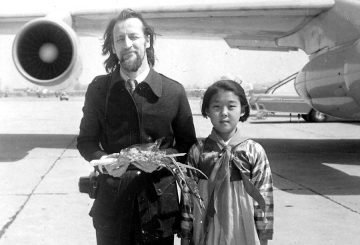
John Gittings, formerly the Guardian’s East Asia editor, looks back on multiple trips to North Korea, from 1976 to 2001.

Climate activists are still stumped by the question of how to ensure that public power results in real, meaningful change. At the same time, the climate movement is setting its sights further than ever.

Street 200 in Phnom Penh is where people come together with a common passion for cinema.

The Hong Kong elite are said to be interested only in making money and not in universal values like democracy, human rights and the rule of law. But that’s not true.

Hafsa Kanjwal contends that Bakshi Ghulam Mohammed’s state-building practices helped strengthen India’s hold over Kashmir while also enabling modernisation, which paradoxically reinforced a sense of alienation rather than reconciliation.
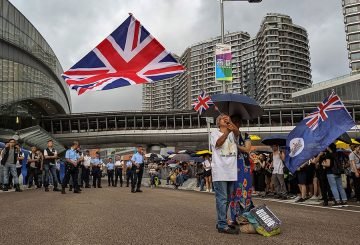
One of the interesting ideas thrown up in Hong Kong a few years back has been a certain nostalgia for the late colonial period. But how enlightened was colonial public policy-making?

Touching that sensitive Cambodian topic of land ownership and dispossession, Further and Further Away questions the nature of relationships entertained with the land.

As a lead bookseller at The Book Cow, I’m not merely selling pages filled with words; I’m at the crossroads where books meet real life.