

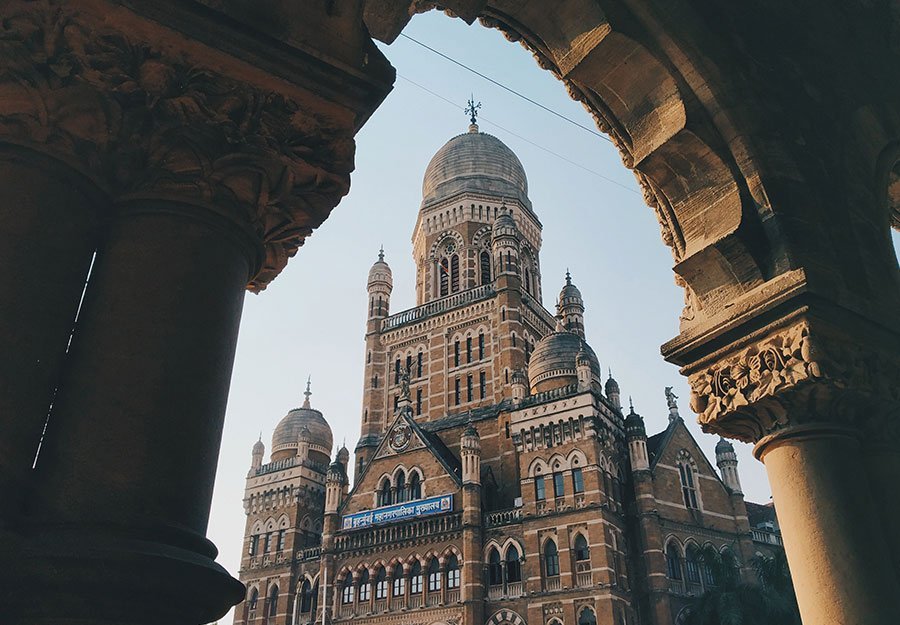

It is impossible to mention Mumbai without alluding to its former name, Bombay. Island city. Glittering metropolis. City of Dreams. I lived there in 1998, a young graduate on the cusp of a career in advertising. It was a year of ruptures and shifts. I was on the brink of sloughing off everything that was familiar: the wide roads and bougainvillea-dappled bylanes of Delhi, seasons that changed from hot to cold with the brief interval of a monsoon, the velvety curries of the north, a degree in English literature that comprised, predictably, Charles Dickens, Thomas Hardy, George Eliot, Jane Austen. Mumbai was in the throes of its own existential crisis. Bombay clung to it, a fierce spectre that brooded over how unlovely the new city had become.
Bombay, with its ethnically mixed population, natural harbour and modern waterworks, Asia’s oldest stock exchange and a thriving film industry, had been, in the years before it transitioned to become Mumbai, a city that was emblematic of Indian modernity. Its heterogeneity and quintessentially cosmopolitan nature altered in the 1990s, with growing hostilities between Hindus and Muslims leading to the Bombay riots in December 1992 and January 1993. The city was renamed Mumbai in 1995 by the right-wing political party Shiv Sena. Mumbai, derived from Mumbā Devi, patron goddess of the native Koli community, was a name that unshackled the city from its colonial past. But this renaming also signified the provincialisation of Bombay. The novelist Amit Chaudhuri notes this change in his 1998 essay ‘Light, Colour and Real Estate’: “While ‘Bombay’ invoked the world of the colonial and the British-influenced, liberal, post-colonial middle class, ‘Mumbai’ signifies the Post-Modern, contradictory city in which xenophobia, globalisation, extreme right-wing politics and capitalism come together.”
More from Mekong Review
-

Poetry from Jack Malik
-

Snacking in Calcutta
-

Hindu-Muslim relations are worsening across India. There have been no rumblings of communal strife in Kadayanallur yet, but news from elsewhere creates ripples of anxiety and worry.
- Tags: India, Issue 31, Mumbai, Radhika Oberoi