


Strike Patterns: Notes from Postwar Laos
Leah Zani
Redwood Press: 2022
.
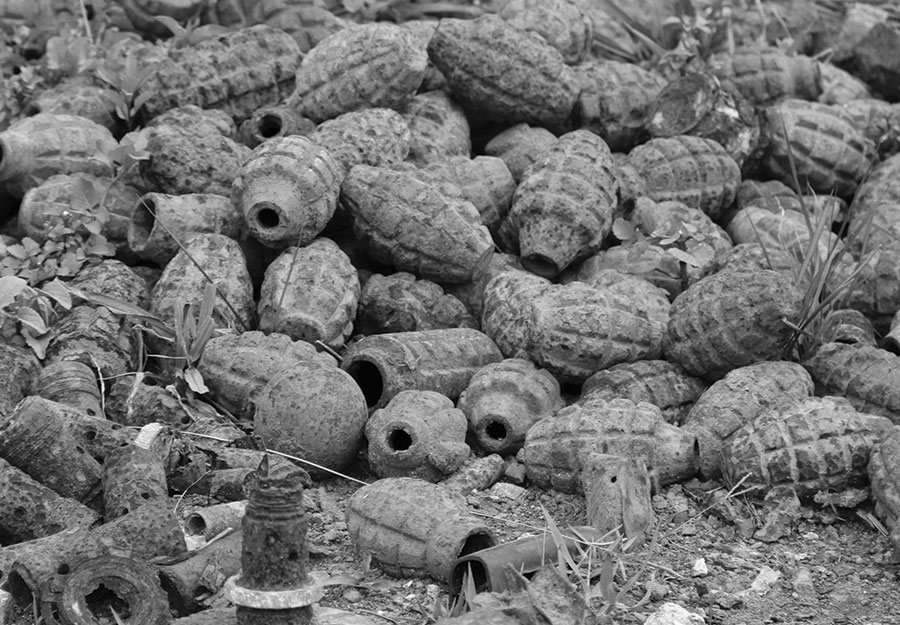
Strike patterns mark out the area that the small, lethal, anti-personnel submunitions known as bomblets or ‘bombies’ contained in cluster bombs spread over when the bomb explodes. Though the first cluster bombs were invented during the Second World War, they were not extensively used until the Vietnam War. They have been weaponised since by twenty-five countries in as many wars, including Russia in its recent invasion of Ukraine. But the country subjected to the most intense cluster bombing in the history of warfare is Laos.
Between 1964 and 1973, during the secret air war over Laos, around 750,000 cluster bombs, each containing 360 bombies, rained down on a country of not much more than 2.5 million people. That amounts to more than 250 million bomblets, or 100 for every man, woman and child. Tens of thousands died, hundreds of thousands fled, villages were destroyed and farmland made unusable because of those 250 million bomblets; according to the website Legacies of War, as many as 80 million failed to explode.
More from Mekong Review
-

Honouring Professor Martin Stuart-Fox
-

There is only one place to eat this
-

Poetry from Lok Man Law
- Tags: Issue 28, Laos, Martin Stuart-Fox