


Burma, Kipling and Western Music; The Riff from Mandalay
Andrew Selth
Routledge: 2017
Rudyard Kipling visited Burma only once, and for just a few nights at that. En route to England from Calcutta, where he’d finished working for a newspaper in 1889, he was twenty-three. In Rangoon for a day, he visited the Shwedagon Pagoda and stayed at the racially exclusive Pegu Club, now a fenced-off and ruinous teak building. Further south, down the coast, was an unscheduled stop by steamer at Moulmein (Mawlamyine), from where the first lines of “Mandalay” would emanate, finding their way into print the following year:
By the old Moulmein Pagoda, lookin’ eastward to the sea,
There’s a Burma girl a-settin’, and I know she thinks o’ me;
For the wind is in the palm-trees, and the temple-bells they say:
‘Come you back, you British soldier; come you back to Mandalay!’
Come you back to Mandalay,
….Where the old Flotilla lay:
….Can’t you ‘ear their paddles chunkin’ from
….Rangoon to Mandalay?
….On the road to Mandalay,
….Where the flyin’-fishes play,
….An’ the dawn comes up like thunder outer
….China ‘crost the Bay!
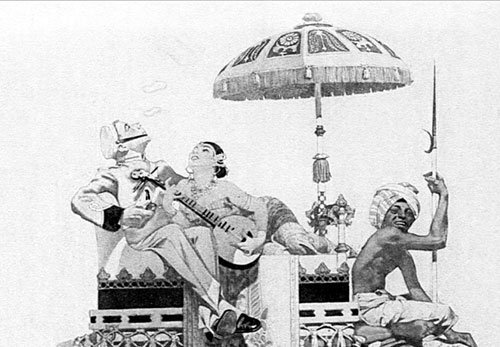
The poem had a profound effect on the Western imagination, and Andrew Selth charts its “riff” and examines its legacy and influence in Western music, popular song, hymns, sea shanties and film soundtracks. The book is specialist and scholarly, loaded with references, but is an original and unique take on a country through its mostly “outsider” music.
More from Mekong Review
-

The ghosts that haunt Myanmar
-

A poem from Maung Day
-
The Burmanisation of language in Myanmar
- Tags: Andrew Selth, Issue 8, Joseph Woods, Myanmar, Rudyard Kipling