

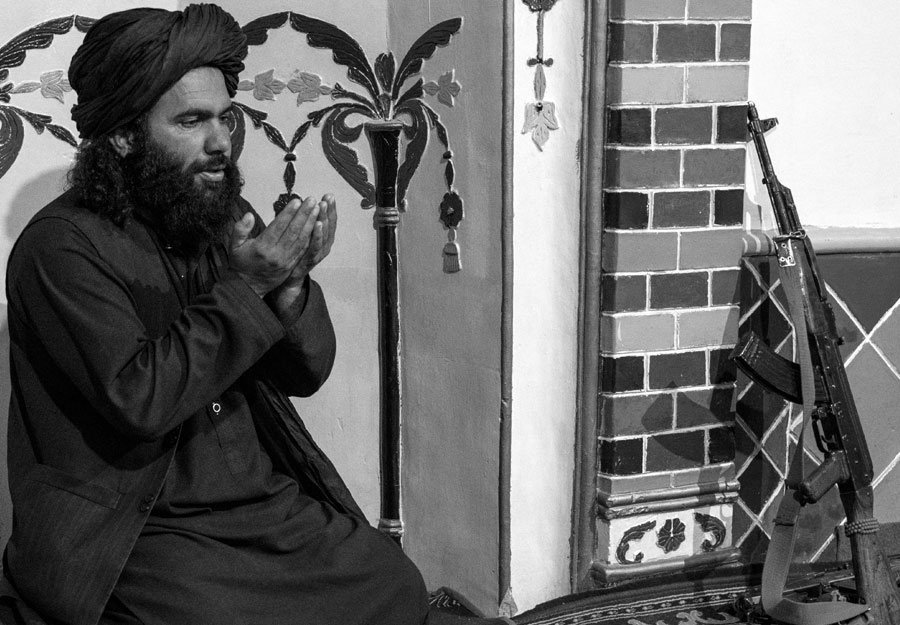

Sher Toghi is a village of homes scattered either side of a cultivated valley floor and at the feet of the mountains that feed the narrow river and irrigation canals that flow through it and make it inhabitable. It is no more than 100 kilometres from the Afghan capital Kabul, but to drive there, even before the winter snows begin to fall, takes about five hours.
The village, and most of Daymirdad district—or Jilgah, as it’s also known—has been under the control of the Taliban for several years. The nearest sign of the Afghan government or its security forces is in neighbouring Chak district, two hours from Sher Toghi by road, where the government maintains control over a small island of territory that can be reached only by helicopter.
I’d been trying to get to Sher Toghi since May 2020. A year prior to that, I’d met for the first time the survivors of a family whose home had been bombed and raided by a CIA-backed Afghan paramilitary unit. Four members of the family—a mother, two girls under the age of ten and a fifteen-year-old son—were killed by US air strikes that presaged the raid. I’d wanted to meet another son, who was working in Iran at the time and who joined the Taliban after returning to Sher Toghi, his family half the size it had been when he left.
More from Mekong Review
-

Poetry from Rory Harris
-
Poetry from S Rupsha Mitra
-
The Burmanisation of language in Myanmar