
Detoxification
Kirsten Han
A review of two books on finding—or perhaps ‘freeing’ is a better word—one’s voice through acts of creation, whether it’s prose, poetry, painting, drawing or cooking.


A review of two books on finding—or perhaps ‘freeing’ is a better word—one’s voice through acts of creation, whether it’s prose, poetry, painting, drawing or cooking.

You Must Take Part in Revolution combines powerful imagery with a compelling plot to convey the political turmoil we’ve experienced and might face in the near future.

“Apart from illustrating how invested the authorities still are in shaping the official story of Vietnam’s wars of liberation, my experience at Thế Giới also revealed an almost religious faith in the power of the written word.”

Did the man who inspired a character in Joseph Conrad’s novels leave behind a fortune in a Swiss bank?

While the voices and expressions in Chinese rock have come from Chinese musicians, outsiders have consistently injected know-how and resources into the country’s marginalised underground musical movements.

In a new banner by Taring Padi and Noongar artists, the Noongar figures and Australian fauna and flora integrate with images from an rebellious Indonesian proletarian class in a bold synthesis, creating a dream-like, political logic.

Despite tofu’s lack of structural integrity, Russell Thomas notes that its versatility has given it the resilience to “stand up in a range of figurative and real-life settings”.

Luise Ahrens, a Maryknoll nun and education innovator from the US, worked with seismic stamina for twenty-six years to build up higher education in Cambodia.

Young people from Myanmar are being forced to choose between survival and service in a conflict they had no say in and strongly object to.

Kornel Chang, a diasporic Korean historian and author, paints a picture of a post-Second World War Korea searching for a singular vision of what independence looks like.

A short story by Lia Tjokro.

Simin Li’s book is a reminder that continuing assertions about the singularity of Chinese culture and politics belie the pluralism and diversity of the Sinophone tradition.
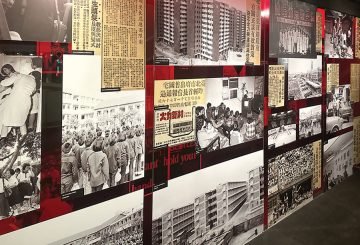
Shifting Horizons: The Generation of Emancipatory Architecture in Taiwan is a unique exhibition including the many aspects that make up architectural production and attempting to locate the formation of contemporary Taiwanese architecture.

Ava Chin’s memoir is a story of roots dismissed and homes denied.

A poem from Julienne Maui Castelo Mangawang

Nature provides expressive backdrops for Han Kang’s fiction; while she chronicles human frailty and barbarity, she also allows the light to seep in through the foliage.
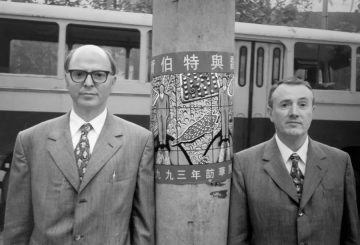
Among a post-Tiananmen flurry of activity, Gilbert & George, the British duo who’d been a dominant force in the UK’s 1980s art scene, made a trail to China and inspired many looking to break free of their constraints.

How does one save the world against evil with little more than one’s own imagination? When faced with hopeless nonsense from the political leadership, what can one do with their writing?
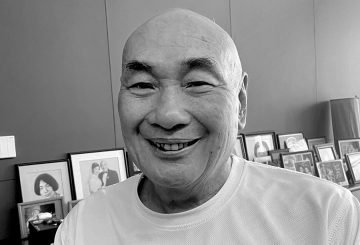
Singaporean actor Lim Kay Siu on the differences between acting in Hollywood and in Singapore, the power of theatre to raise public awareness of important issues, and getting political on live streams while playing a ukulele.

We’re all just finding ways to relieve the anxieties of living in a world that’s spinning out of control.

Through their exposure in front of the camera—as well as their work behind it—the faces and bodies of Kashmiri women not only become visible but also assert themselves on their own terms.
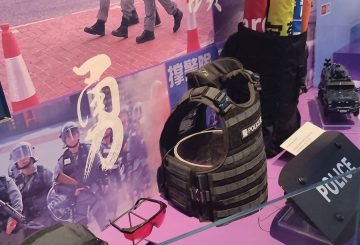
Walking through a new exhibition on national security in the Hong Kong Museum of History.

Scenes and reflections from Bohol.

Nepal’s Supreme Court has ruled in favour of marriage equality, but people on the ground say there’s still a long way to go before same-sex marriage gains acceptance across the country.
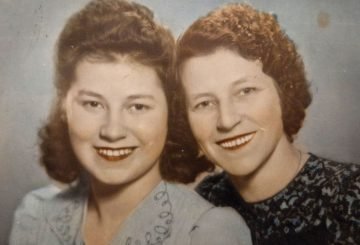
Cousin Merle’s abscission from the family tree didn’t elicit any great feeling on my part, but the fact that there was no Chinese blood in the family was a little more complicated.
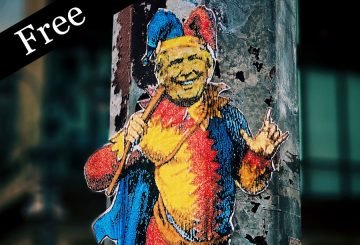
How to score points when the score-board always changes?
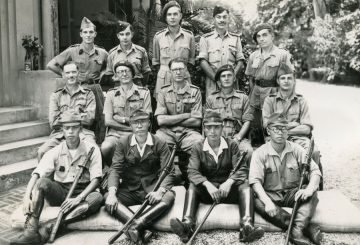
Lieutenant Colonel E.D. Murray—“Moke” to friends and fellow officers—knew nothing about Cambodia, but for a few brief weeks towards the end of 1945, he was, in his own words, its “uncrowned king”.

Both Patricia Evangelista and Neferti X.M. Tadiar’s books question what it means to be human. While some are valued because of their contribution to capitalism, those who are less productive in the profit-making sense are treated as disposable.

Some ghosts aren’t vengeful spectres waiting to shock or scare in the night. Even so, it might still be unbearable to think of them.

Few who encounter Pas-ta’ai, the ritual to the “little people”, and the complex, sometimes contradictory, folklore associated with it are unmoved. Some even become obsessed with unravelling the ceremony’s mysterious origins.
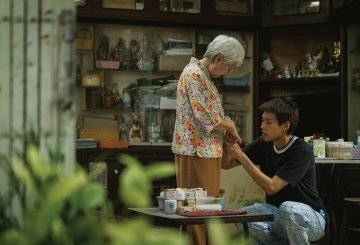
Beyond the reality of family relationships, How To Make Millions Before Grandma Dies paints a portrait of Thai Chinese culture that’s at once singular and relatable.
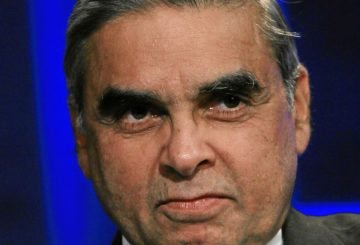
While the bulk of the book focuses on diplomacy, Living the Asian Century can also be read as an introduction to the governance style of Singapore’s first generation of leaders as seen through Mahbubani’s eyes.
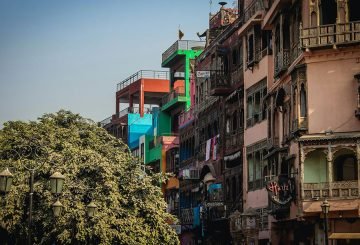
Gossip spreads in a Pakistani neighbourhood after a couple’s daughter elopes with a man late at night.

Despite having held a number of important portfolios as a minister in the city-state’s early years, S. Rajaratnam’s legacy remains largely obscured in Singapore’s public imagination.
Instead of asking what is or how to be one’s authentic self under capitalism, Peripathetic is curious about whether capitalism leaves us with any room for authenticity at all.

The lesson in Ganapathy’s book is salient and applicable to societies beyond Singapore: working class ethnic minorities disenfranchised by dominant societal structures often find themselves enmeshed with criminal justice institutions.

For a relatively slim volume, Lio Mangubat’s Silk, Silver, Spices, Slaves: Lost Tales from the Philippine Colonial Period, 1565–1946 covers a broad swath of Philippine history.

A poem by Leigh Doughty

The adoption of chữ Quốc ngữ, the Vietnamese alphabet that has officially been in use for over a century now, was a notable part of Vietnam’s effort to pull itself out of China’s orbit.
A poem by Alvin Larida, translated from Kinaray-a.