

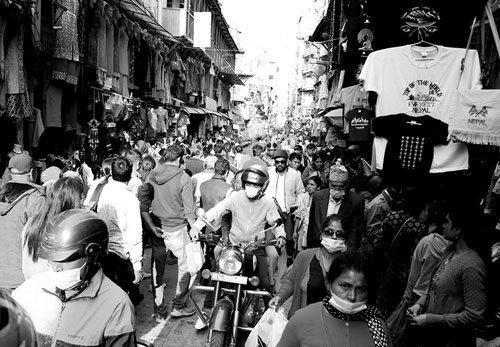

The world started to shake around noon. I was leaning against a pillar that separated two halves of the tall doorway that led into the ornate ballroom of the Yak and Yeti, Kathmandu’s first luxury hotel. The room, a baroque-styled space in the best possible taste, was crowded with punters attending the fifth International Kathmandu Tattoo Convention. The hum of a hundred tattoo machines carving into flesh cut out abruptly as the room plunged into semi-darkness, replaced by the violent shaking of the chandeliers that adorned the high ceiling. For an instant I thought Nepal’s civil war had cranked up again and someone was firing heavy artillery at the city. The several hundred people in the ballroom rushed for the exits in a blind stampede. The ground shook in frantic spasms. I pressed myself against the doorway’s central pillar until the punters, hotel employees and tattoo artists had roared past me towards the wide staircase that led to the ground floor.
In the hotel’s courtyard, a confused, scared crowd of young people tried to put on a collective brave face. Weapons of fortification — whiskey, joints and Buddhist charms — made the rounds as the ground continued to jolt, budge and grumble. The quake continued throughout the following days and weeks with countless aftershocks.
Nepal’s most serious earthquake in almost a century, on 25 April 2015, killed more than 9,000 people, 1,000 of them in the Kathmandu Valley. Entire mountain villages were mauled by the moving earth. In the afternoon I headed to Durbar Square, the Nepali capital’s historic heart, a UNESCO World Heritage site. The sight was heart-breaking. The main temples and part of the eighteenth-century royal palace had collapsed. Mountains of rubble, enveloped in a fine cloud of dust, rose where gods had lived for aeons. There was barely a government presence: no police, no military, no emergency services. The roads and alleys around the square were eerily quiet. People walked around in a daze; shops were shuttered. But there was no violence or looting, not then nor in the coming days.
More from Mekong Review
-

Poetry from Melinda Jane — The Poet Mj
-

Two new crime novels revel in violence
-
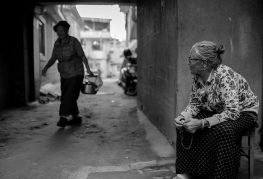
You are never alone in a Kathmandu neighbourhood - or are you?