

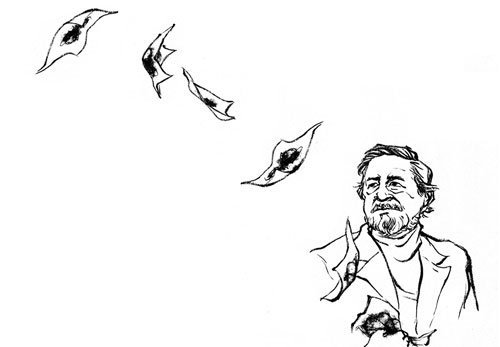
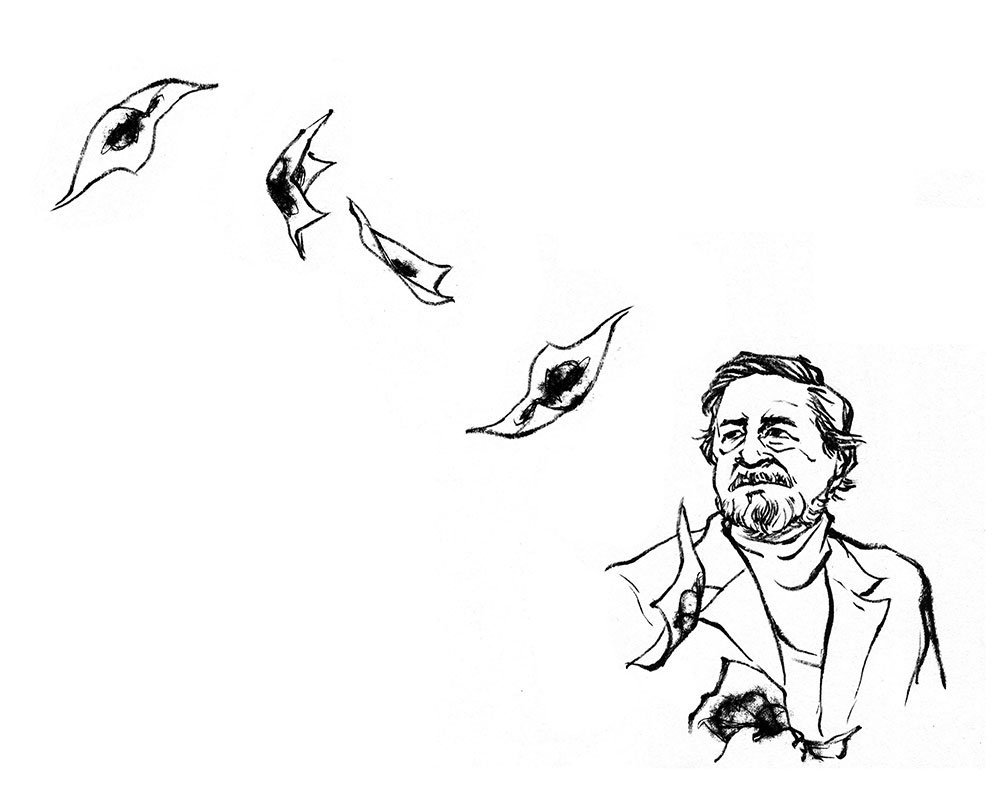
V.S. Naipaul lacked love. He denied himself: he exposed his vicious personality to the public and damaged people who loved him. So it seemed half a plea for forgiveness when he yearned that his writing still be cherished.
Years after achieving literary success, Naipaul regretted that his early masterpiece, A House for Mr Biswas, had received only modest acclaim, and that the New York publisher Alfred A. Knopf had taken so long to notice his talent. After he was awarded the Nobel Prize, in 2001, he remarked that the prize was of little use, having come so late.
As he made these complaints, Naipaul displayed to the world his cruelty and bitterness. It meant that any admiration for his writing had to have a purity — to be for the writing alone, separate from the man. He gave interviews about seeing prostitutes throughout his married life. He justified an affair with Margaret Gooding — whom he beat and bruised — as providing him with a carnal pleasure absent in his marriage. He depended on his wife, Patricia Hale, to nourish his self-belief even as he humiliated her, publicising his infidelities while she battled cancer. He dismissed writing by women as sentimental. He derided former colonies like Trinidad (his childhood home) and India (his ancestral homeland) as stunted and wounded cultures.
Just as Naipaul exposed the societies he wrote about, he did not hide his own flaws. He opened his archives and letters to his biographer, Patrick French, revealing a pattern of physical violence and abuse targeting those closest to him. It is this unsavoury Naipaul that has dominated obituaries after his passing this August. His writing seems drowned out by his persona as a ruthless artist who laid waste to people on his path to greatness.
More from Mekong Review
-
How tea fuelled Western colonial endeavour
-

Poetry from Clarity Lim
-

What does Black Lives Matter mean for Asian artists and writers?
- Tags: Anjan Sundaram, Issue 13, V.S. Naipaul