


In Manila’s Fort Santiago, hours before his execution, José Rizal wrote a final letter to Ferdinand Blumentritt, a long-time correspondent based in Bohemia. “When you receive this letter, I will be dead,” Rizal wrote in German, insisting on his innocence of the charges levelled against him by the Spanish colonial authorities in the Philippines. Even in goodbye, Rizal sent his regards to Blumentritt’s family, calling the teacher and scholar—whose international reputation had derived from ethnographic studies of Filipinos—his “best” and “dearest friend”.
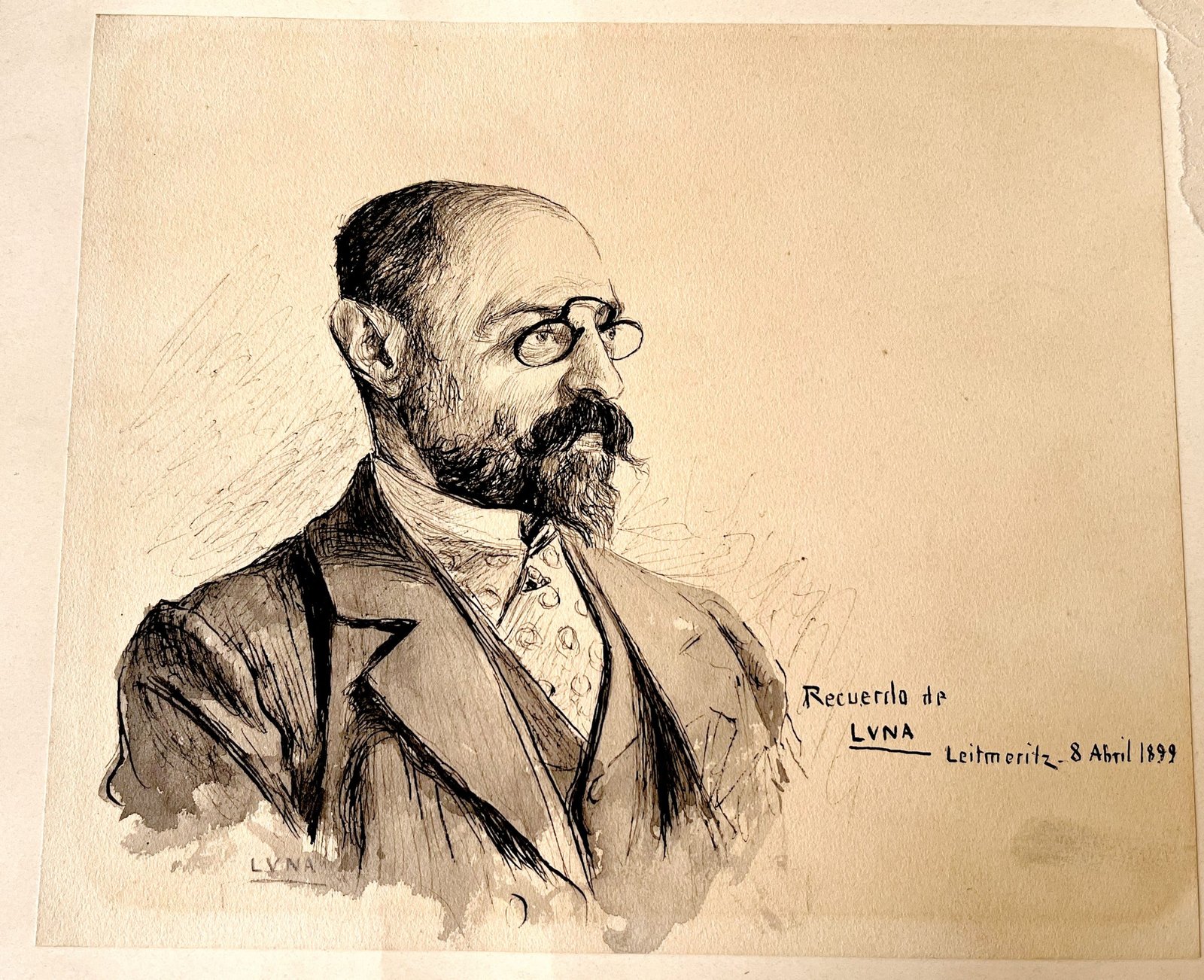
In the late nineteenth century, Ferdinand Blumentritt, a geography and history teacher, engaged in the study of Filipinos, reading a wide range of materials he had collected and cultivating a network of reliable correspondents on whom he depended for information. In the midst of his intellectual pursuits, Blumentritt lent his voice in support of propagandists like Rizal, arguing against the cultural derogation of Filipinos headlined by polemical Spanish friars. Despite never having set foot in the Philippines, Blumentritt turned into a friend from a distance, speaking for Philippine interests in Europe and welcoming visiting Filipinos in his home in Leitmeritz until the last years of his life.
Rizal’s final moving words to his friend, written back in 1896, resonated in my mind on a train ride to České Budějovice, a hundred or so kilometres south of Prague, where an archive of Blumentritt’s files is kept. If Rizal were alive today, he would have likely bid farewell through a messaging app, knowing instantly, and with certainty, that his message had been sent and read. Given the conveniences of modern life, Rizal and Blumentritt’s friendship would have taken an entirely different shape in our day, the distance between them much easier and faster to bridge. But it might have also removed the poignancy that their correspondence carried. Rizal’s last message, written and signed on paper before he was shot by a firing squad, embodied his final hours and ritualised their farewell.
More from Mekong Review
-
A Marcos is tipped to be the Philippines’ next president
-

Poetry from Lawdenmarc Decamora
-

A poem by Alyza Taguilaso