

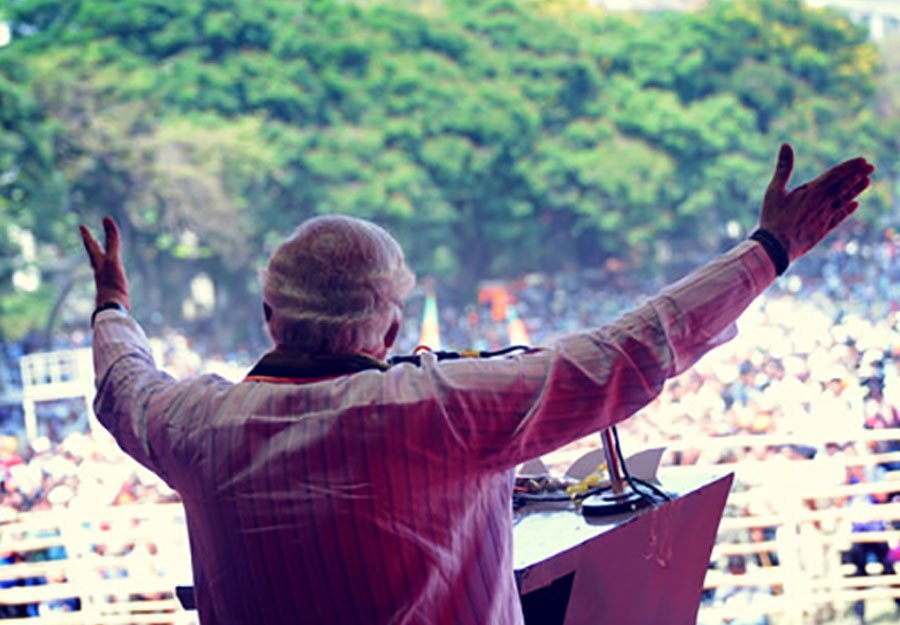

In this year of elections—when voters in more than sixty countries have, or will, cast votes to change national, regional and local governments—the biggest in terms of scale and size is the one in India. Beginning in mid-April, this exercise will take a month-and-a-half, with the final outcome known in early June. With nearly a billion people voting across the sub-continent, Indian elections are a logistical marvel, requiring mobilisation of immense resources and a vast bureaucracy.
Journalists from around the world turn up to watch the democratic process in action. Tired clichés about India being “the world’s largest democracy” will sprout like bamboo shoots. There will be stories of superhuman efforts to bring a ballot box to a remote area to service a handful of voters. There will be allegations of malpractice, celebrities running for office, political parties changing alliance partners, leaders throwing tantrums and opinion polls that contradict one another. Cheap availability of data and the ubiquity of inexpensive mobile phones will make rumours fly faster than ever. There are legitimate concerns that deep fakes will be deployed, fake news will proliferate and hate speech will get transmitted at lightning speed. There will be violence, too.
More from Mekong Review
-

Snacking in Calcutta
-

Where it all started for the writer.
-

What does Black Lives Matter mean for Asian artists and writers?
- Tags: India, Issue 35, Salil Tripathi