

It got too cold where I sat directly under the air conditioner vents. Waking up at 4:30 a.m. to catch the 6 a.m. train to Jaffna from Colombo had taken a toll on my body. I’d intended to sleep my way through the almost seven-hour journey, the shades drawn down on a hot Sri Lankan morning. Instead, I was wide-eyed and, in my sleep-deprived state, got up and walked to the gangway connecting one carriage with another.
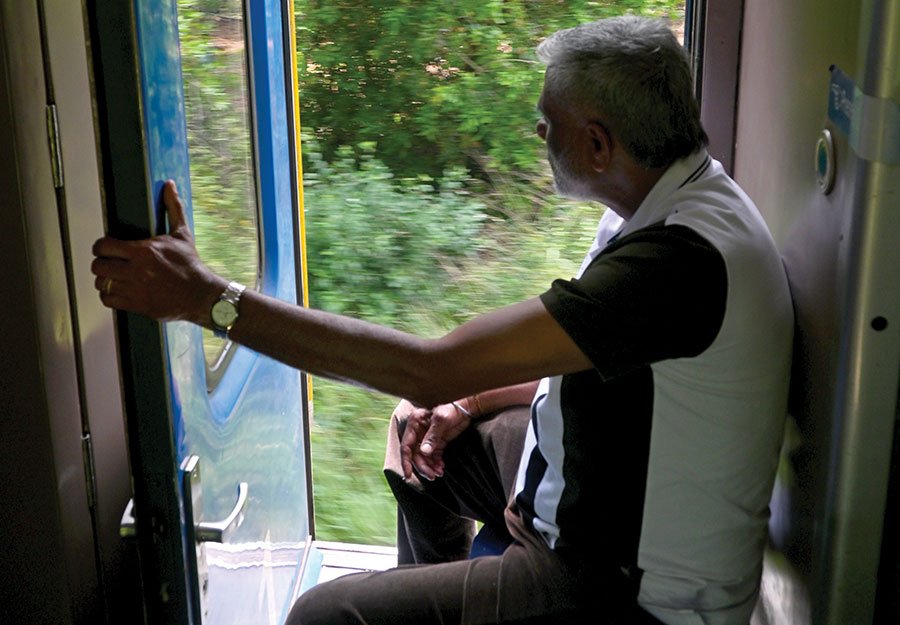
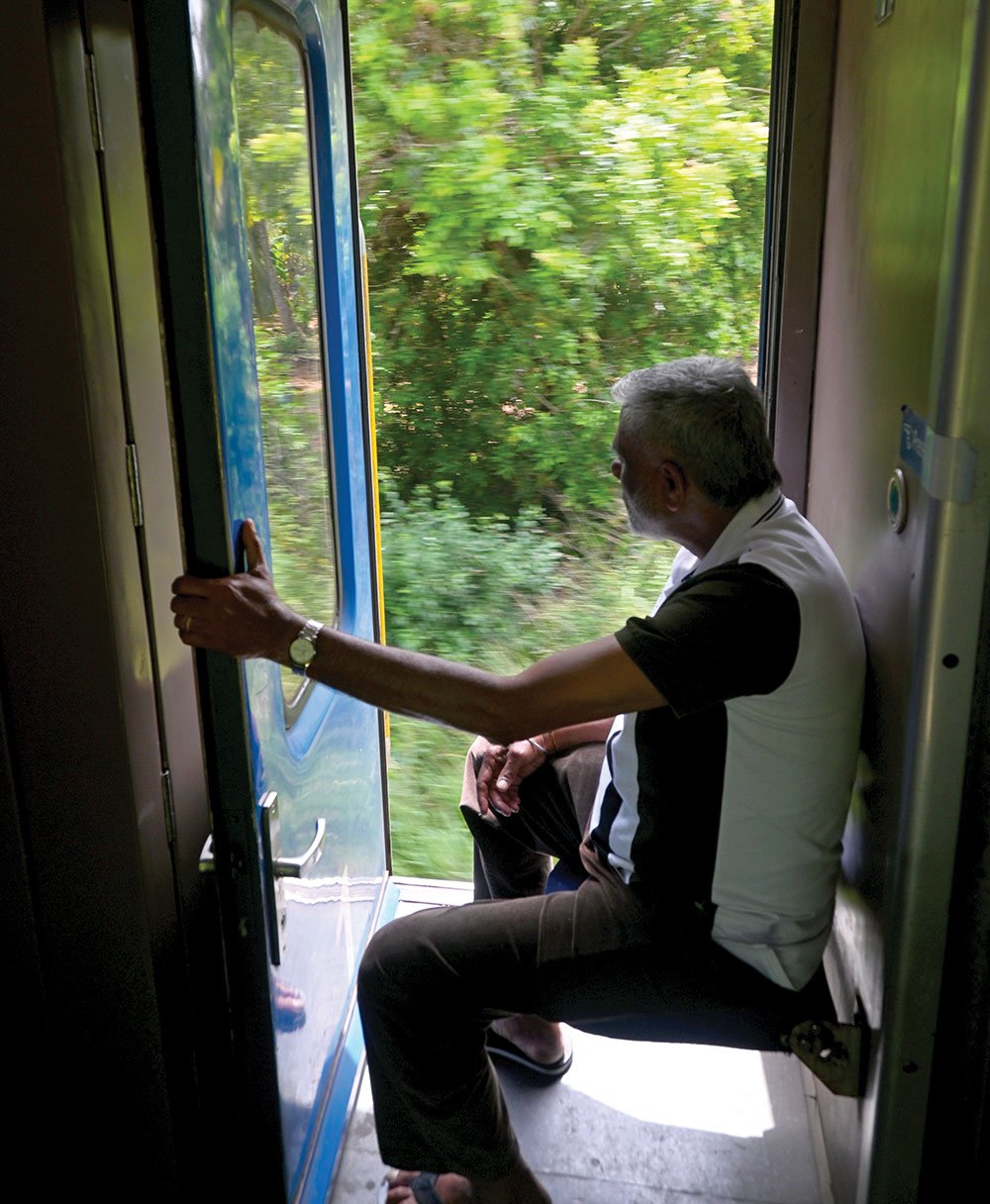
I stood there, looking out at the rising of the day, the landscape passing by in the verdant greens of trees and fields. I leaned out of the carriage door, catching a whiff of the morning air, and stared down the length of the train. I did this despite the warnings—repeatedly played on screens, replete with images of screaming victims and flying mobile devices—telling passengers not to hang out of the carriage doors.
The train made many intermittent stops. As I peeped out again, a Sri Lankan family walked alongside the train, going in the opposite direction. I returned to my seat as they passed, precariously close to the tracks.
More from Mekong Review
-

Shehan Karunatilaka’s Chats with the Dead is a darkly satirical novel with a good dose of the fatalistic humour Sri Lankans will find familiar.
-

Meena Kandasamy, author of The Orders Were to Rape You
-

There’s poignancy in the idea of artistic ambition sacrificed for something as fundamental as war. And Myanmar embroiled in civil war, it’s perhaps only natural that poets, like many of their countrymen, have taken up arms.
- Tags: Issue 42, Leong Kar Yen, Sri Lanka