


High in the hills overlooking Taipei, in a nondescript office tucked within one of the many buildings at the National Chengchi University, sits an unassuming collection of a few hundred Vietnamese-language books. There’s no sign to announce it or posters to promote it. It’s not even a formal library—just a small collection. But it’s one of the world’s most extensive collections of Vietnamese banned books.
“I call it the Luật Khoa Library,” says Trịnh Hữu Long, gesturing at the row of shelves behind him with pride. Long is a journalist, the founder and editor-in-chief of Luật Khoa tạp chí (Law Magazine). “I want this to be the largest collection of Vietnam’s banned books in the world.”
Long co-founded Luật Khoa in 2014 with a group of close friends and fellow activists who refused to relinquish the dream of an independent law and policy magazine in Vietnam. It’s a dream for which Long and his colleagues have paid a personal price. Phạm Đoan Trang, an author and journalist who was one of the co-founders, is currently serving a nine-year prison sentence in southern Vietnam for “spreading propaganda against the state”. Long and his fellow editors now live in Taiwan, effectively choosing exile over censorship.
More from Mekong Review
-
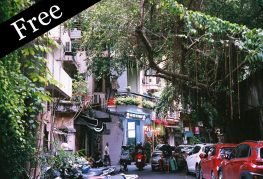
It had been four years since I last returned to Hanoi. I told myself that I’d never loved this city I had wanted to escape. But time may have helped heal old wounds.
-
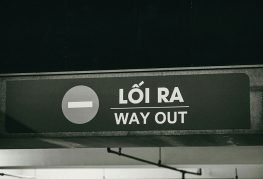
The adoption of chữ Quốc ngữ, the Vietnamese alphabet that has officially been in use for over a century now, was a notable part of Vietnam’s effort to pull itself out of China’s orbit.
-

Inspired by the portraits of the deceased
- Tags: James Tager, Trịnh Hữu Long, Vietnam