

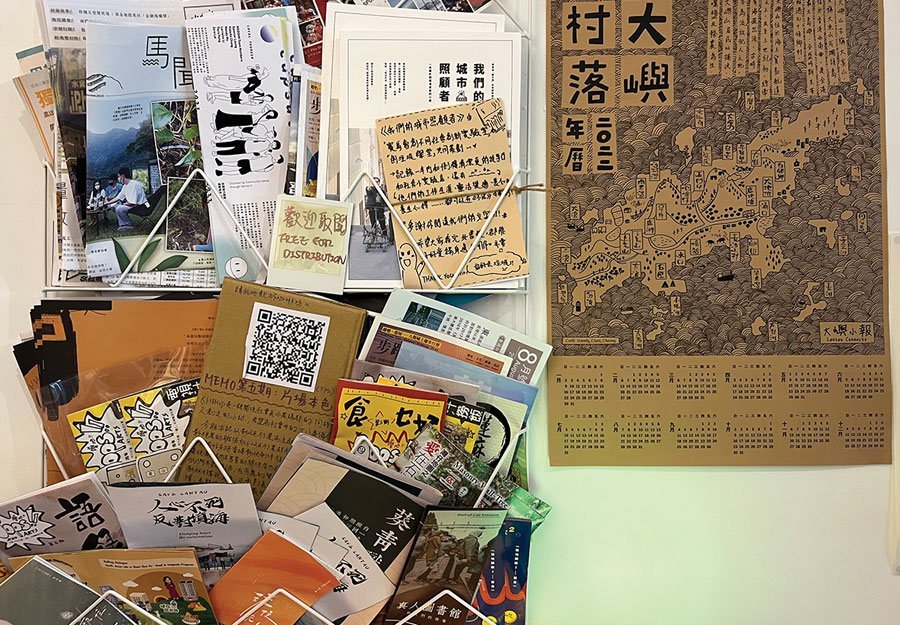

The story of Hong Kong has long been subject to the whims of outsiders’ imaginations. The conventional narrative goes something like this: Hong Kong was once a colonial city, then a postcolonial city, then all at once a cosmopolitan and global city beaten into repression as a neocolonial city.
In 2000, the scholar Ackbar Abbas famously wrote: “Hong Kong culture was a hothouse plant that appeared at the moment when something was disappearing: a case of love at last sight, a culture of disappearance.” The disappearance Abbas envisioned came from the handover of Hong Kong back to China in 1997, but Abbas may as well have been writing about the disappearance of Hong Kong in the face of every single external force it has ever faced, from British colonisation and Japanese invasion to Western globalisation and Chinese assimilation.
Almost nowhere in these narratives is Hong Kong a city for the seven million residents that inhabit its neighbourhoods. “How do real people live here? How do people live in the New Territories? How do people live in Kowloon City? How do people live on Hong Kong Island? It seems that this is important, and in the [official] history, it’s easy to be bypassed,” said Bobo Choy, a thirty-three-year-old Hong Kong native and former journalist.
More from Mekong Review
-

How a teenager from Hong Kong came of political age
-
The Hong Kong elite are said to be interested only in making money and not in universal values like democracy, human rights and the rule of law. But that’s not true.
-
One of the interesting ideas thrown up in Hong Kong a few years back has been a certain nostalgia for the late colonial period. But how enlightened was colonial public policy-making?
- Tags: Hong Kong, Issue 33, Joshua Yang