

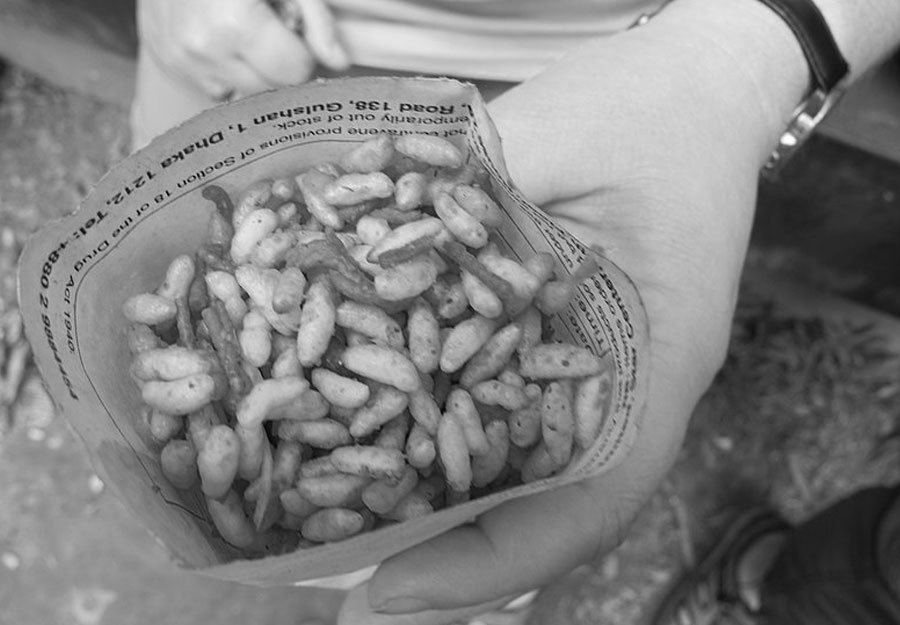

Growing up in England, I knew Dhaka as a place of music and poetry that my parents had exposed me to in my childhood. From our holiday trips there, back in the 1970s, my memories are of a sleepy and leafy city, but in the two decades since I’ve arrived and made it my home, the Bangladeshi capital has metamorphosed into a megacity. It’s now the default destination for the thousands of climate refugees coming from low-lying land in the deltas.
Dhaka is one of the world’s most densely populated cities, in one of the fastest growing economies. It is filled with busy people, from business executives on their mobiles trapped in their cars to chicken sellers wheeling their carts to the market. Speeding past them all are young women on ride-share mo-bikes trying to make it to work on time at one of the big, new gleaming corporate buildings sticking out of what looks like a never-ending construction site. Flyovers and mass transit systems are being built, all the while competing for space and oxygen with swarms of rickshaws and autorickshaws.
More from Mekong Review
-
You are never alone in a Kathmandu neighbourhood - or are you?
-

A poem from Daniel J. Dolley
-
The women of the Vietnamese national weightlifting team overcoming cultural norms
- Tags: Bangladesh, Issue 29, Sadaf Saaz