

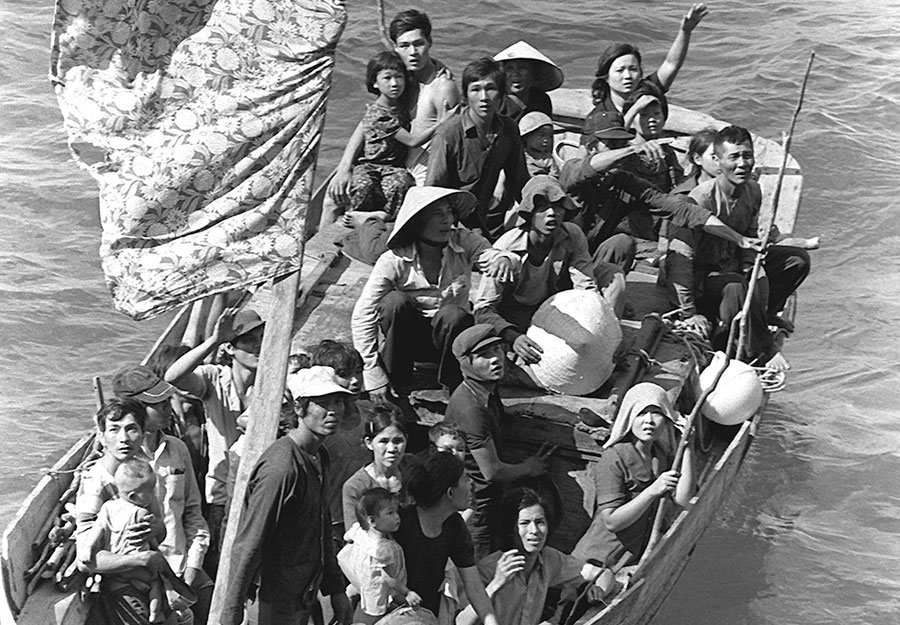

In Camps: Vietnamese Refugees, Asylum Seekers, and Repatriates
Jana K. Lipman
University of California Press: 2020
.
War produces refugees, and even when war ends, influxes of refugees do not. Jana K. Lipman’s In Camps: Vietnamese Refugees, Asylum Seekers, and Repatriates starts from the end of the US war in Vietnam and examines the displacement of Vietnamese refugees, which unfolded well into the twenty-first century. During and after the war, millions of Vietnamese refugees fled, mostly by boat, to neighbouring countries seeking safety. In total, nearly 1.6 million Vietnamese refugees were resettled around the world. Half of these were in the US, whose refugee laws were largely formulated in response to the Southeast Asian refugee crisis. Through microhistories that examine the inner politics of camps in Guam, Malaysia, the Philippines and Hong Kong, Lipman captures the vibrant—and at times conflicting—advocacy that occurred regarding the fate of millions of Vietnamese, and the domestic politics that intersected with their refugee claims.
In the popular imagination, refugees are forced to flee from violent phenomena they cannot control. While displaced, they undertake journeys that bring them to host countries or refugee camps where they wait—potentially for indeterminate amounts of time—until a country is willing to resettle them or, in rare instances, they can safely return to their countries of origin. These decisions hinge on the policies of states and international organisations, namely, the United Nations High Commissioner for Refugees, that either accept their claims and facilitate their relocation, or reject them, leaving them in limbo or prompting them to return home.
More from Mekong Review
-

A poem from Jonathan Chan
-

What Graham Greene ate in Vietnam
-

The deciding end of French colonial rule in Indochina