

Welcome to the Mekong Review Weekly, our weekly musing on politics, arts, culture and anything else to have caught our attention in the previous seven days. We welcome submissions and ideas and look forward to sparking lively discussions.
Thoughts, tips and comments welcome. Reach out to us on email: weekly@mekongreview.com or Twitter: @MekongReview
To sign up for the newsletter, click here

c
Final Bow
c
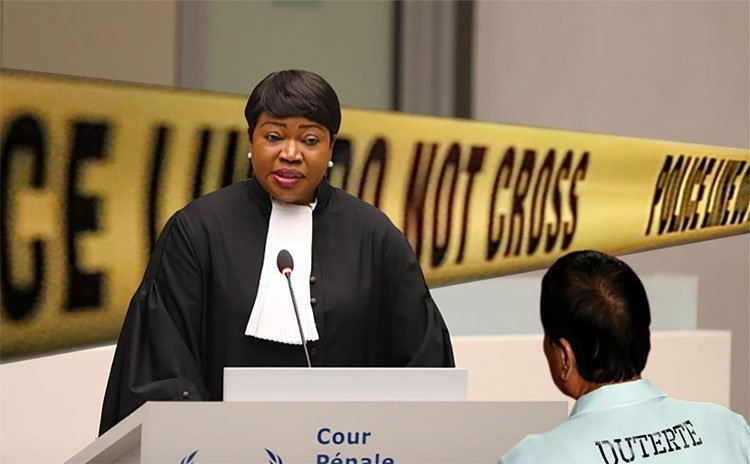
Nine years after she was sworn in, International Criminal Court chief prosecutor Fatou Bensouda ended her term last week with one final, striking mark on Southeast Asia. In a damning, 57-page request for judicial investigation, Bensouda wrote that there was reasonable basis to form a crimes against humanity case in the Philippines’ ‘war on drugs’.
‘Following a thorough preliminary examination process, the available information indicates that members of the Philippine National Police, and others acting in concert with them, have unlawfully killed between several thousand and tens of thousands of civilians during that time,’ Prosecutor Bensouda, said in a statement released last Monday.
If judges decide to take up the case, something rights lawyers believe to be a distinct possibility, it will prove a rare chance of justice for countless grieving families. ‘It’s 3am and I feel like crying. For the dead I’ve seen and their kin I tried to comfort. Thank you ICC,’ tweeted Raquel Fortun, a forensic pathologist who has autopsied countless victims of the drug war and been outspoken about the evidence that they were murdered extrajudicially.
Bensouda’s request names President Rodrigo Duterte along with several others, and makes repeated mention of the similarities between the war on drug killings and those carried out in the late 1980s by the ‘Davao death squad’ when Duterte was Davao City mayor.
Duterte, who publicly called for drug addicts to be killed on multiple occasions, has shown little interest in efforts to investigate or punish those complicit. The Philippines announced it was pulling out of the ICC in 2018, shortly after Bensouda opened her examination. After last week’s announcement, a spokesman said the Philippines would not participate in an investigation as it was not a court member. But in her request, Bensouda argues that the court still has jurisdiction—as the Philippines was indeed a member during the years that the investigation covers.
The prosecutor has a history of savvy legal manoeuvres around the question of jurisdiction. Most famously in Southeast Asia, judges agreed to allow her office to open a probe into possible crimes against humanity committed against the Rohingya. Though Myanmar is not a state party to the ICC, Bangladesh is, and Bensouda in 2019 successfully convinced the court that investigations into the enforced cross-border deportations of hundreds of thousands fell under its purview.
As anyone who has watched the Khmer Rouge tribunal in Cambodia can attest, in few places do the wheels of justice grind more slowly than in international justice. Even if the court accepts Bensouda’s final request, it is unlikely to leave a mark on the Philippines, let alone Duterte and his brutal policies, anytime soon. But for some, the solace of seeing a loved one’s murder classed as such may bring a peace of its own.
From the archives
The tribunal
Alexander Hinton
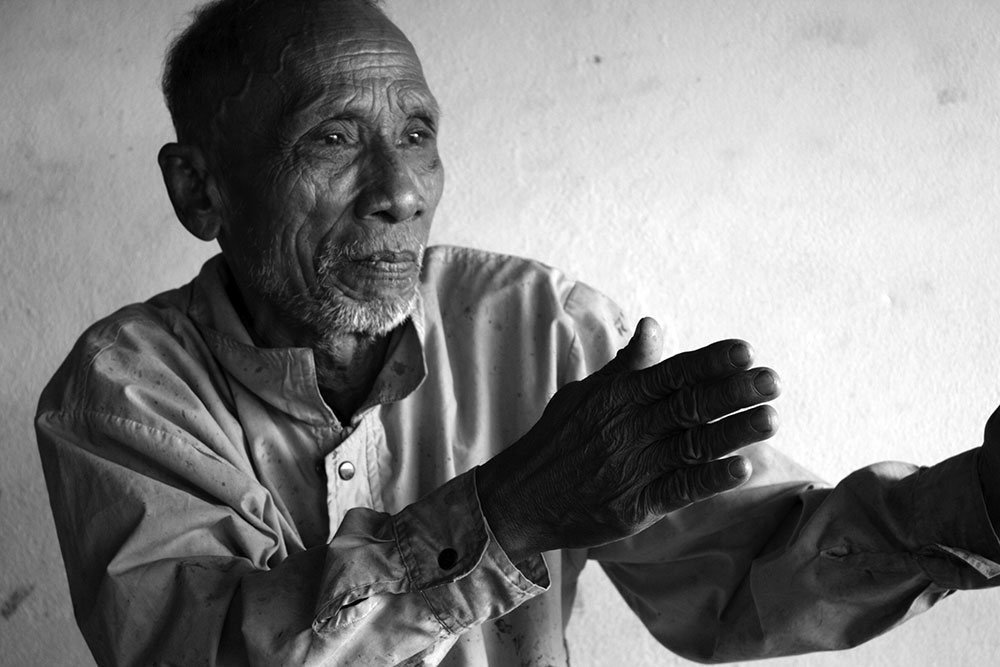
When I first arrived in Cambodia, no one spoke of justice. Few imagined it. The year was 1994, and I had travelled to Kampong Cham province to start my anthropological fieldwork. Much of the time I worked in “Banyan”, a beautiful village surrounded by lush green paddy fields, roughly a dozen kilometres from the provincial capital.
Banyan was also near a famous Buddhist pagoda turned Khmer Rouge execution centre, Wat Phnom Bros. More than 10,000 people were killed there. As in many parts of Cambodia, traces of the killings were still evident on the temple grounds, a terrace of undulating ditches now overgrown with foliage. Babies were said to have been bashed against a tree on the site.
The Phnom Bros killing fields extended all the way to Banyan. The village was off-limits in Democratic Kampuchea (DK); after taking power on 17 April 1975, Pol Pot’s Khmer Rouge had launched one of the most radical revolutions in history. By the time the DK regime was toppled on 7 January 1979, almost a quarter of Cambodia’s eight million inhabitants had perished. Many died of starvation, overwork or illness. Others were executed at places like Phnom Bros, which was part of an extensive Khmer Rouge security apparatus.
Read more here
Watch it:
If you’re in New York City this summer, be sure to check out Dialogues with the Unseen: Short Films from Southeast Asia. Curated by Juliette Yu-Ming Lizeray, the six short films from Indonesia, the Philippines, Singapore, Thailand, and Vietnam, explore the power of the invisible realm. The films are all shorter than six minutes and are screening continuously at the video amphitheatre at the Museum of the Moving Image until October 3.

More from Mekong Review
-

Who makes up Myanmar’s rightful government? The officials elected by the public? Or those who are currently ruling, having deposed the civilian leadership in the 1 February coup?
-
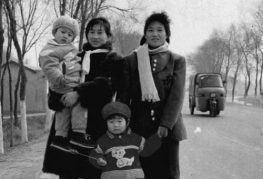
Today’s Beijing is assiduously digitised, connected, monitored and manicured.
-
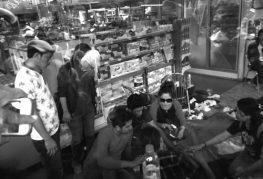
Five years ago last Saturday, Kem Ley was gunned down in broad daylight at a Phnom Penh gas station.
- Tags: Newletter