

Welcome to the Mekong Review Weekly, our weekly musing on politics, arts, culture and anything else to have caught our attention in the previous seven days. We welcome submissions and ideas and look forward to sparking lively discussions.
Thoughts, tips and comments welcome. Reach out to us on email: weekly@mekongreview.com or Twitter: @MekongReview
To sign up for the newsletter, click here

c
Pressing forward
c
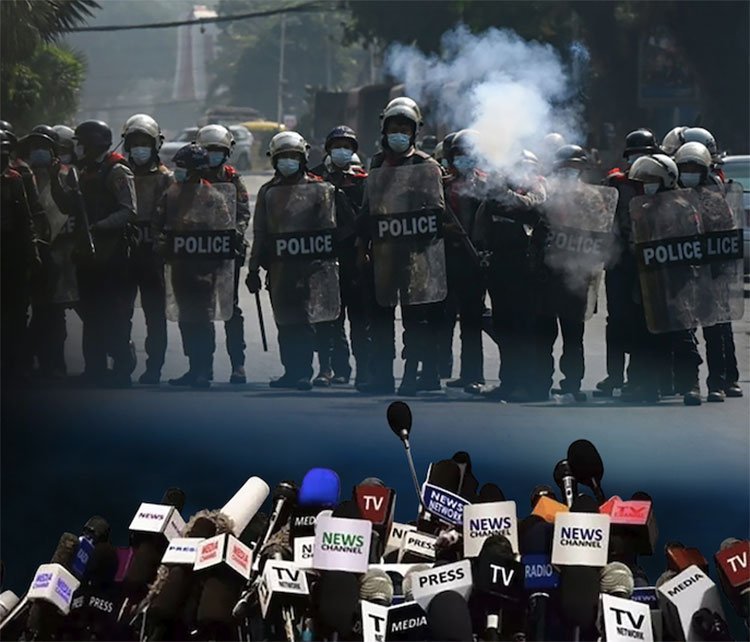
In Kayah State, near the border of Thailand, over 100,000 civilians face starvation after fleeing air strikes and military raids. In Kachin and Shan states, the military continues to use human shields. Arbitrary arrests continue unabated, with filmmaker Ma Aeint becoming the latest artist to be arrested and held incommunicado. Such is the state of Myanmar on the week of 14 June, as the trial of Aung San Suu Kyi begins.
That we know any of this is a testament to Myanmar journalists, many of whom have pushed on with their work despite the significant danger involved. At least 87 journalists have been arrested since the 1 February coup. In other words, about one out of 40 media workers have been arrested, reports journalist Aye Min Thant, compared with about one in 10,000 civilians. There have been arrests in nearly every state, with everyone from owners on down to freelance stringers targeted, according to data compiled by Reporting ASEAN. Most of those detained have been held without trial for upwards of two months, in prisons notorious for the torture of political prisoners.
Journalists have been forced to go underground and move house frequently. With the junta continuing to block access to the internet, getting stories out—or even getting paid—has been a logistical challenge for many.
‘Being a journalist in Myanmar after the coup feels like working in the dark,’ an anonymous reporter recounted in VOA. ‘I take every step carefully, but at any moment I could take a fall that would ruin the rest of my life.’ In spite of the dangers, however, ‘I am eager to stay and report for as long as I am able.’
A 21-year-old freelancer in Shan state echoed the sentiment in an account for Reporting ASEAN. The ‘lack of safety-related support made me feel somewhat hopeless, and in despair, about my role as a journalist and my future as one,’ she wrote.
But, she continued, ‘[I] began to be uncomfortable with staying away from the news, especially after seeing what to me were flaws in the conflicting news reports about the anti-coup events in my town. I worried that outsiders could easily think that the deaths from local protests were an exaggeration, or even “fake news”. They would have no idea about the injustices and lawless actions of the military regime in my town, I reflected … I am determined to carry on journalistic work—as long as I do not get arrested by the police or soldiers.’
From the archives
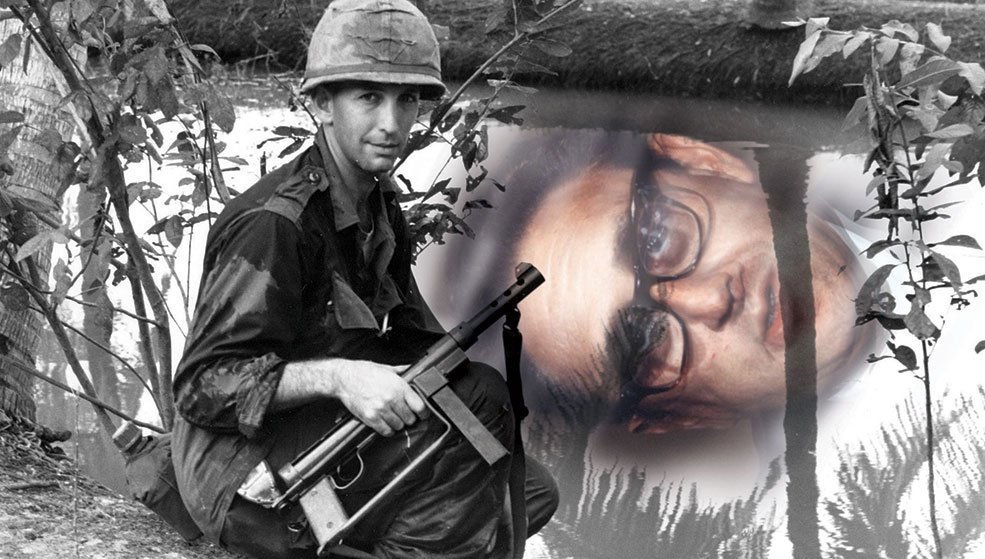
Fifty years ago this week, the New York Times published the Pentagon Papers—changing the course of the Vietnam War and Richard Nixon’s presidency.
Kissinger and Ellsberg in Vietnam
Thomas A. Bass
Before Henry Kissinger was secretary of state in the Nixon administration and Daniel Ellsberg leaked the Pentagon Papers to the New York Times in 1971, they met in Saigon in July 1966 to swap views on Vietnam and discuss how the war was going. Then a Harvard professor looking to make his move into politics, Kissinger was visiting Vietnam as a consultant to Henry Cabot Lodge, Jr., a fellow Harvardian and former senator who was serving as US ambassador. Ellsberg, a military analyst who had been in Vietnam for ten months as an assistant to the CIA agent Edward Lansdale, gave Kissinger two important pieces of advice: never talk to someone in the presence of their boss, and do not go to official briefings. Rarely for an American in Vietnam, he also suggested that Kissinger interview some Vietnamese.
Ellsberg was studying pacification for Lansdale, which meant he was looking for ways to subdue the rural population. This was Lansdale’s second tour of duty in Vietnam. He had become famous in the 1950s when he helped to establish the former French colony of Cochinchina as an independent state, eventually called the Republic of Vietnam. After France’s defeat at the battle of Dien Bien Phu in 1954, the United States had plucked Ngo Dinh Diem, the country’s first leader (1954-63), out of a Belgian monastery and equipped him with an army. Aided by lots of money from the CIA, Lansdale managed to create South Vietnam as a client state led by a corrupt but reliable group of Catholic refugees from North Vietnam.
Having already performed a similar miracle in the Philippines, Lansdale was a favourite of President Kennedy. Unfortunately, after Lansdale’s return to the Department of Defense, where he worked under cover as a colonel in the US Air Force, Kennedy gave the former advertising man an assignment that he described as his biggest failure. Lansdale was supposed to arrange the assassination of Fidel Castro. The Cuban missile crisis of 1962 was the Soviet Union’s response to Lansdale’s larger assignment—to invade Cuba, for a makeover of the failed Bay of Pigs invasion the previous year. By 1965, with Castro still alive and Cuba still communist, Lansdale got turfed back to Vietnam. Travelling with him was an odd assortment of assassins and bagmen, and one newcomer to his team, Dr Daniel Ellsberg, a civilian adviser whose own career in the Pentagon had hit a dead end.
Read more here
Watch it:
If you’re in Phnom Penh this month, be sure to check out PENH ART 2021 at The Factory Phnom Penh Artspace. The artist-run fair features dozens of the country’s finest contemporary artists, including Anida Yoeu Ali, Sopheap Pich, Chhim Sothy and Sao Sreymao.

More from Mekong Review
-
Who makes up Myanmar’s rightful government? The officials elected by the public? Or those who are currently ruling, having deposed the civilian leadership in the 1 February coup?
-
Five years ago last Saturday, Kem Ley was gunned down in broad daylight at a Phnom Penh gas station.
-
In May 2018, the mood in Malaysia was jubilant. One of the greatest get-out-the-vote drives in history had resulted in an overthrow of a party that had ruled Malaysia for 61 years.
- Tags: Newsletter