

Future Forward: The Rise and Fall of a Thai Political Party
Duncan McCargo and Anyarat Chattharakul
NIAS: 2020
.
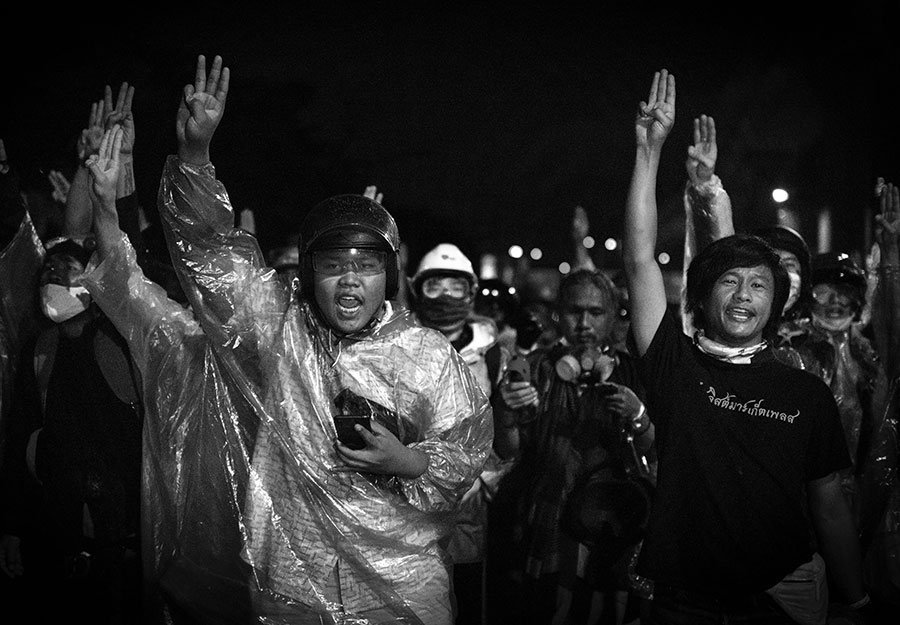
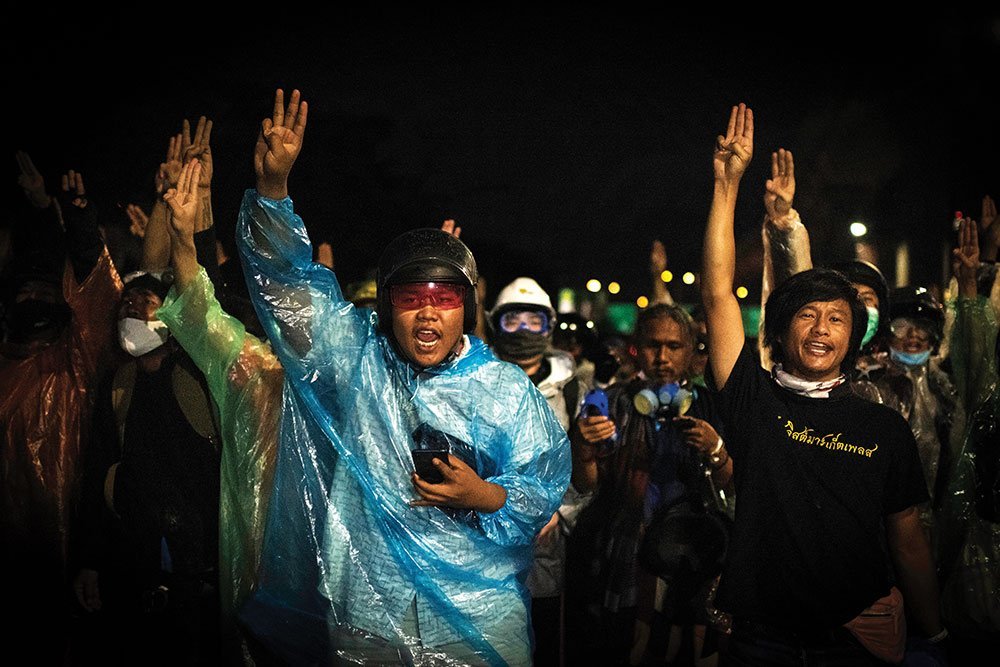
On 3 August at Bangkok’s Democracy Monument, the lawyer Arnon Nampha told the big crowd, ‘The monarchy has more power than the system allows. This is something we really have to talk about.’ In a handful of words, he shattered a taboo. A week later, a twenty-one-year-old anthropology student who had never before spoken in public read out a list of ten demands for reform of the monarchy. At the end, amid loud cheers, she hurled her script into the air. The students have called themselves the ‘People’s Party 2020’, linking to the movement that overthrew the absolute monarchy in 1932. They rallied on 14 October, the anniversary of the 1973 student uprising that brought down a military dictatorship and ushered in Thailand’s democratising era. They have already inserted themselves into history. And nobody knows where this will end.
But it’s clear why it started. In Thailand, since the early 2000s the march of authoritarianism has seemed relentless and unstoppable. After the country’s most popular elected politician ever, Thaksin Shinawatra, was thrown out by coup in 2006, the courts junked two elections, overthrew three more premiers, dissolved two major political parties and sent many dissidents to jail.
More from Mekong Review
-

Alienated souls in exotic locations—welcome to Osborneland
-

Poetry from Rupert Arrowsmith
-

The end of an affair