

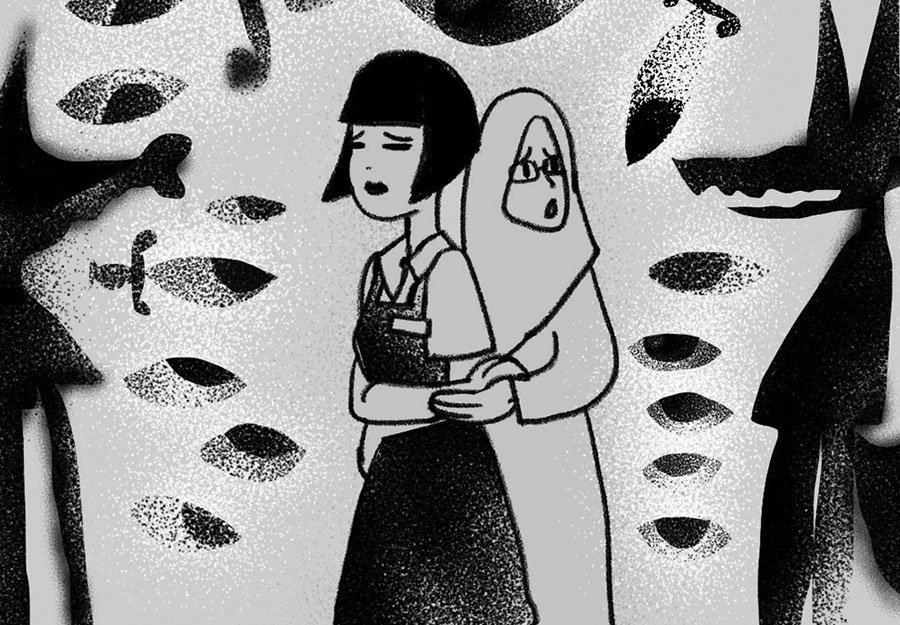
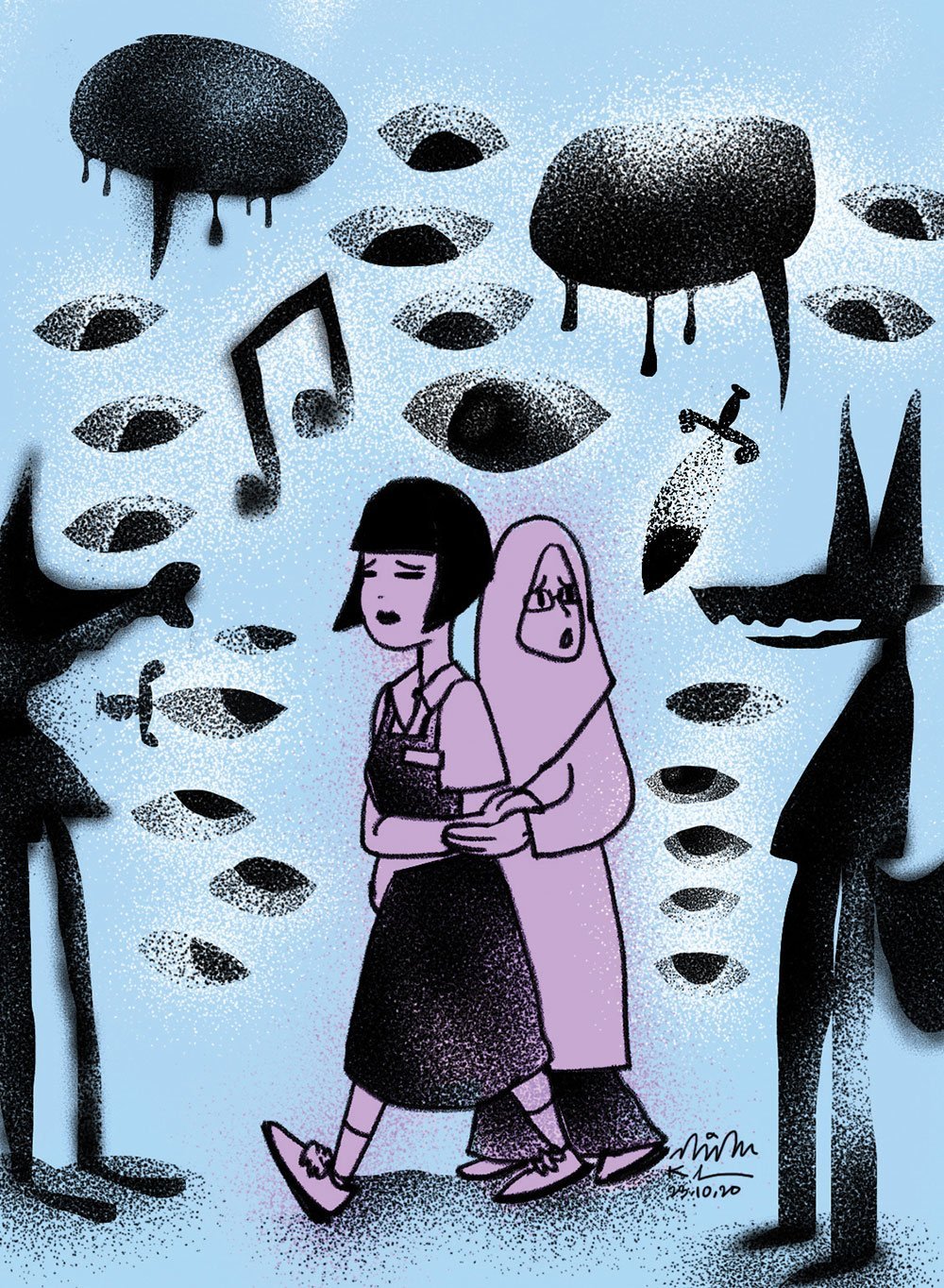
A common trope in Malaysian media and literature romanticises the idea of women marrying their rapists and abusers. In the hit film Ombak Rindu, as just one example, the main character is degraded, abused and violently raped by a man who eventually ‘falls in love’ with her and ends up becoming her husband. In Pantai Kasih—a novel that was part of the curriculum I had to study in high school—there is a scene clearly depicting marital rape by one of the main characters, who violates his unwilling vulnerable wife and impregnates her without consent.
These are the stories I was surrounded by as a child. I didn’t much question them at the time. It was only after I began university that I discovered the term ‘sexual politics’, introduced by Kate Millett in her book of the same title. Millett defines sexual politics as ‘power structured relationships’ and arrangements whereby one group of persons is controlled by the other. In sexual politics, the patriarchy is one of these groups that possesses control. When I learned of this, things began snapping into place.
More from Mekong Review
-

A bookshop in George Town rides the pandemic
-

Poetry from Rupert Arrowsmith
-

A poem from Hon-Wai Wong
- Tags: Dania Kamal Aryf, Issue 21, Malaysia