

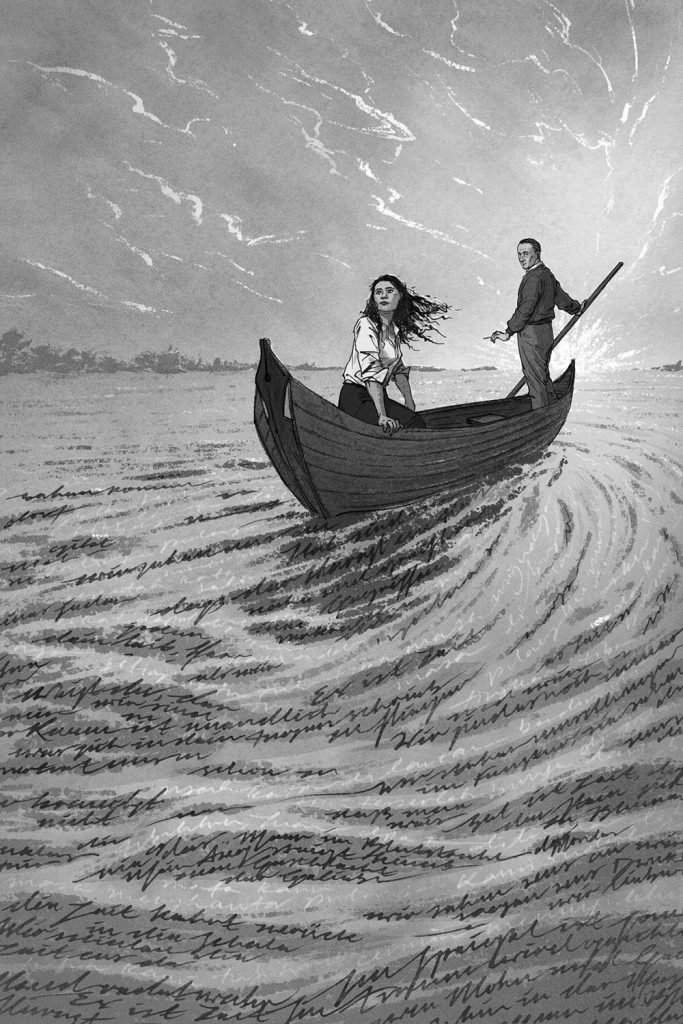

‘The world is gone, I must carry you.’—Paul Celan
In our isolation there was not quite enough solitude. I wanted to seal myself off for a while, not from the open wounds of the world but from the shrillness of its cries. Surely there was a deeper language of loss that could speak to the darkness of what we were living through. I wanted to reach a place of silence, where I could listen for that voice of witness and elegy. And it was not enough to listen: I needed to grapple with language as a way of grappling with the world.
In this search, I returned to a project I had put aside for several years—translating the poetry of Paul Celan from German to Malay. Considered by many to be the greatest European poet of the twentieth century, Celan’s poetry profoundly addresses the human condition in the modern age through his strikingly personal response to the Holocaust and its aftermath. The Frankfurt School thinker Theodor Adorno, who famously proclaimed that ‘it is barbaric to write poetry after Auschwitz’, is said to have reassessed and clarified his statement upon encountering Celan’s poetry. Even now, Celan speaks to us like a terrifying angel of history, poised on the threshold between life and death, language and silence, memory and oblivion.
More from Mekong Review
-

Poetry from Rory Harris
-
Poetry from Jennifer MacKenzie
-

A poem from Hon-Wai Wong
- Tags: Issue 20, Malaysia, Paul Celan, Pauline Fan