

Culinary Nationalism in Asia
Michelle T. King (ed)
Bloomsbury: 2019
.
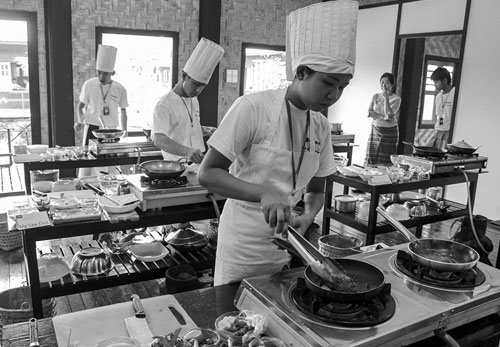
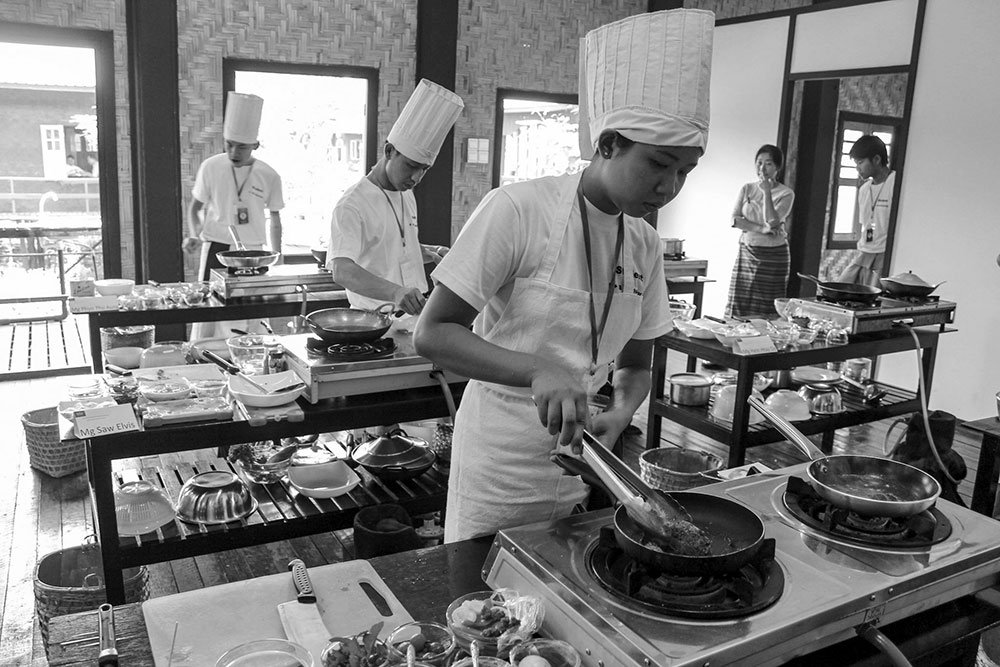
Three years ago, I traded a corporate job in New York City, and the lifestyle that accompanied it, for a job teaching English in Myanmar. My placement was at Inle Heritage, an amalgamation of vocational school, hotel, restaurant and cat sanctuary nestled on a remote island at the southern tip of Inle Lake, a freshwater lake nestled in the Shan Hills. I arrived by long-tailed boat on a Saturday evening with my American Tourister suitcase and a ten-month contract. I thought I had been hardened by life in lonely cities, but nothing could have prepared me for the isolation on the lake.
Seven days a week, three meals a day, I ate in the hotel canteen. We all did, around one hundred of us. Around me, students and staff chattered in Burmese. Eating soothed my loneliness. The canteen was a place to blend in. We sat on the same benches, eating the same curries from stainless-steel tiffin boxes.
Myanmar’s national cuisine comprises eight regional cuisines, including Bamar, Shan and Kachin. What I ate at Inle Heritage was a mix of Shan and Inthar, the lake’s main ethnic group. Because the Bamar population is the majority, and the country is often still referred to as Burma, “Burmese cuisine” often becomes the default — stuffing all the regional influences under the umbrella term and reducing the complex variety of cuisines to a homogenous blur.
More from Mekong Review
-
Where to for the Asian elephant?
-

A poem by Aiden Heung
-

Back to bricks and mortar
- Tags: food, Issue 16, Michelle T. King, Myanmar, Tiffany Teng